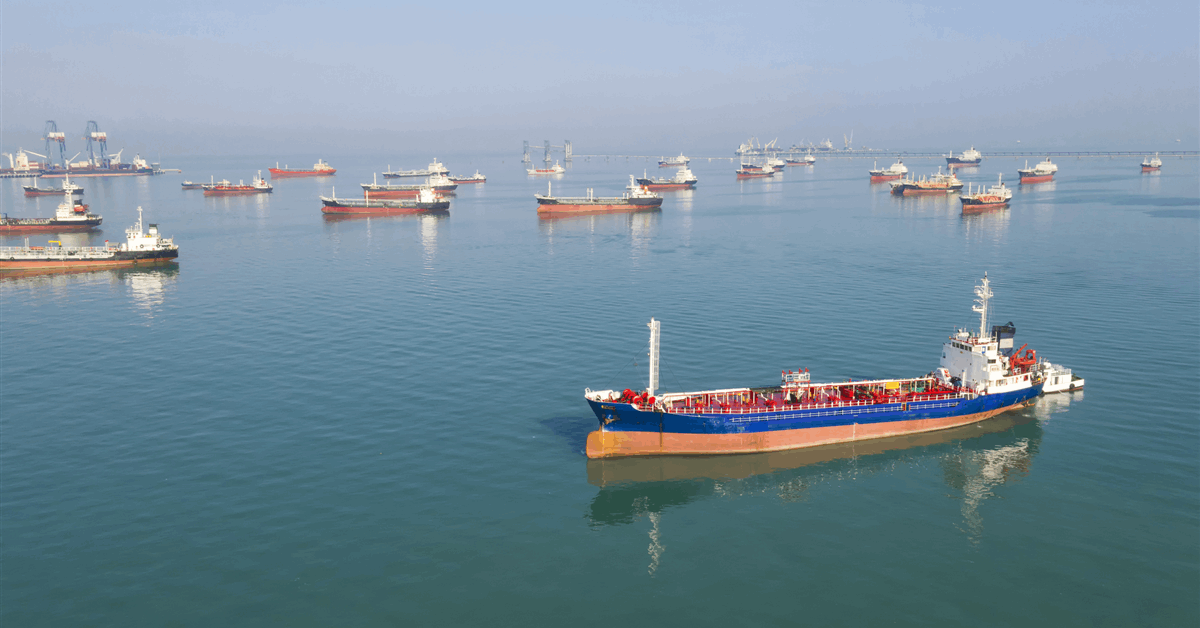
Geopolitical tensions in the Persian Gulf have escalated dramatically, directly impacting one of the world’s most critical energy chokepoints: the Strait of Hormuz. Following recent military actions involving the US and Israel against Iran, the vital shipping lane is experiencing significant disruption, with oil and gas tankers increasingly halting or diverting their journeys. This development immediately elevates the supply risk for global energy markets, forcing investors to re-evaluate their positions and assess the potential for sustained volatility. As roughly one-fifth of the world’s seaborne oil and liquefied natural gas (LNG) transits this narrow waterway daily, any impediment here sends immediate ripples across the entire energy complex, demanding close attention from discerning investors.
Hormuz Under Siege: Tanker Traffic Grinds to a Halt
The immediate aftermath of recent military engagements has seen an unprecedented slowdown in maritime traffic through the Strait of Hormuz. Proprietary vessel tracking data indicates a significant number of tankers are either holding outside the waterway or have aborted their transits midway. This cautious approach by shipowners stems from unsettling radio broadcasts, purportedly from the Iranian navy, announcing a ban on transit. While no official confirmation from Tehran has emerged, the message has been enough to trigger a widespread re-evaluation of shipping routes and risk profiles.
Major players in the shipping industry have reacted swiftly. Japanese giant Nippon Yusen KK explicitly instructed its fleet to avoid navigating Hormuz, and the Greek merchant fleet, one of the world’s largest, has been advised to reassess passage. These proactive measures underscore the severity of the perceived threat and the industry’s deep concern over crew safety and asset security. The fact that some vessels continue to pass, albeit in reduced numbers, highlights the desperate need to maintain supply chains but also the inherent risks being taken. The situation is dynamic, with at least three gas tankers having halted their voyages and a flotilla of eight crude tankers accumulating outside the Gulf of Oman over the past fortnight, all awaiting clarity.
Market Reaction and Shifting Investor Sentiment
The heightened risk in the Persian Gulf has naturally impacted crude oil prices, even if initial market reactions were somewhat muted due to weekend closures. As of today, Brent Crude trades at $93.92 per barrel, reflecting a modest increase of 0.73% within a day range of $93.52 to $94.21. West Texas Intermediate (WTI) Crude similarly shows an uptick, standing at $90.48, up 0.9% for the day, with its range between $89.71 and $90.7. This current upward movement is a direct response to the supply uncertainty emanating from Hormuz.
However, it’s crucial for investors to contextualize these immediate gains against recent trends. Our 14-day data pipeline reveals that Brent Crude has actually experienced a significant decline, dropping from $118.35 on March 31 to $94.86 on April 20, a substantial decrease of $23.49 or 19.8%. This broader downtrend, driven by various factors prior to the current crisis, suggests that while Hormuz tensions provide an upward impetus, the market’s underlying bearish sentiment has been strong. Investors are keenly asking whether “WTI is going up or down,” and the answer is complex: short-term geopolitical shocks are pushing prices higher, but the longer-term trajectory remains subject to broader supply-demand fundamentals and the duration of the current disruption. The initial retail market reaction, which saw WTI briefly spike as high as $75.33 (a 12% gain from Friday’s close) before the current levels, illustrates the rapid repricing of risk when headlines hit.
Forward Outlook: Geopolitics, Supply Dynamics, and Key Events
The duration and ultimate impact of this Hormuz disruption remain the critical unknown for investors. Tehran has threatened to close the strait before but has never fully done so, setting a precedent that suggests a full closure is a high-stakes move. However, the current environment, marked by direct military engagement, presents a far more volatile scenario. Traders are closely monitoring for any Iranian retaliatory strikes or impacts on regional ports, which could further exacerbate supply chain issues.
Looking ahead, several key energy events on our calendar will provide crucial data points for assessing the market’s trajectory. The **OPEC+ Joint Ministerial Monitoring Committee (JMMC) Meeting on April 21** will be particularly significant. How will the group react to the heightened regional instability? Will they consider adjusting output quotas to stabilize markets if supply is genuinely threatened, or will they maintain cuts to capitalize on higher prices? Following this, the **EIA Weekly Petroleum Status Reports on April 22 and April 29** will offer immediate insights into US inventory levels, which could either cushion or amplify price movements. The **Baker Hughes Rig Count on April 24 and May 1** will provide a pulse on North American supply growth, a vital counterweight to Middle Eastern disruptions. Finally, the **EIA Short-Term Energy Outlook on May 2** will offer a comprehensive forecast for global supply and demand dynamics, crucial for answering the perennial investor question: “what do you predict the price of oil per barrel will be by end of 2026?” Our analysis suggests that this will depend heavily on the evolution of the Hormuz situation, OPEC+’s response, and the broader global economic recovery.
Navigating Investment Implications and Risk Management
For investors in the oil and gas sector, the current situation demands heightened vigilance and a dynamic approach to portfolio management. The elevated geopolitical risk premium is here to stay for the foreseeable future, making energy equities and futures markets particularly sensitive to headlines. Companies with diversified supply chains or those with significant production capabilities outside the Middle East, particularly in North America, may see increased investor interest as a hedge against regional instability. Conversely, shipping companies heavily reliant on the Strait of Hormuz for transit and refiners with high dependence on Persian Gulf crude face increased operational risks and potential cost escalations.
Investors should meticulously evaluate their exposure to companies with assets or operations in the region. Understanding the specific crude grades and LNG sources that underpin a company’s business model is now more critical than ever. Furthermore, considering derivatives strategies to hedge against extreme price volatility could be a prudent move. While the immediate focus is on crude oil, the disruption to LNG flows through Hormuz also warrants attention, potentially impacting global natural gas prices and related equities. OilMarketCap.com will continue to monitor these developments closely, leveraging our proprietary data to provide timely and actionable insights for navigating this complex market landscape.


