Geopolitical Crosscurrents Derail $22 Billion Energy Deal
The global energy landscape is once again highlighting the profound impact of geopolitical tensions on investment and market stability. Swiss commodity trading giant Gunvor recently confirmed its withdrawal from a proposed $22 billion acquisition of Lukoil’s international assets, a decision directly prompted by a firm blockade from the United States Treasury. This development is far more than a simple transaction failure; it signals a significant escalation in Washington’s strategy to choke off funding for Russia’s war efforts in Ukraine, further entangling major energy players in a complex web of sanctions and political pressure. For oil and gas investors, this scenario introduces heightened uncertainty, impacting asset valuations, future deal flow, and overall market sentiment at a time when crude prices are already navigating considerable volatility.
Sanctions Intensify, Reshaping Global Energy Footprints
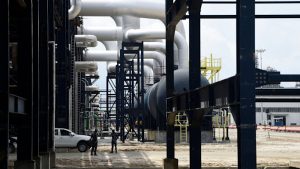
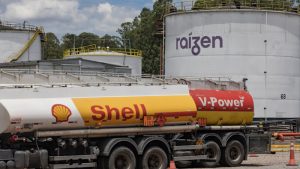
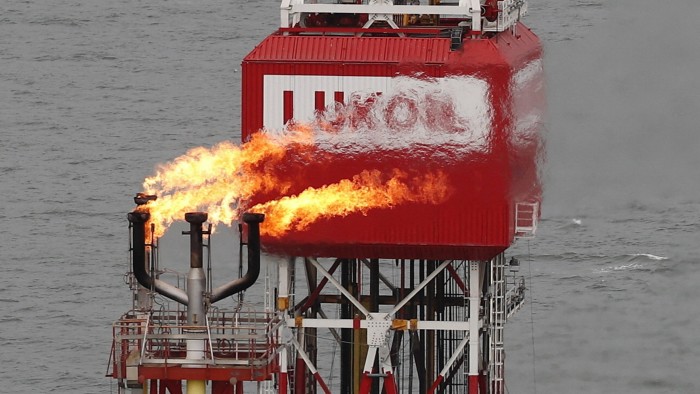
The US Treasury’s public statement, labeling Gunvor as a “Kremlin’s puppet” despite the company’s strong denials and documented efforts to distance itself from Russian ties over the past decade, underscores a hardening stance against entities perceived to be facilitating Russian economic activity. Lukoil, already under sweeping US sanctions imposed last month, had been actively seeking buyers for its extensive international portfolio, which included valuable oil refineries in Romania and Bulgaria, a widespread network of petrol stations across the US and Europe, and key oil and gas fields spanning the Middle East, Central Asia, and Africa. The collapse of this substantial deal leaves these assets in limbo, creating a significant strategic challenge for Lukoil and potentially signaling to other international firms the extreme risks associated with acquiring Russian-linked energy assets. This incident reinforces the critical need for investors to meticulously assess geopolitical risk, as the cost of miscalculation can be immense, directly influencing the viability of multi-billion-dollar ventures and the long-term outlook for energy companies operating in sensitive regions.
Market Volatility Reflects Heightened Risk Perception
The repercussions of such high-profile geopolitical interventions are immediately visible in commodity markets. As of today, Brent Crude trades at $90.38 per barrel, marking a significant 9.07% decline within the day’s range of $86.08 to $98.97. Similarly, WTI Crude has fallen by 9.41% to $82.59, while gasoline prices have dipped to $2.93, down 5.18%. This sharp daily contraction adds to an already bearish trend, with Brent having shed $22.4, or nearly 20%, from its $112.78 perch just 14 days ago. This accelerated price depreciation reflects a broader market apprehension, where concerns over global demand elasticity are now compounded by escalating geopolitical risk premiums. Investors are clearly reacting to the potential for further disruptions to global oil supply chains and the increasing difficulty of navigating international energy trade. The uncertainty surrounding Lukoil’s $22 billion asset package contributes to a risk-off sentiment, forcing a re-evaluation of energy sector exposures, particularly for those with intertwined operations in politically sensitive areas.
Lukoil’s Assets in Limbo: A Strategic Challenge
With Gunvor out of the picture, the future of Lukoil’s substantial international assets is now critically uncertain. The original sale was a direct response to US sanctions, aimed at divesting operations that became untenable under the new regulatory environment. These assets, comprising a mix of downstream refining capabilities, extensive retail networks, and upstream production, represent a significant portion of Lukoil’s global footprint. The challenge now shifts to finding alternative buyers willing to navigate the complex legal and political hurdles. The US Treasury’s explicit warning against the Gunvor deal sets a precedent, indicating that any successor bid for these assets would likely face similar intense scrutiny. This situation raises pertinent questions for investors observing the broader energy market: How will Lukoil manage these stranded assets? What valuation adjustments will be necessary? And how does this impact the competitive landscape, particularly for refiners and fuel retailers in Europe and the US? The difficulty in offloading these assets could depress their value significantly, impacting Lukoil’s financial health and sending a chilling message across the industry about the long-term viability of assets linked to sanctioned entities. Investors are keenly watching how such challenges affect the performance of companies with significant international exposure, reflecting broader concerns about specific company performance in a turbulent market.
Navigating the Upcoming Energy Calendar Amidst Geopolitical Jitters
Against this backdrop of heightened geopolitical risk and market volatility, the immediate energy calendar takes on added significance for investors. This weekend, the OPEC+ Joint Ministerial Monitoring Committee (JMMC) and the subsequent Ministerial Meeting on April 19th and 20th will be crucial. With Brent crude already down significantly, the question of OPEC+’s production quotas and strategy will undoubtedly be top of mind for market participants. Any indication of a deviation from current output levels, or a commitment to further cuts, could either stabilize or further destabilize prices. Following these critical meetings, market attention will shift to the API Weekly Crude Inventory report on April 21st and the EIA Weekly Petroleum Status Report on April 22nd, providing vital insights into US supply and demand dynamics. These data points, along with the Baker Hughes Rig Count on April 24th, will offer a clearer picture of fundamental market conditions. For investors, the interplay between OPEC+’s policy decisions, the latest inventory data, and the lingering geopolitical fallout from the Lukoil-Gunvor deal will dictate short-to-medium-term price movements and inform strategic positioning in a market increasingly defined by rapid shifts and complex interdependencies.