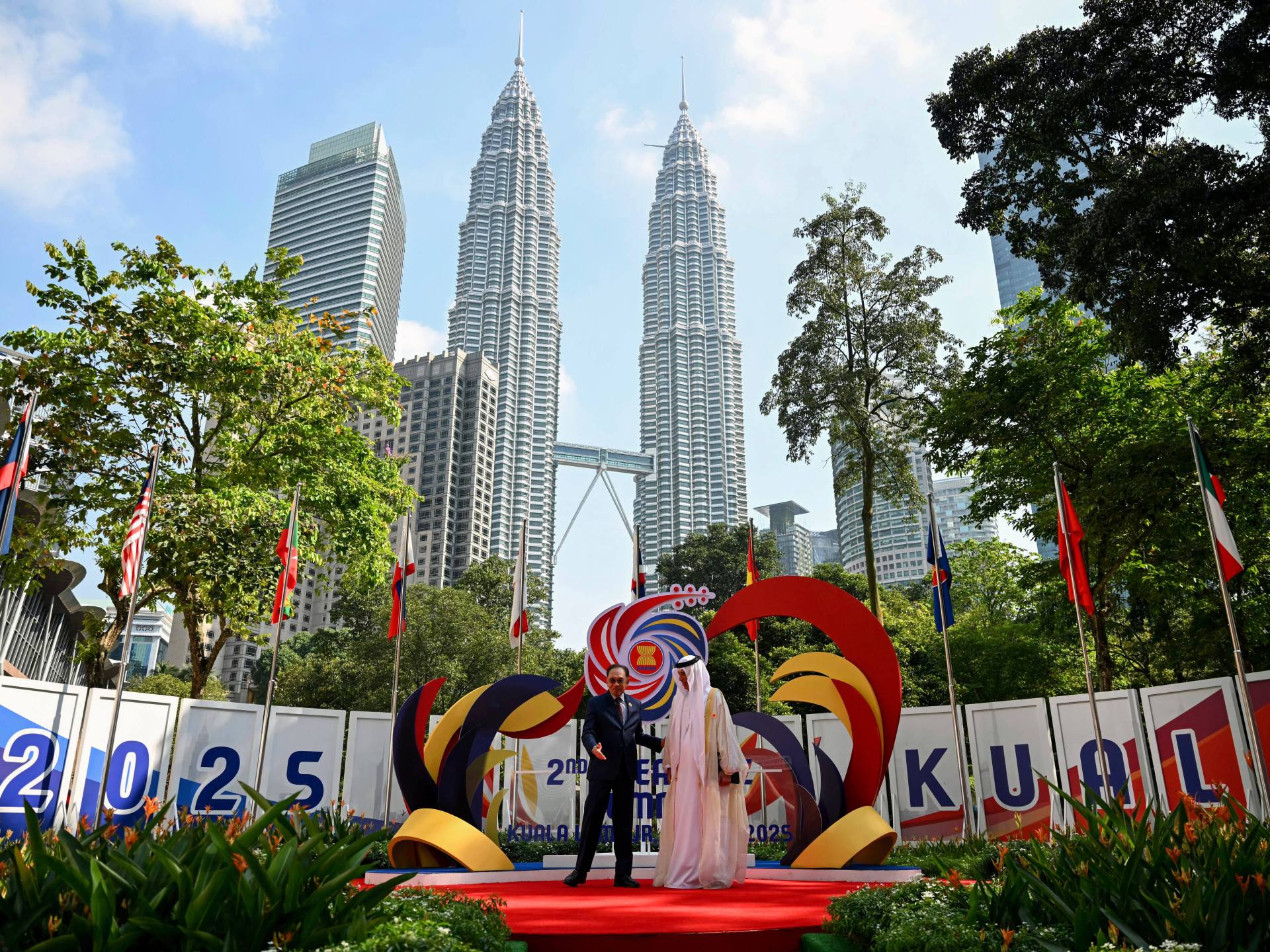
In a rapidly evolving global economic landscape, marked by shifting alliances and a search for stability amidst trade tensions, a significant convergence recently took place in Kuala Lumpur. The Gulf Cooperation Council (GCC), China, and the ten-member Association of Southeast Asian Nations (ASEAN) convened for an inaugural trilateral meeting, signaling a concerted effort to forge a “unified and collective path towards a peaceful, prosperous, and just future.” This landmark gathering holds profound implications for global energy markets and investment strategies, particularly for those focused on oil and gas.
The joint statement, issued following the meeting, underscored a robust commitment to enhancing economic cooperation across these influential blocs. The GCC, comprising energy powerhouses Bahrain, Kuwait, Oman, Qatar, Saudi Arabia, and the United Arab Emirates, alongside the economic dynamism of China and the growth potential of ASEAN nations—Indonesia, Singapore, Malaysia, Thailand, Vietnam, Philippines, Brunei, Cambodia, Laos, and Myanmar—are collectively charting a course that promises to reshape trade flows and investment corridors.
Solidifying Free Trade for Energy Security
A cornerstone of this renewed cooperation centers on the aggressive promotion of free trade. Investors should take note of the explicit mention of an “early completion of the GCC-China Free Trade Agreement negotiations” and the “upgrading of the ASEAN-China free trade area.” These initiatives are not mere diplomatic pleasantries; they represent tangible efforts to dismantle trade barriers, streamline logistics, and create more efficient supply chains. For the oil and gas sector, this translates into potentially reduced costs for crude oil and LNG exports from the Gulf to the energy-hungry markets of China and Southeast Asia, while also facilitating easier movement of refined products, petrochemicals, and energy-related technologies.
The collective resolve articulated by the parties to “work hand in hand to unleash the full potential of our partnership” suggests a long-term vision. This commitment to tangible benefits for their populations and societies naturally extends to securing stable and affordable energy supplies—a critical component for economic development across all participating regions. Oil and gas companies looking for robust, long-term demand growth and predictable regulatory environments will find these developments highly encouraging.
A Colossal Market Opportunity for Energy Investors
The sheer scale of this tripartite alliance presents an unparalleled opportunity for energy investors. Malaysian Prime Minister Anwar Ibrahim, whose nation chaired the ASEAN summits, highlighted the formidable economic muscle of the grouping. The GCC, ASEAN, and China collectively command a staggering Gross Domestic Product (GDP) of $24.87 trillion and encompass a combined population of approximately 2.15 billion people. “This collective scale offers vast opportunities to synergize our markets, deepen innovation, and promote cross-regional investment,” Prime Minister Anwar stated.
This immense market segment represents a colossal consumer base for energy products, from crude oil and natural gas to refined fuels and petrochemical derivatives. For oil and gas companies, this translates into sustained demand for exploration, production, processing, and distribution infrastructure. Investment prospects abound in everything from new LNG import terminals across ASEAN to expanded refining capacity in China, and diversified petrochemical complexes in the Gulf, all designed to serve this burgeoning economic engine.
Navigating Geopolitical Currents and Diversifying Partnerships
The context for this deepened cooperation cannot be overlooked. In a world increasingly wary of unilateral trade actions and economic uncertainties, such as those emanating from previous U.S. administrations, this trilateral meeting underscores a strategic pivot towards diversifying economic partnerships. While Prime Minister Anwar Ibrahim was careful to emphasize that the U.S. remains an important market and that ASEAN is committed to balanced engagement with all major powers, the gathering undeniably provided a prominent platform for China to bolster its influence without direct U.S. presence.
Professor James Chin, an expert in Asian studies, noted the significance of this meeting for China, positioning it on a global stage where its power is recognized by both ASEAN and GCC members. For investors, this implies a strengthening of an alternative economic axis, potentially offering greater stability and predictability in trade relations within this specific bloc, even as global geopolitical tensions persist. Securing energy supply routes and demand markets through such strong regional alliances can mitigate risks associated with broader international trade disputes.
China’s Strategic Energy Imperative
China’s Premier Li Qiang articulated Beijing’s readiness to collaborate with the GCC and ASEAN “on the basis of mutual respect and equality.” This rhetoric is backed by a strategic imperative to secure long-term energy supplies for its industrial and consumer growth, while also expanding its economic and political footprint. By strengthening the alignment of development strategies and increasing macro policy coordination, China aims to deepen collaboration across vital sectors, including energy infrastructure, technology transfer, and joint ventures in renewable energy as well as traditional hydrocarbons.
For oil and gas investors, this signals a concerted drive to enhance energy security through robust bilateral and multilateral agreements. Expect to see increased Chinese investment in GCC upstream projects, as well as downstream and midstream infrastructure in ASEAN countries, securing off-take agreements and solidifying strategic partnerships. The synergy between the GCC’s abundant hydrocarbon reserves and China’s and ASEAN’s burgeoning energy demand creates a powerful dynamic that will drive significant capital expenditure in the coming decades.
Investor Outlook: A New Era for East-West Energy Nexus
The Kuala Lumpur meeting marks a pivotal moment in global energy finance. The deepening ties between the GCC, China, and ASEAN are set to create a more integrated and resilient East-West energy nexus. Investors should closely monitor the progress of the GCC-China Free Trade Agreement and the upgrading of the ASEAN-China free trade area, as these will directly impact the cost-efficiency and volume of energy trade. Companies with strong operational presence or strategic partnerships in these regions are particularly well-positioned to capitalize on the substantial cross-regional investment opportunities.
From securing long-term crude and LNG supply contracts to developing new petrochemical facilities and expanding energy infrastructure networks, the growth trajectory of this collective market appears robust. The commitment to economic cooperation, free trade, and mutual development positions this trilateral partnership as a significant force shaping the future of global oil and gas investing, offering a compelling narrative of demand growth and strategic stability in an often unpredictable world.