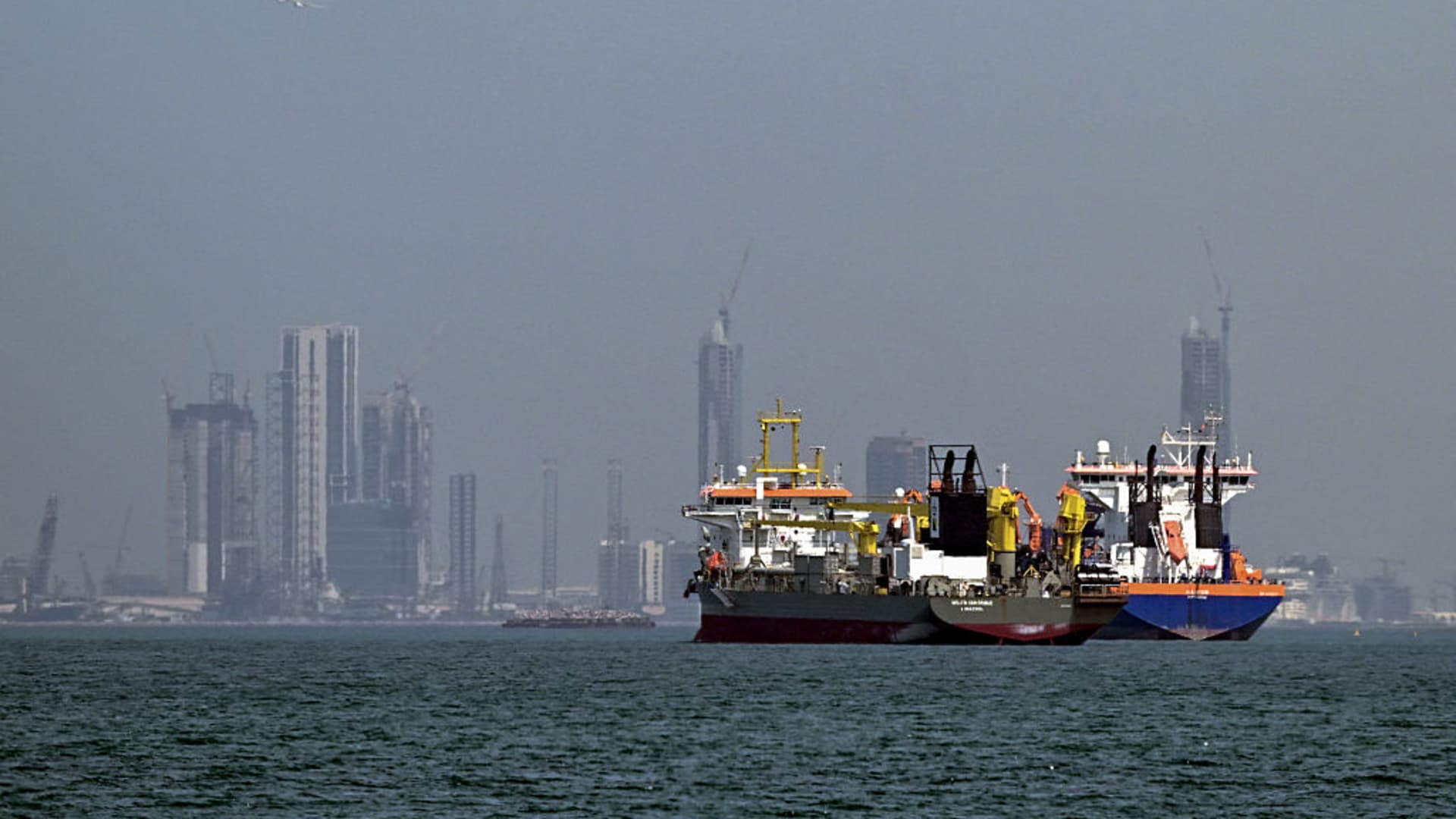
The Strait of Hormuz, a critical choke point for global energy flows, has once again become a flashpoint for geopolitical tension, sending ripples of uncertainty through international oil markets. Recent reports confirm a significant escalation in attacks on commercial vessels navigating or nearing this vital waterway, directly following U.S. and Israeli airstrikes on Iran on February 28. With Iran explicitly warning of a potential surge to $200 oil, investors are grappling with heightened supply disruption risks and attempting to discern the true implications for their energy portfolios. This analysis delves into the immediate market reactions, the credibility of Iran’s stark warning, and the critical data points investors should monitor in the coming weeks to navigate this increasingly volatile landscape.
The Strait of Hormuz: A Critical Volatility Crucible
The strategic importance of the Strait of Hormuz cannot be overstated, connecting the Persian Gulf and the Gulf of Oman and serving as a conduit for approximately 20% of the world’s oil and natural gas. The recent intensification of hostilities has seen shipping traffic through the strait virtually grind to a halt since February 28, underscoring the severe operational risks facing maritime commerce. Overnight, three more foreign ships were struck, adding to incidents earlier in the week where three other vessels sustained damage. Notable among these were a container ship hit by an unknown projectile about 35 nautical miles north of Jebel Ali, a major UAE port, which caused a small fire, and two foreign oil tankers set ablaze near Iraq’s Umm Qasr port, resulting in at least one fatality. These coordinated attacks, described as Iranian retaliation, starkly highlight the vulnerability of global energy supply lines.
In response to these developments, the market’s reaction has been cautious but volatile. As of today, Brent Crude trades at $92.83, reflecting a modest decrease of 0.44% within a daily range of $92.57 to $94.21. Similarly, WTI Crude stands at $89.3, down 0.41%, trading between $88.76 and $90.71. While these prices represent a slight pullback today, they remain elevated by historical standards and illustrate the underlying tension. It’s important to note the broader trend: Brent crude has seen a significant decline over the past two weeks, dropping from $101.16 on April 1 to $94.09 by April 21, a 7% decrease. This suggests that while geopolitical events like the Strait of Hormuz attacks inject immediate risk premium, fundamental supply-demand dynamics or broader economic concerns might be exerting a more sustained downward pressure, preventing a full-blown panic even amidst such severe threats.
Iran’s $200 Oil Warning: Beyond Bluster?
The pronouncement from Ebrahim Zolfaqari, spokesperson for Iran’s military command, warning the world to “get ready for oil to be $200 a barrel,” is a stark reminder of the potential for extreme price shocks in a destabilized region. Such a forecast, while aggressive, underscores the direct link between regional security and crude prices. Our proprietary reader intent data reveals a significant investor focus on future price trajectories, with common questions including “what do you predict the price of oil per barrel will be by end of 2026?” and “is wti going up or down?” While a $200 per barrel scenario would represent an unprecedented surge, requiring a severe, prolonged disruption to a substantial portion of global supply, it highlights the extreme tail risk currently priced into the market.
Historically, significant Strait of Hormuz disruptions have led to sharp, albeit often temporary, price spikes. The current geopolitical backdrop, marked by direct U.S. and Israeli airstrikes on Iran and subsequent Iranian retaliation, creates an environment where a sustained blockade or widespread damage to infrastructure could indeed push prices dramatically higher. However, the market also factors in potential mitigating actions, such as strategic petroleum reserve releases. The International Energy Agency (IEA) has already signaled a push to release a record 400 million barrels of oil, though without a firm timeline, which could act as a dampener to extreme price increases if implemented effectively. Investors should consider that while the threat of $200 oil is real given the current escalation, the market’s current reaction suggests a belief that either the conflict will de-escalate, or global buffers can absorb some of the shock, at least for now.
Navigating Supply Dynamics and Upcoming Data Points
Beyond the immediate geopolitical headlines, investors must closely monitor fundamental supply and demand indicators to gain a comprehensive understanding of the energy market’s trajectory. The coming weeks are packed with crucial data releases that will offer deeper insights into U.S. production, inventory levels, and global energy outlooks, providing essential context to the current geopolitical risks. For instance, the EIA Weekly Petroleum Status Reports on April 22, April 29, and May 6 will be critical for assessing U.S. crude oil, gasoline (currently $3.11, down 0.64%), and distillate inventories, as well as refinery utilization rates. Significant draws could amplify price pressures, while builds might offer some relief.
Furthermore, the Baker Hughes Rig Count, scheduled for April 24 and May 1, will provide forward-looking signals on U.S. drilling activity and potential future production trends. A sustained increase in rig counts could indicate a growing domestic supply response, which would be crucial in offsetting any prolonged international disruptions. Perhaps most importantly, the EIA Short-Term Energy Outlook on May 2 will offer a comprehensive forecast for energy markets, including updated price predictions and supply-demand balances, factoring in recent events. These scheduled events will be pivotal in evaluating the market’s underlying health and its capacity to absorb shocks, helping investors move beyond speculative reactions to informed decisions.
Investment Implications and Forward Strategy
In this environment of elevated geopolitical risk and volatile crude prices, a disciplined investment strategy is paramount. Investors are understandably seeking clarity on whether WTI will go up or down, but the answer is rarely simple. The recent attacks in the Strait of Hormuz serve as a potent reminder of the inherent risks in energy markets, particularly for those with direct exposure to Middle Eastern crude. For investors, this translates into a need for robust risk management and diversification. Companies with diversified global operations and less reliance on single-choke point supply chains may present more stable investment opportunities.
Consider looking at integrated energy majors with strong balance sheets and diversified portfolios spanning upstream, midstream, and downstream operations. These firms often have hedging strategies in place and can better weather price fluctuations. Furthermore, companies focused on North American production, which is less directly impacted by Strait of Hormuz disruptions, could offer a relative safe haven. As the market digests the escalating tensions and upcoming data from EIA and Baker Hughes, maintaining a long-term perspective while staying nimble to short-term shifts will be key. The current environment underscores the enduring importance of geopolitical factors in oil and gas investing, demanding constant vigilance and a readiness to adapt strategies to rapidly evolving global dynamics.