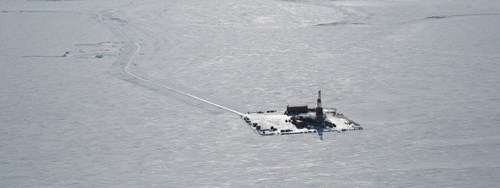
The political landscape for major U.S. oil and gas projects appears to be shifting, with recent congressional actions signaling a significant de-risking for long-term investments. House Republicans have launched an investigation into several prominent environmental organizations, scrutinizing their tactics and coordination in opposing ConocoPhillips’ $9 billion Willow project in Alaska. This move, coming after a series of unsuccessful legal challenges against the ambitious Arctic development, represents a substantial pivot that could clear regulatory hurdles and bolster investor confidence not just for Willow, but for future large-scale domestic energy endeavors. For investors closely watching the interplay between policy, environmental advocacy, and energy supply, this development offers a potent signal about the future direction of American energy strategy and the viability of long-term capital commitments in the sector.
Willow Project De-Risked: A Political Green Light for Arctic Development
The House Committee on Natural Resources, led by Representative Bruce Westerman, has initiated a formal inquiry into six environmental groups, including the Center for Biological Diversity, Earthjustice, and Greenpeace. The core of the investigation focuses on alleged “lawfare strategies” and “ethically dubious sue and settle tactics” employed to obstruct the Willow project. This isn’t merely political posturing; it’s a direct challenge to the often-effective litigation-based obstruction that has plagued major energy projects for years. The Willow project itself is monumental, projected to yield approximately 600 million barrels of crude over its three-decade lifespan, with production slated to commence in 2029. By actively scrutinizing the methods of project opponents, lawmakers are sending a clear message: the path to developing critical energy infrastructure, particularly projects deemed vital for “Alaskan economic prosperity and American energy security,” will be actively defended against what they perceive as undue obstruction. For ConocoPhillips, and indeed any operator contemplating large-scale, long-lead projects, this congressional backing significantly reduces the non-technical, regulatory, and legal risks that often inflate project costs and timelines. It signals a more predictable, and potentially more favorable, operating environment for major domestic energy investments.
Market Dynamics and the Long-Term Supply Horizon
While the immediate market reaction to political developments can be nuanced, the longer-term implications for supply are clear. As of today, Brent Crude trades at $93.5 per barrel, marking a significant daily gain of 3.39% within a range of $89.11 to $95.53. Similarly, WTI Crude stands at $89.86, up 2.79% from its daily low of $85.5, with retail gasoline prices also reflecting upward momentum at $3.12. This daily positive movement follows a period of considerable volatility; Brent crude, for instance, has seen a substantial decline from $118.35 on March 31st to $94.86 just yesterday, representing a nearly 20% drop in less than three weeks. This underscores the market’s sensitivity to both geopolitical risks and supply expectations. The progression of projects like Willow, which promise significant future output, offers a counter-narrative to short-term supply anxieties. The assured delivery of 600 million barrels of crude over 30 years from Willow, once fully online, represents a substantial contribution to global supply stability and U.S. energy independence. This political de-risking, therefore, acts as a long-term moderating factor, potentially cushioning against future price spikes driven by supply concerns and geopolitical disruptions, which are ever-present in the current energy landscape.
Investor Questions and Upcoming Catalysts
Our proprietary reader intent data reveals a clear and consistent investor focus on market direction, with common queries like “what do you predict the price of oil per barrel will be by end of 2026?” and “is WTI going up or down?” This reflects a deep-seated desire for clarity amid persistent volatility. The political developments surrounding the Willow project provide a tangible supply-side factor that analysts and investors can now incorporate into their forward-looking models. The next two weeks are packed with critical market catalysts that will further shape these predictions. On April 21st, the OPEC+ JMMC Meeting will offer crucial insights into global supply management and potential output adjustments. This will be swiftly followed by the EIA Weekly Petroleum Status Report on April 22nd and April 29th, which provides granular data on U.S. crude inventories, production, and demand. The Baker Hughes Rig Count on April 24th and May 1st will serve as a key indicator of U.S. drilling activity, potentially reflecting an uptick in confidence from producers in light of a more supportive regulatory environment. Finally, the EIA Short-Term Energy Outlook on May 2nd will deliver updated projections for supply, demand, and prices, which could begin to factor in the reduced risk profile for major domestic projects like Willow. These upcoming events, viewed through the lens of a potentially smoother path for large-scale production, offer a more robust framework for investors to evaluate long-term commodity price trends and investment opportunities.
Strategic Implications for ConocoPhillips and Future Arctic Investment
For ConocoPhillips, the Willow project is a cornerstone of its Alaskan portfolio, representing a significant long-term growth driver. The legislative scrutiny of environmental opposition directly tackles a primary source of uncertainty that has historically plagued such ventures. This move effectively strengthens the investment thesis for ConocoPhillips by reducing the likelihood of further costly and time-consuming legal battles. Beyond ConocoPhillips, this development sets a powerful precedent for other companies eyeing resource development in the Arctic and other challenging basins. The notion that “ethically dubious sue and settle tactics” can be challenged and potentially curtailed by political will offers a more attractive risk-reward profile for large-scale, long-lead projects. Investors should view this as a signal that the U.S. government is increasingly prioritizing energy security and economic development derived from domestic resources. This could unlock further investment in Alaska’s vast, untapped potential, potentially leading to a resurgence of exploration and production activities in the region. The ability to bring a project of Willow’s magnitude to fruition, with less interference from non-governmental organizations, could inspire a new wave of capital allocation towards U.S. frontier areas, ultimately enhancing the nation’s energy resilience and creating new opportunities for investors in the coming decades.