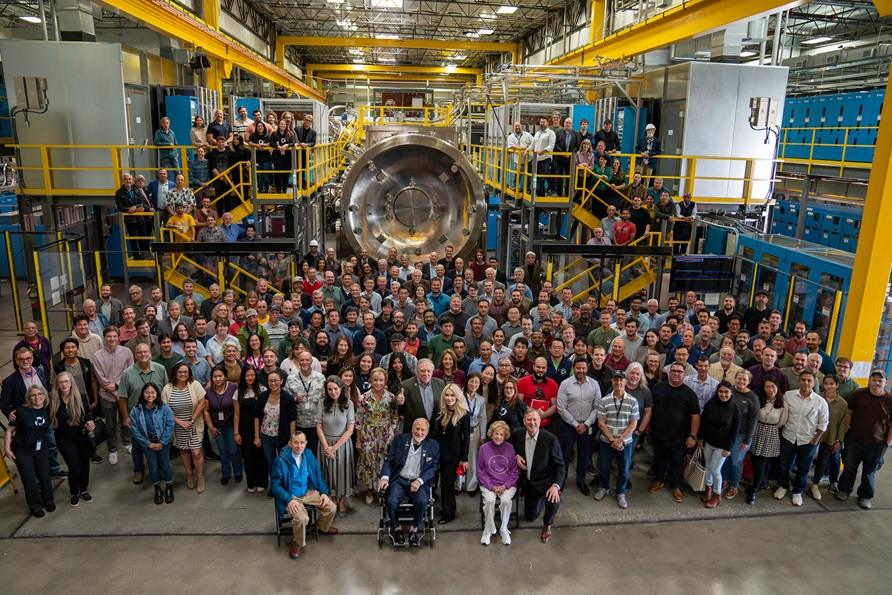
The recent announcement that TAE Technologies, a prominent fusion energy company, has secured an additional $150 million in funding, with notable participation from Google and Chevron, sends ripples through the broader energy investment landscape. While fusion remains a long-term aspiration, this significant capital injection, pushing TAE’s total equity raised to over $1.3 billion, signals growing confidence in the technology’s potential. For oil and gas investors, the question isn’t if fusion will eventually arrive, but rather when, and what its implications are for a sector currently navigating complex supply dynamics, geopolitical tensions, and the ongoing energy transition. This analysis delves into the immediate and distant ramifications, contrasting the promise of fusion with the immediate realities driving today’s oil and gas market.
Fusion’s Persistent Pursuit and Strategic Endorsements
TAE Technologies, established in 1998, has consistently pushed the boundaries of fusion research, focusing on its proprietary advanced beam-driven Field-Reversed Configuration (FRC). The company’s claims of safe, carbon-free, utility-scale power, devoid of long-lived radioactive waste, position it as a potential game-changer for future energy grids. Their modular systems are designed for quick, scalable deployment with a smaller footprint, integrating seamlessly with existing infrastructure. A critical element in their recent “breakthrough,” achieving stable plasmas at over 70 million °C, has been a decade-long collaboration with Google Research, which has applied AI to enhance plasma temperature and lifetime. This long-standing technical partnership, now solidified with direct investment from Google, underscores the tech giant’s commitment. Equally significant is the participation of Chevron, an oil and gas major, which highlights a strategic hedging approach within the traditional energy sector, recognizing the potential for future disruption while continuing to capitalize on current hydrocarbon markets. TAE’s roadmap outlines validation of net energy capability in its Copernicus reactor and aims for its first prototype power plant, Da Vinci, to be operational in the early 2030s, targeting the delivery of commercial fusion power.
Immediate Market Realities vs. Distant Energy Dreams
While the long-term vision of commercial fusion power is compelling, the day-to-day realities of the oil and gas market remain firmly rooted in conventional supply and demand fundamentals. As of today, April 15, 2026, Brent crude trades at $95.92 per barrel, marking a 1.19% increase for the day, with an intraday range spanning $91 to $96.89. Similarly, WTI crude stands at $92.37, also up 1.19%, trading between $86.96 and $93.3. These figures represent a rebound from the recent trend, where Brent experienced an 8.8% decline over the past 14 days, falling from $102.22 on March 25 to $93.22 on April 14. Gasoline prices, meanwhile, hold steady at $2.97 per gallon, reflecting a tight balance within a day range of $2.93-$3.00. These price movements are driven by a complex interplay of geopolitical events, inventory data, and economic outlooks – factors that currently dwarf the influence of even multi-billion dollar investments in fusion technology. The market’s immediate focus remains on tangible supply disruptions, demand fluctuations, and refining margins, not yet on power plants slated for the early 2030s.
Investor Focus: Navigating Near-Term Volatility Amidst Long-Term Shifts
Our proprietary reader intent data reveals a clear picture of what’s occupying the minds of oil and gas investors this week: immediate market dynamics. Investors are keenly focused on building base-case Brent price forecasts for the next quarter, understanding the performance of Chinese tea-pot refineries, and analyzing the drivers behind Asian LNG spot prices. There’s also significant interest in the consensus 2026 Brent forecast. This immediate focus underscores the disconnect between the exciting long-term potential of fusion and the pressing need for tactical investment decisions in the traditional energy space. While Google and Chevron’s investment in TAE Technologies is a significant signal of future energy trends, it doesn’t alter the current supply-demand calculus that dictates crude prices and refining margins. Investors are grappling with tangible variables like OPEC+ output decisions and weekly inventory changes, rather than the developmental timelines for technologies that are still a decade away from commercial deployment. The news, while certainly a talking point, serves more as a reminder of the energy transition’s ultimate destination than a factor influencing immediate trading strategies.
Upcoming Events: The Unwavering Drivers of Oil & Gas Markets
Looking ahead, the next two weeks will be dominated by a series of critical events that directly impact oil and gas market sentiment and pricing, demonstrating where investor attention must remain. On April 17th and again on April 24th, the Baker Hughes Rig Count will offer insights into North American drilling activity, providing a leading indicator for future production trends. More significantly, the OPEC+ Joint Ministerial Monitoring Committee (JMMC) meeting on April 18th, followed by the full Ministerial Meeting on April 20th, will be pivotal. These gatherings will determine the alliance’s production policy for the coming months, directly influencing global supply and, consequently, the Brent price forecasts that investors are so eager to establish. Following these key policy events, weekly data releases will provide granular insights into market health. The API Weekly Crude Inventory reports on April 21st and April 28th, coupled with the EIA Weekly Petroleum Status Reports on April 22nd and April 29th, will offer crucial indicators of U.S. crude, gasoline, and distillate stock levels, reflecting demand strength and supply balances. These near-term, data-driven events continue to be the primary catalysts for price movements and investment decisions in the conventional energy sector, far outweighing the long-term, albeit revolutionary, promise of fusion energy for the foreseeable future.
Conclusion: A Dual Path for Energy Investors
The substantial funding secured by TAE Technologies, bolstered by the long-term commitment of Google and the strategic investment from Chevron, undeniably marks a significant milestone in the pursuit of fusion energy. It underscores a growing conviction that carbon-free, virtually limitless power could become a reality within the next decade. However, for investors navigating the volatile oil and gas markets, this future vision exists in parallel with an immediate present defined by traditional energy fundamentals. Current crude prices, influenced by geopolitical currents and supply-demand imbalances, remain the primary focus. Upcoming OPEC+ decisions and weekly inventory reports will continue to be the most critical drivers of market sentiment and price action. While the energy transition inevitably points towards innovative solutions like fusion, the hydrocarbon economy, and the investment opportunities it presents, will persist and evolve for many years to come. Astute energy investors must therefore maintain a dual perspective: monitoring the cutting edge of energy innovation while expertly navigating the tangible, near-term forces that shape today’s oil and gas landscape.


