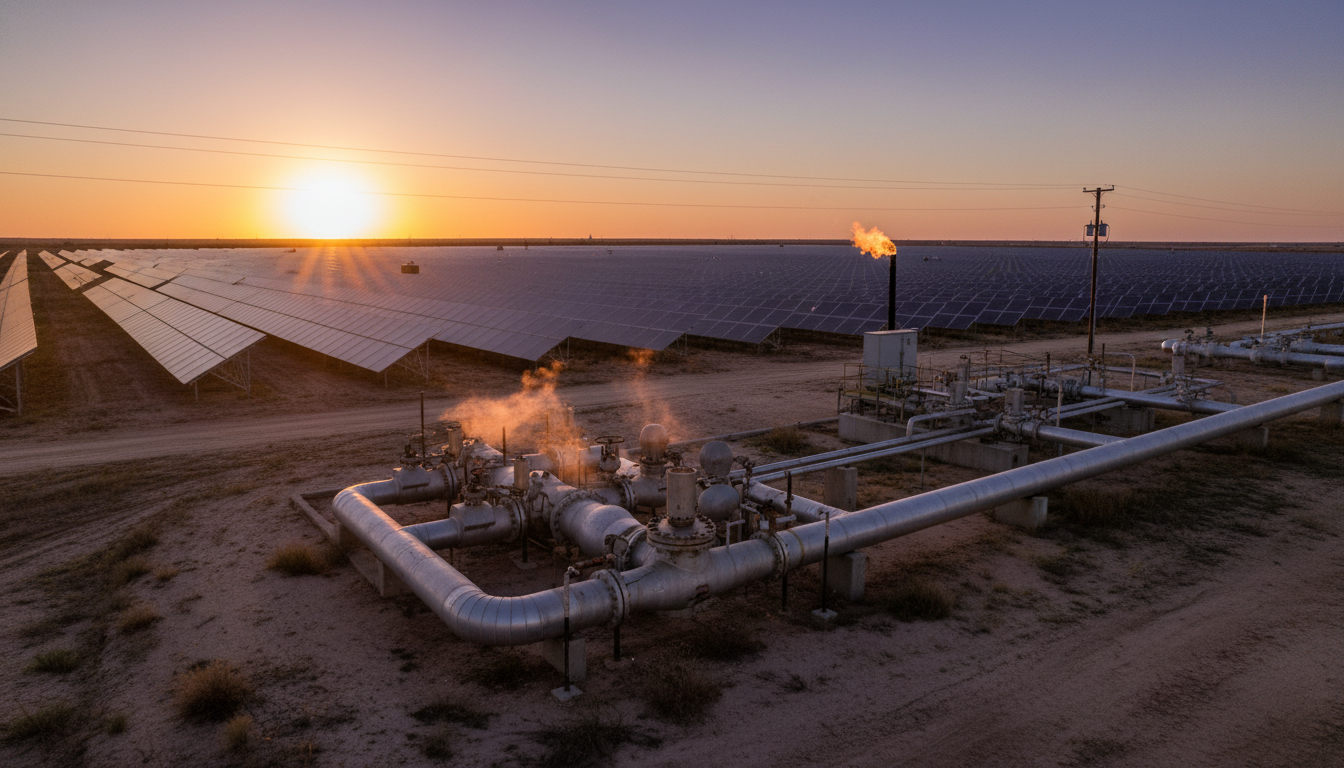
In a significant move underscoring the accelerating energy transition, tech giant Google recently finalized a substantial 15-year Power Purchase Agreement (PPA) with Linea Energy. This landmark deal commits to procuring 500 megawatts (MW) of clean electricity from a new solar facility slated for construction in Texas. For investors monitoring the evolving energy landscape, this transaction highlights the immense capital flowing into renewable generation, driven by the insatiable energy demands of hyperscale data centers. The implications for traditional oil and gas markets, particularly in a powerhouse energy state like Texas, warrant close scrutiny.
This latest PPA forms part of Google’s aggressive strategy to decarbonize its extensive global operations, with a specific focus on powering its burgeoning data center infrastructure within the Lone Star State. The sheer scale of Google’s commitments in 2024 alone provides a clear indicator of market direction. Earlier this year, the company secured a 1-gigawatt (GW) solar PPA with energy major TotalEnergies, also in Texas, in February. This followed closely on the heels of a massive 1.2 GW agreement struck with Clearway in January, designed to supply data centers across Missouri, Texas, and West Virginia. These multi-gigawatt procurement efforts demonstrate a consistent, long-term capital allocation strategy towards renewable energy sources by one of the world’s largest corporate energy consumers.
Google’s Aggressive Decarbonization Blueprint and Market Impact
Google’s environmental objectives are ambitious, setting a 2030 target to achieve net-zero emissions across its entire operational footprint and value chain. Central to this vision is its “24/7 Carbon-Free Energy (CFE)” ambition, which aims to match electricity demand with carbon-free supply every hour of every day, in every region where it operates. This goes beyond simply offsetting annual consumption, demanding a constant, reliable supply of clean power. Since 2010, Google has cemented over 170 agreements to purchase more than 23 GW of clean energy generation, solidifying its position as a leading corporate buyer in the renewable energy sector. For oil and gas investors, this trend represents a permanent shift in demand patterns from major industrial and tech players, compelling a re-evaluation of long-term demand forecasts for fossil fuels in grid-scale power generation.
Will Conkling, Director of Energy and Power at Google, articulated the broader economic benefits, stating, “By collaborating with Linea Energy to bring new low-cost power to the grid, we are helping to ensure the Lone Star State’s energy system remains affordable for local families and businesses.” This emphasis on affordability, coupled with clean energy, positions renewables as a cost-competitive alternative, a narrative that increasingly challenges the economic stronghold of traditional baseload power sources, including natural gas.
The Duffy Solar Project: A New Frontier in Texas
The 500 MW power supply under the new agreement will originate from Linea Energy’s Duffy Solar Project. This formidable installation will span approximately 3,526 acres in Matagorda, Texas, a region deeply intertwined with the state’s traditional energy economy. The project is strategically positioned to bolster Google’s data center operations within the Electric Reliability Council of Texas (ERCOT) market. ERCOT, which governs roughly 90% of the state’s electrical grid and serves approximately 26 million customers, is a critical battleground for the energy transition. Its unique, largely isolated grid structure makes it an intriguing case study for how large-scale renewable integration impacts grid stability and market dynamics.
Construction for the Duffy Solar Project is slated to commence in the third quarter of 2026. Significantly, the solar farm will be co-located with a 235 MWac Duffy Battery Energy Storage System (BESS) project, which is already under construction. The inclusion of a large-scale BESS is a crucial detail for oil and gas investors. It acknowledges the inherent intermittency of solar power and highlights the escalating need for energy storage solutions to maintain grid reliability. While BESS deployments are expanding rapidly, they still complement, rather than entirely replace, the dispatchable power provided by natural gas peaker plants and combined cycle facilities, especially during periods of low renewable output or peak demand spikes. This creates a fascinating hybrid investment landscape where natural gas infrastructure may see continued demand for firming capacity, even as renewable generation proliferates.
Strategic Implications for Oil and Gas Capital
Cassidy DeLine, Chief Executive Officer of Linea Energy, commented on the deal’s significance, stating, “We are pleased to sign this agreement to supply clean energy in Texas to Google, one of the world’s largest buyers of clean power. This transaction highlights Linea’s credibility amongst the largest hyperscalers and the ability to support affordability and grid reliability.” The “hyperscaler” reference is key; these tech giants possess vast financial resources and an urgent imperative for clean energy, driving an unprecedented surge in utility-scale renewable development. This sustained demand for clean power from corporate buyers effectively de-risks renewable projects, attracting substantial institutional capital that might otherwise be directed towards conventional energy assets.
For oil and gas companies, particularly those operating within ERCOT, these developments present both challenges and opportunities. The challenge lies in navigating a market increasingly saturated with low-cost renewable generation, which can depress wholesale power prices and erode margins for traditional generators. However, opportunities abound for those willing to adapt. Investment in natural gas-fired generation with advanced carbon capture technologies, or strategic partnerships in hybrid renewable-storage projects, could offer compelling pathways. Furthermore, the expertise of oil and gas firms in large-scale project development, complex logistics, and subsurface engineering (for CCS or geothermal) remains highly valuable. As Google and other tech titans accelerate their pivot towards 24/7 CFE, the demand for sophisticated, reliable energy solutions that can integrate seamlessly with intermittent sources will only grow. This necessitates not just more renewables, but also smarter grid infrastructure, enhanced storage capabilities, and the enduring flexibility that only dispatchable power, often from natural gas, can currently provide on a large scale. Investors must recognize that the energy transition is not a simple replacement but a complex evolution, requiring a nuanced understanding of capital flows and technological interplay.


