Gold’s $4K Resistance: A Bellwether for Oil & Gas Investors?
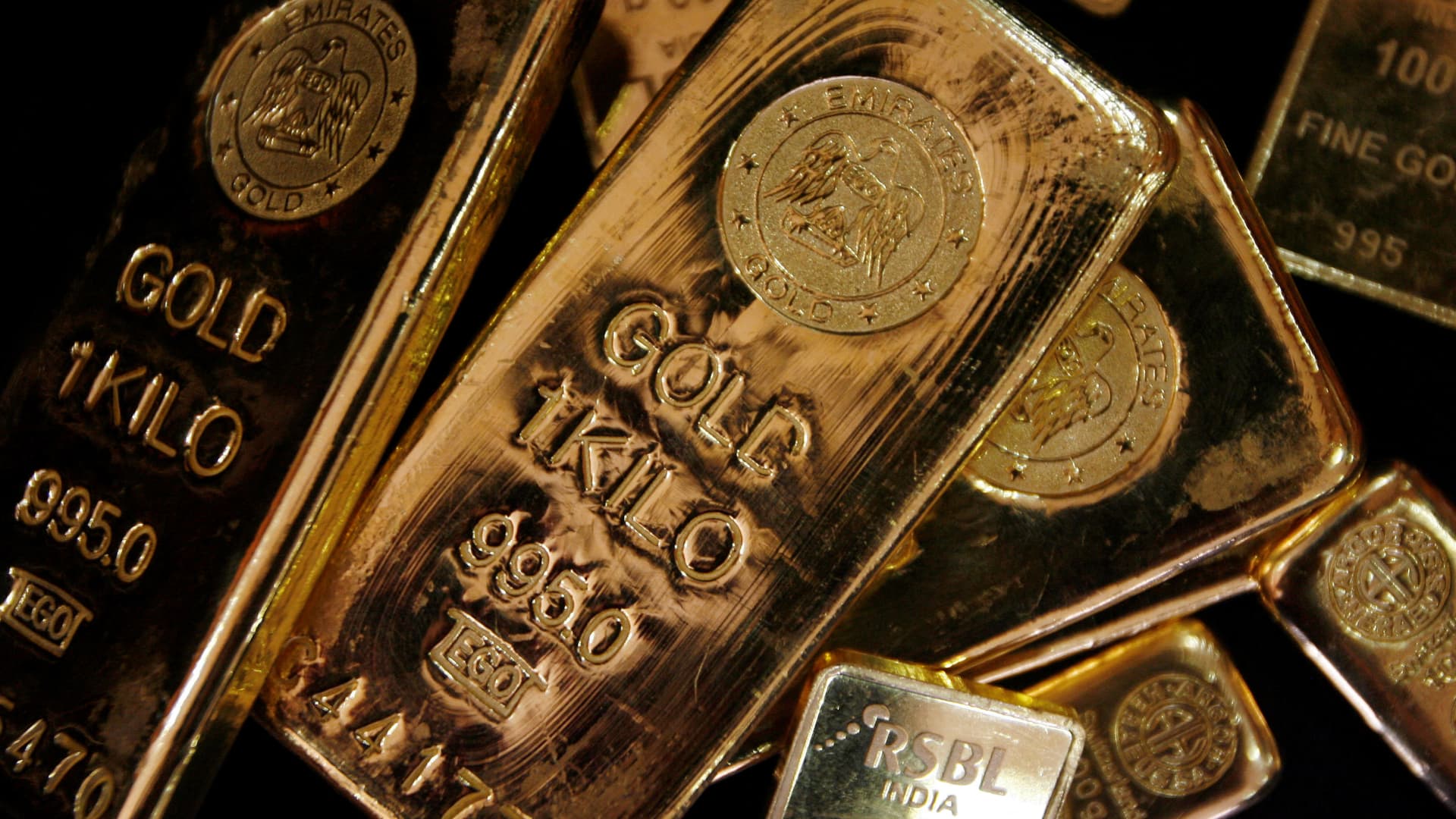
The recent surge in gold prices, culminating in its historic breach of the $4,000 per ounce mark, has generated significant buzz across financial markets. While gold is often viewed in isolation as a precious metal, its underlying drivers – geopolitical instability, inflationary pressures, and economic uncertainty – have profound implications for the oil and gas sector. As leading analysts caution that gold’s rapid ascent may be nearing “uptrend exhaustion” and could face a “consolidation or correction” phase, energy investors must closely watch these signals. The same forces that propel safe-haven assets can either buoy or buffet crude markets, making a deep dive into gold’s trajectory a crucial exercise for understanding the broader investment landscape for oil and gas.
Decoding Gold’s Safe Haven Rally and Its Energy Market Echoes
Gold’s impressive approximately 50% gain this year, propelling it past the $3,000 threshold without significant resistance before challenging $4,000, reflects a powerful confluence of macroeconomic and geopolitical factors. Investors have flocked to the precious metal as a hedge against a weaker dollar, persistent inflation, and escalating global tensions. For oil and gas investors, these same dynamics are critical. A weaker dollar typically makes dollar-denominated commodities like crude oil more attractive to international buyers, potentially supporting prices. Similarly, geopolitical volatility can directly impact oil supply routes and production, often leading to price spikes. However, the shadow of economic uncertainty, which also drives gold’s appeal, presents a more complex picture for crude demand. Our reader intent data shows investors are keenly asking, “What do you predict the price of oil per barrel will be by end of 2026?” This question underscores a fundamental concern about the long-term balance between inflation-driven commodity strength and potential demand destruction from a slowing global economy. Understanding gold’s technical exhaustion at key psychological levels, like the $4,000 mark, can offer a leading indicator for how broader market sentiment might soon shift regarding other inflation-sensitive assets, including energy.
Current Crude Volatility and Technical Signals from the Front Line
While gold has been scaling new heights, the crude oil market has demonstrated its own brand of intense volatility. As of today, Brent crude trades at $90.38 per barrel, marking a significant 9.07% decline on the day, having oscillated wildly within a daily range of $86.08 to $98.97. WTI crude similarly experienced a sharp downturn, falling to $82.59, a substantial 9.41% drop, after trading between $78.97 and $90.34. This sharp daily correction comes on the heels of a more prolonged retreat; Brent crude has shed nearly 20% of its value, dropping from $112.78 on March 30th to its current level in less than three weeks. Gasoline prices reflect this pressure, currently at $2.93, down 5.18% today. This pronounced downturn in crude, even amidst gold’s strong performance, suggests that the energy market might be exhibiting its own form of “uptrend exhaustion” or facing significant technical resistance. Analysts noted gold’s historical tendency to peak when trading 25% above its 200-day moving average, as seen in August 2020, August 2011, March 2008, and May 2006. With gold now trading 20% above its 200-day moving average, the parallel for crude is clear: after a period of strength, a market correction or consolidation phase often follows when an asset becomes technically overextended. For oil, the recent rapid descent indicates that supply-demand fundamentals, perhaps amplified by broader economic concerns, are asserting themselves forcefully, potentially signaling a pivotal moment for price direction.
Navigating Forward: Upcoming Catalysts and Investor Concerns
The immediate future for oil and gas prices will be heavily influenced by a series of critical events and data releases, which our proprietary event calendar highlights. The upcoming OPEC+ Ministerial Meeting on April 19th is paramount. Investors are asking “What are OPEC+ current production quotas?” and this meeting will provide crucial insights into whether the alliance plans to adjust output levels in response to recent price volatility and global demand outlooks. Any deviation from current production policies could trigger significant market movements. Following this, the API Weekly Crude Inventory reports on April 21st and 28th, and the EIA Weekly Petroleum Status Reports on April 22nd and 29th, will offer essential granular data on U.S. crude stockpiles, refinery activity, and product demand. These reports are vital for assessing the near-term supply-demand balance. Furthermore, the Baker Hughes Rig Count on April 24th and May 1st will provide a forward-looking indicator of future drilling activity and potential production growth in North America. These scheduled events will either reinforce current market trends or introduce new catalysts, directly impacting the performance of energy companies. For example, investor questions like “How well do you think Repsol will end in April 2026?” underscore the direct link between these macro and industry-specific events and company valuations. Strategic investors will be closely monitoring these dates, using the incoming data to refine their positions and anticipate market shifts, especially if gold’s technical signals prove prescient for broader commodity markets.
Investment Implications for Oil & Gas Portfolios
The signals emanating from the gold market, combined with current crude price action and a packed calendar of energy-specific events, necessitate a vigilant and strategic approach for oil and gas investors. Gold’s potential “uptrend exhaustion” serves as a cautionary tale: even strong rallies can face significant pullbacks or consolidation. For crude, the sharp recent declines and the nearly 20% drop in Brent over the past two weeks suggest that the market is grappling with its own set of challenges, despite ongoing geopolitical risks. Investors should consider how a potential shift in broader safe-haven sentiment or a cooling of inflation expectations, indicated by gold’s performance, could impact the premium currently embedded in oil prices. The upcoming OPEC+ meeting, coupled with weekly inventory and rig count data, will be instrumental in shaping the market’s trajectory. Active portfolio management, with a keen eye on both macro indicators like gold’s technical health and micro drivers within the energy sector, is essential. Leveraging proprietary data and forward-looking analysis, such as that provided by OilMarketCap, becomes critical for identifying potential opportunities or managing risk in this dynamic environment. As the market enters what could be a pivotal period, informed decision-making, rather than reactive trading, will differentiate successful energy investment strategies.