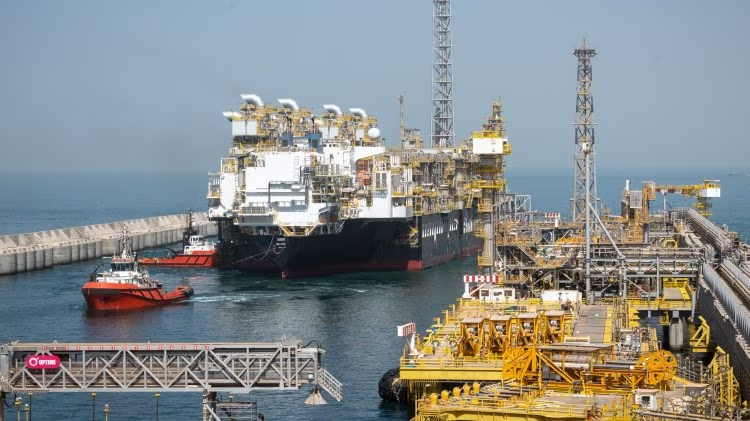
The global energy landscape continues to evolve, with natural gas, particularly in its liquefied form (LNG), playing an increasingly pivotal role in bridging energy security gaps and supporting cleaner energy transitions. A significant development for investors tracking this space is the recent achievement of Commercial Operations Date (COD) for Golar LNG’s FLNG Gimi vessel, a cornerstone of the Greater Tortue Ahmeyim (GTA) gas project offshore Mauritania and Senegal. This milestone marks not just the commencement of a critical 20-year lease-and-operate agreement, but also unlocks a substantial $3 billion in adjusted EBITDA backlog for Golar, fundamentally strengthening its financial outlook and solidifying Africa’s position as an emerging LNG powerhouse. For investors seeking durable returns in the energy sector, understanding the implications of this project against the backdrop of current market dynamics and future catalysts is essential.
Golar LNG’s De-Risked Growth Trajectory and Robust Backlog
The commercial launch of the FLNG Gimi is a transformative event for Golar LNG, moving a major project from development to revenue generation. The 20-year lease agreement for the GTA project provides a long-term, stable cash flow stream, directly translating into the reported $3 billion adjusted EBITDA backlog. This substantial figure offers investors a clear view of Golar’s future earnings visibility, significantly de-risking its growth profile. The Gimi unit is set to initially produce 2.4 million tonnes per annum (MMtpa) of LNG, with a planned ramp-up to 2.7 MMtpa, tapping into an estimated 15 trillion cubic feet (Tcf) of natural gas reserves. This capacity not only secures Golar’s position as a key player in the floating LNG market but also underpins its ability to generate predictable returns over the coming decades. The strategic importance of such long-term contracts in volatile energy markets cannot be overstated, providing a stable foundation for Golar’s continued expansion.
Africa’s Emerging LNG Frontier and Global Energy Security
The GTA project is more than just a financial win for Golar LNG; it is a critical step in positioning Mauritania and Senegal as significant players in the global LNG market. This development, nestled within the broader MSGBC Basin, underscores Africa’s growing potential as a vital source of natural gas for global consumption. Beyond GTA, Golar LNG is actively expanding its footprint across the continent. Notably, a Project Development Agreement was recently signed with the Nigerian National Petroleum Company Limited for a new FLNG facility in the Niger Delta, designed to liquefy 400-500 million cubic feet per day (MMcfgd). This initiative aligns with Nigeria’s “Decade of Gas Initiative,” aiming to leverage its 209 Tcf of reserves to enhance domestic access to cleaner energy and boost export capabilities. Golar’s established success in Cameroon since 2018 with the Hilli Episeyo FLNG facility further demonstrates its pioneering role. These collective efforts from Golar and host nations are crucial for bolstering regional and global energy security, diversifying supply sources, and fostering significant economic growth in resource-rich African economies.
Navigating the Broader Energy Landscape: Investor Focus on LNG Amidst Crude Volatility
Against the backdrop of Golar’s recent success, investors are keenly observing the broader energy market. Our proprietary reader intent data reveals a strong interest in understanding the drivers behind Asian LNG spot prices and building robust Brent crude price forecasts for the coming quarter. This indicates a dual focus on both natural gas and crude dynamics. As of today, Brent crude trades at $94.93, showing a modest uptick of 0.15% within a daily range of $91-$96.89. WTI crude similarly saw a 0.12% gain to $91.39. However, a glance at the 14-day trend reveals Brent crude retreating from $102.22 on March 25th to $93.22 on April 14th, marking an 8.8% decline. This recent volatility in crude prices highlights the appeal of stable, long-term contracted LNG projects. While crude prices remain sensitive to geopolitical events and supply-demand imbalances, LNG projects like GTA offer a degree of insulation through their long-term off-take agreements. Investors are increasingly seeking assets that provide predictable returns and contribute to energy security, making Golar’s strategy of de-risked, contract-backed LNG production particularly attractive in the current climate.
Upcoming Catalysts and the Future Path for African Gas Monetization
The investment landscape for energy is dynamic, with several upcoming events poised to influence market sentiment and strategic direction. While direct LNG-specific events are less frequent, broader industry and OPEC+ meetings provide crucial macroeconomic context. Investors will be monitoring the Baker Hughes Rig Count on April 17th and 24th for insights into drilling activity and potential supply trends. More significantly, the OPEC+ Joint Ministerial Monitoring Committee (JMMC) meeting on April 18th, followed by the Full Ministerial meeting on April 20th, will offer clarity on crude oil production policies. Although these directly concern crude, their outcomes can sway overall energy market sentiment, indirectly impacting investor confidence in capital-intensive gas projects. The long-term outlook for African gas monetization remains exceptionally strong. As more countries like Ivory Coast, Gabon, Equatorial Guinea, Ghana, Mozambique, and Tanzania look to harness their offshore gas reserves, the demand for innovative and reliable partners such as Golar LNG will only intensify. The successful commercialization of GTA serves as a powerful proof point, paving the way for further investment and development across Africa’s vast natural gas value chain.