Geopolitical Tensions Reshape Global Shipping: A Critical Lens for Energy Investors
The intricate web of global energy supply chains is once again under intense scrutiny as escalating geopolitical tensions in the Middle East cast a long shadow over vital maritime corridors. These developments are not merely headlines; they represent tangible risks to the cost and reliability of oil and gas delivery, directly impacting energy sector valuations and investor strategies. At OilMarketCap.com, our proprietary data indicates a market grappling with this renewed uncertainty, even as crude prices exhibit complex dynamics. Understanding the immediate ramifications for shipping, the potential for prolonged supply chain friction, and the forward-looking market signals is paramount for investors navigating this volatile landscape.
The Chokepoint Squeeze: Immediate Market Reactions and Supply Implications
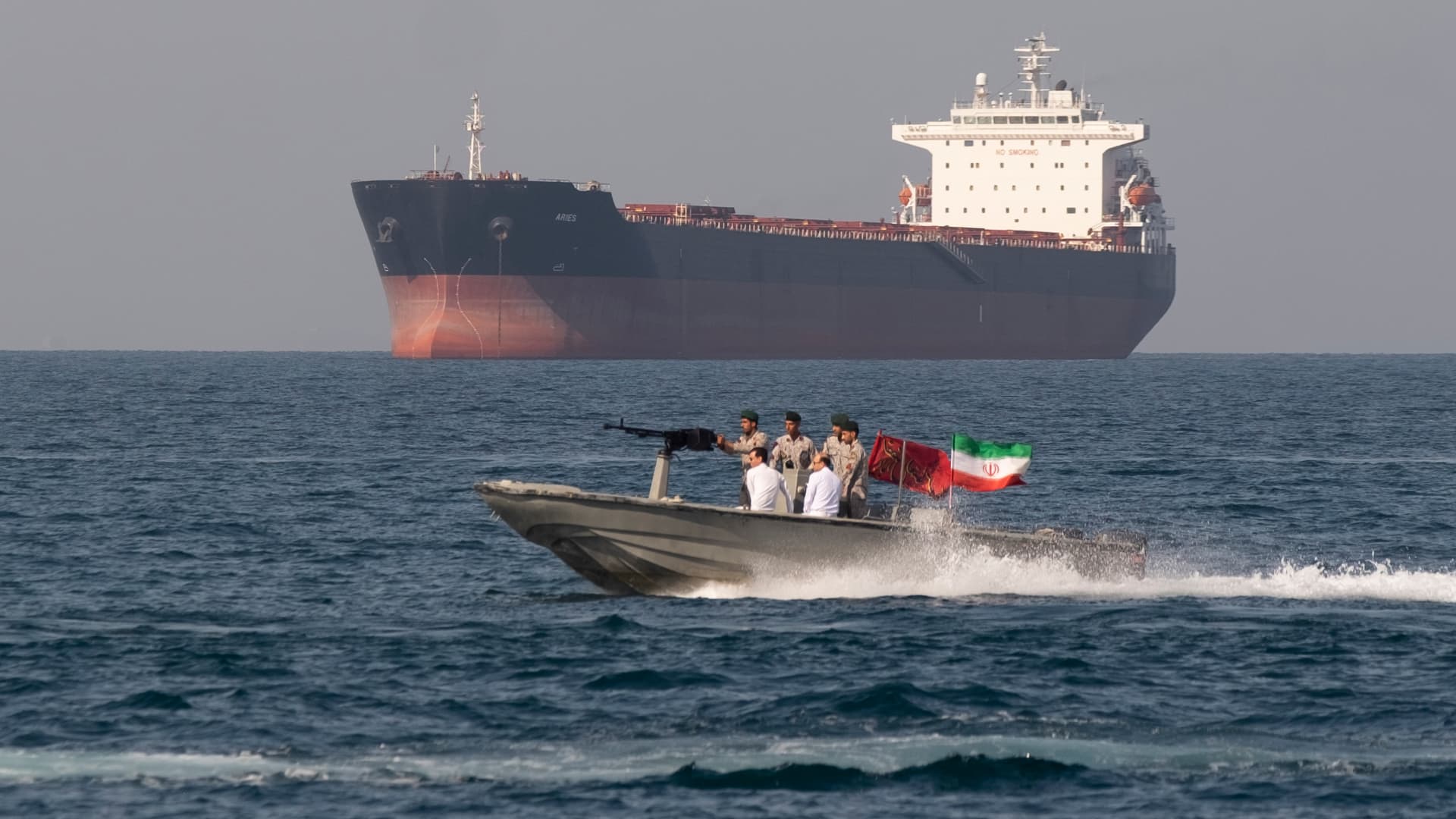
The recent suspension of operations by major container shipping companies through critical waterways like the Strait of Hormuz and the Bab el-Mandeb Strait sends a clear signal of heightened risk. The Strait of Hormuz, nestled between Oman and Iran, is undeniably one of the world’s most significant oil chokepoints, funneling an average of 20.9 million barrels per day in 2023. This represents a staggering 20% of global petroleum liquids consumption. Meanwhile, the Bab el-Mandeb Strait, linking the Red Sea to the Gulf of Aden, accounted for an estimated 12% of seaborne oil trade and 8% of liquefied natural gas (LNG) trade in the first half of 2023. Rerouting vessels around the southern tip of Africa, as giants like Maersk have announced, immediately adds thousands of miles and considerable time to voyages. As of today, Brent Crude trades at $93.83, marking a +0.63% increase within a daily range of $93.52-$94.21. WTI Crude similarly saw an uptick, reaching $90.43, up +0.85% for the day. This current upward movement reflects a market attempting to price in the potential for supply disruption, contrasting sharply with a challenging two-week period where Brent had shed nearly 20%, falling from $118.35 on March 31st to $94.86 by April 20th. This shift indicates that while broader market pressures may have driven recent declines, the immediate geopolitical flare-up is introducing a fresh bullish impulse, underscoring the sensitivity of crude prices to perceived supply vulnerabilities.
Beyond the Barrel Price: The Cost Escalation Across the Energy Value Chain
The impact of these shipping disruptions extends far beyond the spot price of crude. Increased transit times translate directly into higher operating costs for shipping companies, which are invariably passed down the supply chain. Fuel consumption rises significantly when rerouting around the Cape of Good Hope, contributing to elevated bunker fuel demand and, subsequently, higher freight rates. For energy investors, this means a multi-faceted cost increase. Exploration and production (E&P) companies might face higher costs for equipment and personnel transportation. Refiners could see increased expenses for crude feedstock delivery and refined product exports. Consumers, ultimately, will bear the brunt through higher gasoline prices, which currently stand at $3.13. Industry analysts, such as Peter Sand from Xeneta, rightly point out that there is “no real alternative” to ocean freight for the vast majority of global trade, making these higher container shipping rates a persistent factor as long as the conflict endures. This scenario introduces a layer of “geopolitical fatigue” for global logistics, as companies continually adapt to new risks, highlighting a growing need for supply chain resilience and diversified shipping strategies in energy portfolios.
Navigating Uncertainty: Upcoming Events and Investor Insights
Investors are keenly focused on the trajectory of oil prices, with questions ranging from the immediate direction of WTI to predictions for the end of 2026. While definitive forecasts are elusive in such a dynamic environment, our proprietary reader intent data reveals a strong interest in understanding underlying market drivers. The current shipping disruptions introduce a significant upward risk factor. However, the market will also be heavily influenced by a series of critical upcoming events. This week, the OPEC+ JMMC Meeting on April 21st (Tuesday) could signal any shifts in production policy that would directly counter or amplify the shipping-induced supply concerns. Following this, the EIA Weekly Petroleum Status Reports on April 22nd (Wednesday) and April 29th (Wednesday) will provide crucial insights into U.S. crude inventories, refining activity, and demand indicators. These reports are vital for gauging the health of the world’s largest oil consumer and its capacity to absorb or exacerbate global supply shocks. Further data points like the Baker Hughes Rig Count on April 24th (Friday) and May 1st (Friday) offer a glimpse into future U.S. production trends. Looking further ahead, the EIA Short-Term Energy Outlook on May 2nd (Saturday) will offer a comprehensive forecast that will undoubtedly incorporate the latest geopolitical and shipping developments, providing a critical benchmark for investor expectations regarding oil prices through the remainder of 2026. Investors should meticulously track these data releases, as they will provide essential context for how the market is truly processing the interplay between geopolitical risk and fundamental supply-demand balances.
Strategic Portfolio Adjustments for a Risky Shipping Environment
Given the persistent and intensifying nature of geopolitical risks impacting global shipping, energy investors must consider strategic adjustments to their portfolios. Companies with robust logistical frameworks, diversified shipping routes, or substantial regional energy assets may prove more resilient. Investors should evaluate the exposure of their holdings to specific maritime choke points and assess the potential for increased operational costs to erode margins. Consideration should be given to energy companies with strong balance sheets that can absorb higher freight costs or invest in more resilient supply chains. Furthermore, the long-term implications of these disruptions could accelerate investment in localized energy production or alternative energy sources, reducing reliance on long-distance maritime transport. While the immediate focus remains on crude price volatility, a holistic investment strategy must account for the evolving and increasingly costly landscape of global energy logistics. The current environment demands vigilance, detailed analysis of market fundamentals, and an understanding of how geopolitical events translate into tangible financial impacts across the entire energy sector.