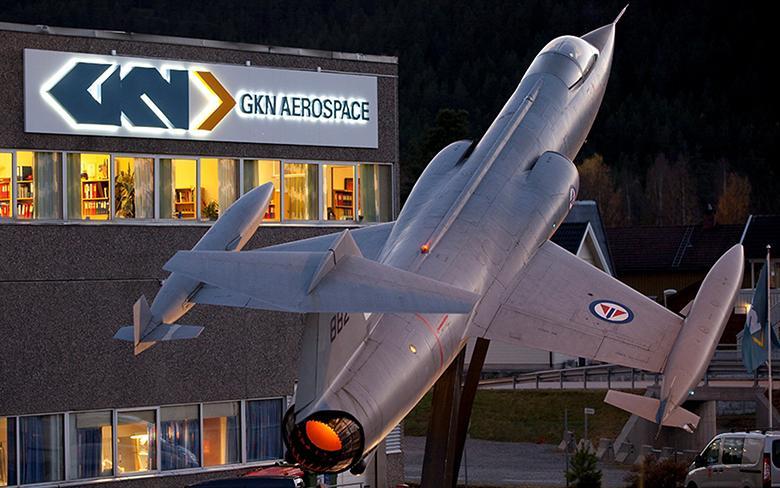
In a strategic maneuver that offers valuable insights for investors across capital-intensive industries, GKN Aerospace Norway recently completed a sale and leaseback transaction of its facilities in Kongsberg Technology Park. This move, far from a simple real estate deal, represents a sophisticated approach to capital reallocation, designed to unlock significant funds for production expansion and critical investments in advanced manufacturing technologies. For investors closely monitoring the energy sector, this strategy underscores a broader trend: companies are prioritizing financial flexibility and operational efficiency to navigate an increasingly dynamic global economic landscape, even as commodity markets present complex signals.
Strategic Capital Reallocation Amidst Market Volatility
GKN Aerospace Norway’s decision to monetize its fixed assets while securing a long-term lease-back exemplifies a shrewd financial engineering strategy, one that resonates deeply within the oil and gas investment community. By converting property ownership into operational capital, the company gains substantial liquidity without disrupting its core operations or strategic industrial footprint. This approach is particularly pertinent in an environment characterized by fluctuating energy prices and the continuous demand for technological upgrades.
As of today, Brent crude trades at $90.22, reflecting a marginal daily dip of 0.23%, while WTI sits at $86.67, down 0.86%. This relative stability in daily trading belies a more significant shift observed over the past fortnight, with Brent crude having retreated from $118.35 on March 31st to $94.86 by April 20th – a substantial reduction of nearly 20%. Such volatility in benchmark prices heightens the imperative for companies across all industrial sectors, including oil and gas exploration and production, to maintain robust balance sheets and flexible capital structures. GKN’s move ensures that capital can be directed precisely where it’s needed most: into tangible assets that enhance productivity and competitiveness, rather than being tied up in non-core real estate.
Fueling Future Growth: Capacity, Efficiency, and the Energy Nexus
The primary objective behind GKN’s transaction is to fund a significant expansion program, focusing on new production facilities, advanced machinery, and enhanced manufacturing technology. This drive for increased capacity and improved operational efficiency is a common theme across global heavy industries, including the energy sector. Higher demand for aerospace components, fueled by both commercial aviation recovery and increased defense spending, translates indirectly into greater demand for jet fuel and, consequently, crude oil. Therefore, GKN’s growth trajectory has tangible linkages to the broader energy market’s health.
Furthermore, the emphasis on “advanced manufacturing investments” and “efficiency gains” aligns with critical ESG (Environmental, Social, and Governance) considerations now central to investment theses in oil and gas. Modern equipment reduces energy consumption, minimizes material waste, and improves overall carbon footprint—factors that are increasingly scrutinized by investors. The pursuit of resilient supply chains, highlighted in the context of Norway’s industrial policy, is equally critical for energy companies navigating geopolitical risks and ensuring consistent global energy supply. This strategic investment in core capabilities positions GKN Aerospace Norway for sustained growth, mirroring the prudent capital allocation strategies seen in leading energy firms aiming for long-term value creation.
Navigating Price Uncertainty: What Investors are Asking
Our proprietary reader intent data offers a direct window into the prevailing concerns of oil and gas investors. A recurring theme in recent queries revolves around future price trajectories, with questions such as “will WTI go up or down?” and “what do you predict the price of oil per barrel will be by end of 2026?” dominating discussions. This reflects a deep-seated uncertainty about the stability and direction of commodity markets, a sentiment that directly influences investment decisions in companies whose fortunes are tied to these prices.
GKN’s strategic move provides a tangible response to this environment of price uncertainty. By freeing up capital through a sale-leaseback, the company fortifies its financial position, enabling it to pursue critical expansion and technological upgrades irrespective of short-term market fluctuations. This approach allows management to focus on long-term value creation through operational excellence and market share gains, rather than being unduly constrained by daily or quarterly commodity price swings. For investors seeking resilience in their portfolios, backing companies that demonstrate such proactive capital management strategies, whether in aerospace or oil and gas, becomes paramount.
Forward Momentum: Upcoming Events and Strategic Positioning
The broader energy market calendar provides crucial context for understanding the strategic implications of GKN’s capital unlocking. While GKN Aerospace Norway’s direct operations are not tied to energy reporting, the global economic and industrial environment in which they operate is significantly influenced by these events. The upcoming OPEC+ Joint Ministerial Monitoring Committee (JMMC) Meeting on April 21st, for instance, could provide critical signals regarding global oil supply policy, directly impacting crude prices and, by extension, industrial confidence and demand for aerospace components.
Further insights into market dynamics will come from the EIA Weekly Petroleum Status Reports on April 22nd and 29th, offering snapshots of inventory levels and demand trends. Similarly, the Baker Hughes Rig Count on April 24th and May 1st provides a leading indicator for future production activity. Investors keenly anticipating clarity on future oil prices, echoing the questions from our readers, will be particularly focused on the EIA Short-Term Energy Outlook scheduled for May 2nd. GKN’s strategic investments in capacity and efficiency are designed to position the company strongly, enabling it to capitalize on sustained industrial growth and demand, regardless of the precise short-term path taken by energy prices. This proactive approach ensures readiness for an evolving global economy, making it a compelling case study for capital deployment in a dynamic investment landscape.


