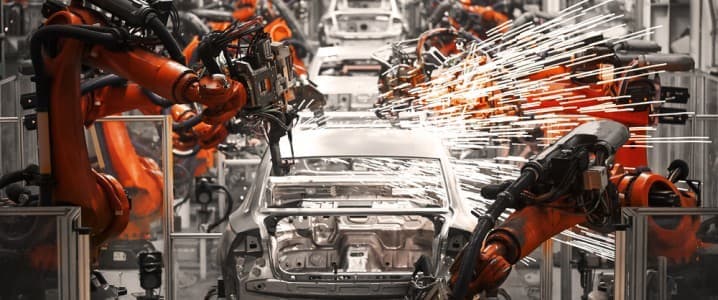
A significant development from Germany this week offers a potential recalibration for long-term oil demand forecasts, suggesting a less aggressive timeline for the European Union’s energy transition than previously anticipated. Chancellor Friedrich Merz announced Germany’s intention to lobby the EU for exemptions to the proposed 2035 ban on new gasoline and diesel passenger cars, specifically advocating for the continued sale of plug-in hybrids and highly efficient conventional vehicles. This strategic pivot, driven by concerns over the competitiveness and stability of Germany’s vital automotive manufacturing sector, could introduce a notable upside risk to future crude consumption, warranting close attention from energy investors.
Germany’s Policy Shift: A Boost for Long-Term Oil Demand?
Germany, home to Europe’s largest and most influential auto industry, is making a pragmatic move to safeguard its economic interests. The ruling coalition recognizes the precarious situation facing its car manufacturers, which have contended with U.S. tariffs, Chinese export restrictions on rare earths, and heightened competition from lower-cost Chinese electric vehicles. By seeking to soften the 2035 ban, the German government aims to foster “innovation-friendly and technology-neutral regulations” that balance climate goals with industrial competitiveness. This stance is a direct response to warnings from industry giants like BMW, which previously stated the hard 2035 deadline was “no longer realistic” given the slow pace of EV adoption and the potential for “massive shrinking” of the European auto sector.
For oil and gas investors, this represents a crucial development. A prolonged lifespan for plug-in hybrids and highly efficient internal combustion engine (ICE) vehicles directly translates to sustained demand for refined petroleum products. While electric vehicle adoption remains a long-term trend, any regulatory easing that extends the sales window for traditional and hybrid powertrains pushes out the peak oil demand horizon, particularly within one of the world’s largest economic blocs. This policy initiative signals a potential slowdown in the pace of demand destruction from the European automotive sector, a factor that was largely considered a foregone conclusion in many long-term outlooks.
Navigating Current Market Volatility Amidst Emerging Demand Signals
This potential demand upside emerges at a time when crude markets are experiencing considerable volatility. As of today, Brent Crude trades at $95.03, reflecting a modest 0.47% decline within a daily range of $93.87 to $95.69. Similarly, WTI Crude stands at $86.8, down 0.71% with a day range between $85.5 and $87.47. Gasoline prices, meanwhile, hold steady at $3.04. This recent stability follows a more significant correction, with our proprietary data showing Brent Crude declining by a substantial $23.49, or 19.8%, from $118.35 on March 31st to $94.86 on April 20th. This recent bearish sentiment, driven by broader macroeconomic concerns and supply dynamics, could be partially counteracted by the demand-side implications of Germany’s proposed policy shift.
While the immediate impact on crude prices might be muted, the long-term implications are significant. The market has largely priced in an aggressive decline in European oil demand post-2035 due to the strict emissions regulations. Any deviation from this path, particularly initiated by a major economy like Germany, forces a re-evaluation of those assumptions. Investors should consider how this potential softening of the ban could underpin demand for longer, providing a structural support not previously accounted for in many bearish scenarios, especially for refining companies exposed to European product markets.
Investor Focus: Future Prices and Key Calendar Events
Our proprietary intent data reveals a keen investor focus on future price trajectories, with common inquiries centering on “is WTI going up or down?” and “what will the price of oil per barrel be by end of 2026?” These questions underscore the market’s continuous search for fundamental drivers and catalysts. Germany’s move to reconsider the 2035 car ban introduces a new, previously unmodeled variable into this intricate equation.
Looking ahead, the energy calendar is packed with events that will undoubtedly influence short-term price movements and investor sentiment. The upcoming OPEC+ JMMC Meeting on April 21st will offer insights into supply-side decisions, while the EIA Weekly Petroleum Status Reports on April 22nd and April 29th, alongside API Weekly Crude Inventory data on April 28th and May 5th, will provide crucial updates on U.S. inventories and demand. Furthermore, the Baker Hughes Rig Count on April 24th and May 1st will shed light on drilling activity. While these events command immediate attention, the longer-term implications of Germany’s policy push, including the EIA Short-Term Energy Outlook on May 2nd, which may begin to incorporate such evolving demand-side factors, cannot be overlooked. Should OPEC+ maintain disciplined supply management, an unexpected boost in European demand potential could lead to a tighter market balance than current projections suggest, positively influencing prices towards the end of 2026 and beyond.
The Domino Effect: Will Other EU Nations Follow Germany’s Lead?
Germany’s assertive stance could set a precedent for other EU member states facing similar industrial pressures. The call from Germany’s key car industry association, VDA, for “flexibility and technological openness” to achieve climate targets while maintaining competitiveness resonates across Europe. If other nations, particularly those with significant automotive manufacturing bases, align with Germany’s position, the collective impact on EU-wide oil demand projections could be substantial. Such a scenario would further delay the widespread adoption of battery-electric vehicles as the sole powertrain option, providing a longer runway for ICE and hybrid technologies.
This creates a nuanced investment landscape. Companies heavily invested in the traditional automotive supply chain, including refiners and fuel retailers, could see an extended period of profitability in Europe. Conversely, the growth trajectory for EV-related infrastructure and manufacturing might face a slight deceleration in the region. Investors should monitor the political discourse in Brussels closely, as the eventual outcome of Germany’s plea will have lasting implications for the pace of the energy transition and the longevity of oil demand in one of the world’s largest consumer markets.


