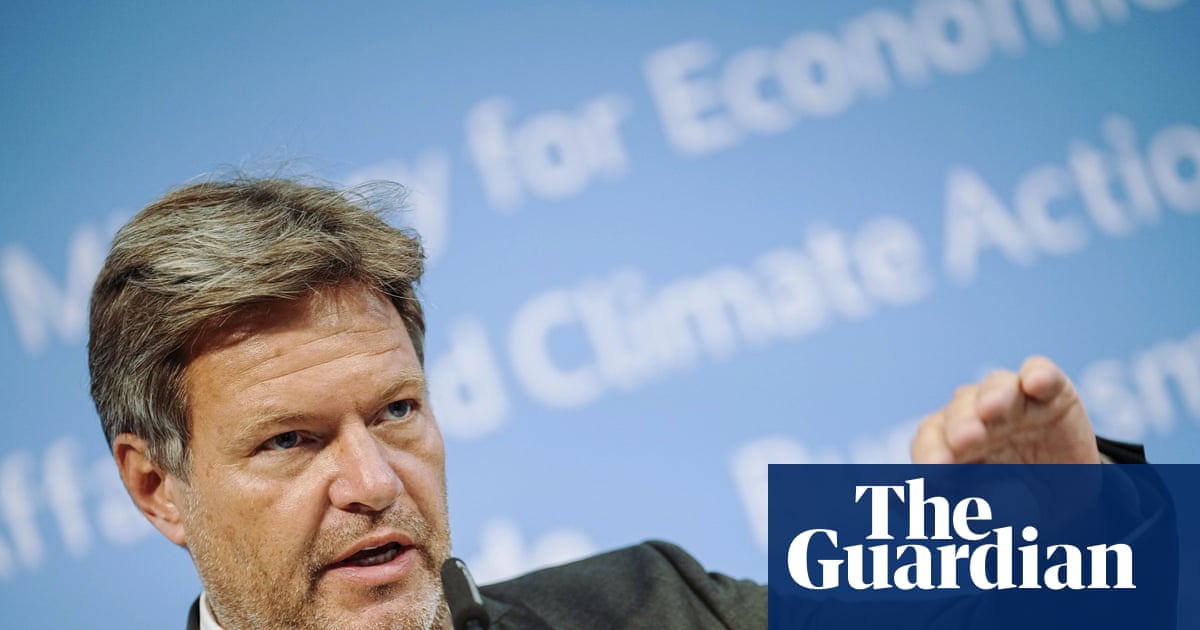
The global energy landscape is undergoing a profound transformation, moving beyond the mere “weaponization of energy” witnessed during the Russia-Ukraine conflict to a more expansive era where “everything” — from tariffs to technology and critical resources — is increasingly leveraged as a geopolitical tool. This stark warning, articulated by Germany’s former economy minister, underscores a critical shift for oil and gas investors: market risk is no longer solely a function of traditional supply and demand fundamentals but is now deeply intertwined with political maneuvering and sovereign policy decisions. For investors seeking clarity, understanding these evolving dynamics is paramount as they navigate a world where a “second security shock” could emerge from unexpected corners, demanding a re-evaluation of energy strategies and investment resilience.
Geopolitical Headwinds and Market Tempering
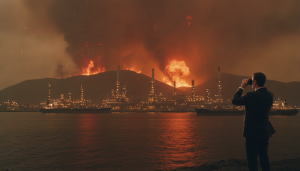
The specter of “weaponizing everything” has undoubtedly injected a heightened geopolitical risk premium into energy markets. Warnings about escalating tensions, such as the potential closure of the Strait of Hormuz following recent conflicts in the Middle East, logically suggest a bullish trajectory for oil prices. However, current market behavior indicates a more complex interplay of factors. As of today, Brent crude trades at $92.76, reflecting a 0.51% decline, with its daily range spanning $92.57 to $94.21. Similarly, WTI crude is priced at $89.24, down 0.48% within a range of $88.76 to $90.71. This recent tempering is not an isolated incident; Brent has notably shed $7.07, or approximately 7%, over the past 14 days, falling from $101.16 on April 1st to $94.09 on April 21st. This downtrend, despite persistent geopolitical friction, suggests that the market is either discounting the immediate impact of these risks, or other factors—such as global demand concerns, robust non-OPEC supply, or a strong dollar—are currently exerting greater downward pressure. Investors must reconcile these seemingly contradictory signals, recognizing that underlying geopolitical tensions could quickly reassert themselves, leading to swift price reversals.
Europe’s Enduring Vulnerability and Strategic Pivot
Germany’s painful lessons from its prior reliance on Russian gas serve as a potent reminder of the perils of energy dependence in a politically charged world. The country’s proactive response – rapidly commissioning LNG terminals and securing diverse gas supplies – highlights a broader European imperative to build energy resilience. This strategic pivot involves not only diversifying supply sources but also accelerating the transition to localized, clean energy production. Germany, for instance, sourced 60% of its electricity from renewables last year, with natural gas and coal filling the remainder. The debate around nuclear power, including the decision to delay the shutdown of Germany’s final reactors only briefly, underscores the difficult choices nations face in balancing energy security with environmental goals. From an investment perspective, this environment creates opportunities in LNG infrastructure, renewable energy projects, and technologies that enhance grid stability and energy storage across Europe. Looking ahead, the upcoming EIA Weekly Petroleum Status Reports on April 22nd, April 29th, and May 6th will offer crucial insights into global supply-demand balances, while the EIA Short-Term Energy Outlook on May 2nd will provide a broader forecast for global energy markets. These reports, alongside the Baker Hughes Rig Count on April 24th and May 1st and API Weekly Crude Inventory data on April 28th and May 5th, will be key indicators for assessing the health of global supply chains and their potential impact on Europe’s energy procurement strategies and long-term resilience initiatives.
Investor Sentiment: Navigating Uncertainty and Seeking Clarity
In this landscape of escalating geopolitical risk and shifting energy paradigms, investor sentiment is marked by a clear demand for clarity amidst considerable uncertainty. Our proprietary reader intent data for this week highlights a common thread among inquiries: fundamental questions like “is WTI going up or down” and detailed requests for “what do you predict the price of oil per barrel will be by end of 2026?” These questions are a direct reflection of the market’s struggle to price in the multifaceted risks posed by “weaponized everything,” from trade wars and technology restrictions to direct energy sanctions and Middle East instability. The recent 7% drop in Brent crude over two weeks, despite geopolitical flashpoints, only amplifies this uncertainty. Investors are not just looking at supply outages or demand forecasts; they are grappling with the unpredictable nature of political decisions that can swiftly alter market fundamentals. This environment demands a more sophisticated approach to risk assessment, moving beyond traditional economic models to incorporate geopolitical forecasting and scenario planning. For energy portfolios, this translates into a focus on companies with robust balance sheets, diversified asset bases, and those positioned to benefit from enhanced energy security measures or the accelerating transition to local, cleaner energy sources.
The Long Game: Resilience in a Weaponized World
The lessons from the past and the warnings about future “security shocks” compel investors to prioritize resilience. Germany’s experience, where a reliance on a single major energy supplier proved disastrous, serves as a stark warning against concentrated risk. The “weaponization of everything” implies that any critical resource or strategic advantage could become a point of leverage. For the oil and gas sector, this means traditional investment theses must now account for increased supply chain fragility, the potential for sudden policy shifts, and the accelerating drive towards energy independence in many nations. Companies that are diversifying their geographical footprints, investing in carbon capture technologies, expanding into renewable energy, or developing advanced energy storage solutions are likely to be better positioned. The market will increasingly reward entities that can demonstrate adaptability, technological leadership, and a commitment to sustainable energy practices, even as they continue to meet conventional energy demands. Investors should scrutinize corporate strategies for their ability to withstand not just market volatility, but also unforeseen geopolitical pressures, making resilience a core metric for long-term value creation in this new global order.