AI’s Insatiable Thirst: A Looming Resource Crisis for Energy Investors
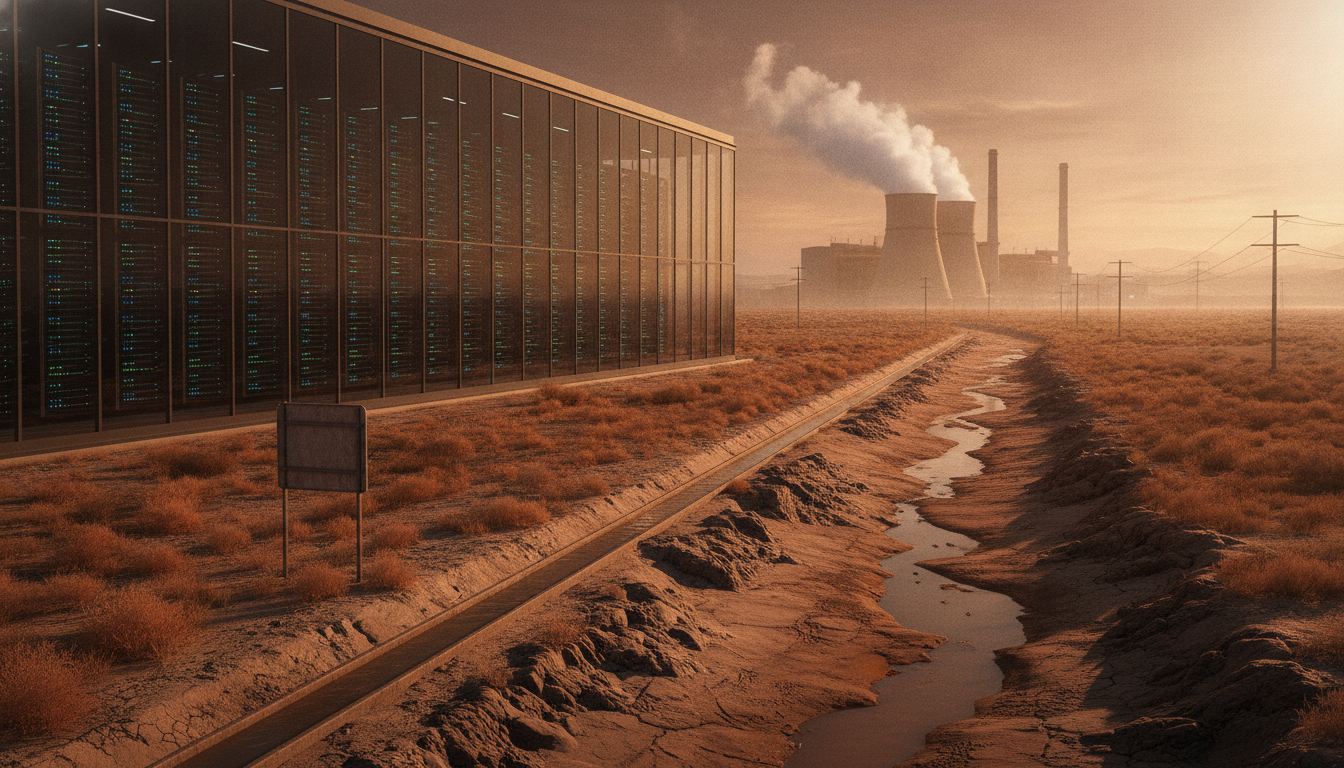
The artificial intelligence revolution, while promising unprecedented technological advancement, casts a growing shadow over critical natural resources, particularly water. A substantial majority of new data centers, the backbone of AI operations, are emerging in regions already grappling with severe drought conditions across the United States. This trend signals a significant, often overlooked, resource crunch that demands immediate attention from energy and infrastructure investors.
Recent analyses reveal a staggering statistic: approximately two-thirds of all upcoming data centers, facilities inherently water-intensive, are slated for construction in areas experiencing persistent drought over the past year. Out of 809 planned data centers, a remarkable 517 sit in locations classified under various stages of drought severity. This mirrors the distribution of existing data center infrastructure, demonstrating a continued pattern despite escalating water scarcity. With over 60% of the contiguous U.S. currently in drought – a record expanse for spring in modern records – the implications for resource allocation and energy security become increasingly pronounced.
The Rising Water Demand Driving Energy Needs
The operational demands of these digital behemoths are formidable. Large data centers, some sprawling to the size of small towns, can consume up to 5 million gallons of water daily. This volume rivals the daily water usage of up to 50,000 individuals, primarily dedicated to cooling the vast arrays of high-performance computing hardware. This intense water requirement directly translates into increased energy demand, as power generation itself is a water-intensive process, creating a critical interdependency that impacts oil and gas markets.
Projections underscore an alarming trajectory for water consumption. U.S. data centers are forecast to escalate their annual water demand to 73 billion gallons by 2028, a dramatic increase from an estimated 17 billion gallons in 2023. Even seemingly innocuous AI interactions contribute to this demand; researchers estimate that a mere 100-word AI prompt necessitates roughly half a liter of water for cooling. This surge in consumption occurs as the climate crisis, intensified by the combustion of fossil fuels, exacerbates the duration and intensity of droughts nationwide.
Major tech players, including Google, Meta, Microsoft, and Amazon, are committing billions to new data center projects. These corporations often target dry, sparsely populated areas, driven by lower land costs, attractive tax incentives, and the perceived benefit of arid climates minimizing equipment corrosion. However, this strategy places immense strain on already stressed water systems. A massive data center complex, reportedly twice the size of Manhattan, recently gained approval in a Utah county deep in drought since the previous summer. Similarly, Walla Walla County, Washington, site of a planned Amazon data center, has experienced overwhelming drought conditions since July of last year.
Texas, a key energy producing state, also faces this challenge. Two of its largest new data centers are slated for Pecos and Carson counties, both recently parched by drought. Analyses suggest data centers could account for 9% of Texas’s total water use by 2040, against a backdrop of the state’s water development board forecasting increasing overall demand and declining supply.
Navigating Regulatory Headwinds and Public Opposition
The intensifying competition for water resources is sparking significant public backlash and prompting calls for regulatory action. Industry experts caution that without strategic intervention, “a crunch point is inevitable.” Hard choices loom regarding water allocation between residents, agricultural interests, and these burgeoning digital infrastructures. In regions like the Eastern U.S., where water abundance was historically assumed, legal frameworks may prove ill-equipped to handle acute shortages, leading to potential clashes over water access.
Public sentiment registers strong opposition; polling indicates 70% of Americans prefer not to reside near a data center. This sentiment, combined with concerns over rising energy bills and water scarcity, has led to local protests, curtailing or even canceling some data center projects. This evolving landscape creates a political challenge, particularly for proponents of AI and technological expansion.
States are beginning to respond. California, Michigan, and Iowa consider legislation requiring data center operators to submit regular water usage reports. Others, like South Carolina and Kansas, might mandate more water-efficient closed-loop cooling systems. New York lawmakers have explored even more stringent measures, including a potential moratorium on new data center developments. In Utah, the controversy surrounding the colossal Stratos data center, backed by businessman Kevin O’Leary, exemplifies the tension. Despite O’Leary’s reassurances and recent agreement to scale back elements of the project, significant local opposition, including a public referendum effort and a lawsuit, targets the development, citing concerns for the already shrinking Great Salt Lake.
Energy Investment Implications: A Complex Interplay
While data center operators highlight their efforts in water conservation, including investments in local water infrastructure and the adoption of more efficient closed-loop cooling technologies, these solutions are not without trade-offs. Closed-loop systems, while reducing direct water consumption for cooling, typically demand more energy. This increased energy often originates from fossil fuel-fired power plants, which themselves are substantial water consumers in electricity generation, creating a critical circular dependency for oil and gas investors to monitor.
Consider Meta’s proposed Hyperion data center in Louisiana. This facility plans to utilize closed-loop cooling but will require the energy equivalent of ten gas-fired power plants. This necessitates significant water for power generation and generates considerable planet-warming emissions. Meta estimates this facility could draw up to 1 billion gallons of water annually from an aquifer primarily used for agriculture, separate from community drinking supplies, yet still impacting regional water tables.
For oil and gas investors, this scenario presents both challenges and opportunities. The accelerating demand for electricity to power AI data centers could drive sustained demand for natural gas, a primary fuel for power generation. Companies involved in natural gas production, transportation, and power plant development may see continued growth. However, this also amplifies ESG risks related to water stress and carbon emissions. Investment in technologies that reduce the water footprint of power generation or enable the transition to truly water-efficient and low-carbon energy sources becomes increasingly critical.
Beyond Data Centers: The Broader AI Water Footprint
It is crucial to recognize that the water impact of AI extends far beyond the data centers themselves. A recent study estimates data centers will account for only 4% of the projected 30 trillion gallons of additional global water needed for AI expansion by mid-century. The lion’s share of this demand will stem from power generation and the intricate, water-intensive processes of semiconductor fabrication necessary for AI hardware. This broader view underscores the systemic nature of the challenge and its profound implications for global resource management.
As the world grapples with potential drought impacts for three-quarters of its population by 2050, the United Nations projects data centers alone will consume 9.3 trillion liters of water in the coming decade – enough to meet the drinking water needs of the entire human population for over a year. While some water is recycled, large-scale withdrawals undeniably strain aquifers and river systems, particularly in already vulnerable regions.
This evolving landscape presents a complex calculus for investors. The unchecked demand for water to fuel AI’s expansion, coupled with its intensive energy requirements, highlights the urgent need for a more sustainable approach to resource management. For oil and gas and broader energy sector participants, understanding and adapting to these intertwined water and energy demands will be paramount for long-term investment viability and responsible growth in an AI-driven future.


