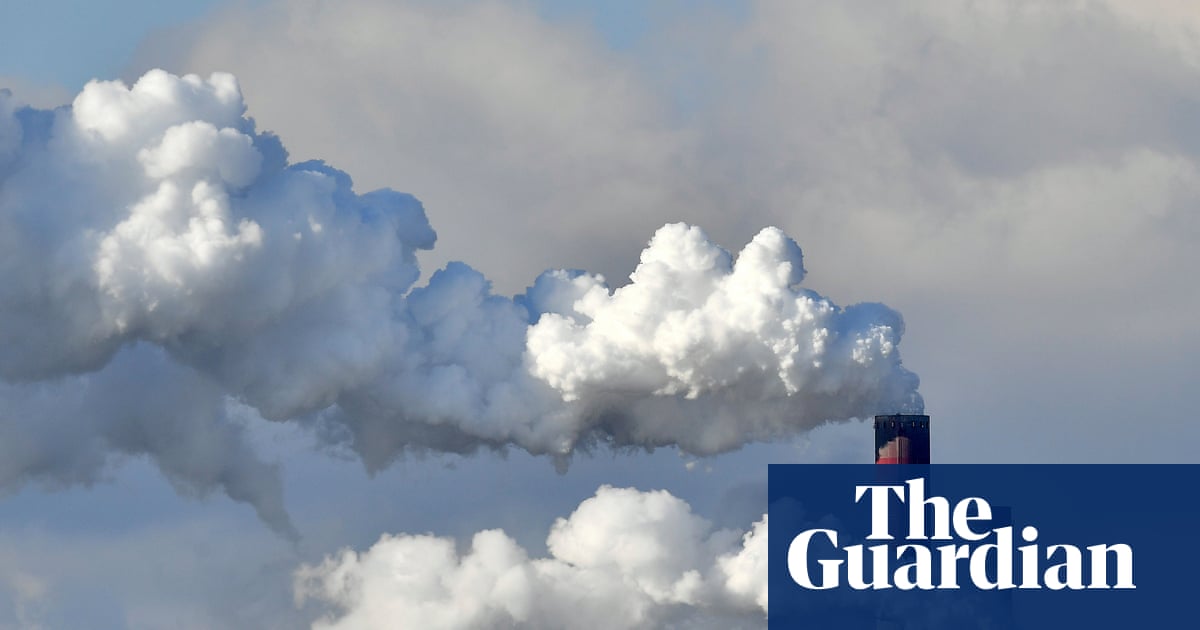
Germany, Europe’s economic engine and a global manufacturing powerhouse, has once again signaled a continued, perhaps even entrenched, reliance on traditional energy sources. The nation’s greenhouse gas emissions for 2025 barely moved the needle, decreasing by a mere 0.1% year-on-year. This sluggish pace of decarbonization, falling significantly short of expert forecasts and internal targets, sends a clear message to the oil and gas investment community: structural demand in key European sectors remains resilient. For investors navigating a complex energy landscape, Germany’s struggle to accelerate its transition offers a critical lens through which to assess near-term fossil fuel demand and the broader implications for global energy markets.
Germany’s Stalled Decarbonization and its Market Implications
The latest figures from the German Environment Agency reveal a sobering reality for climate ambitions, yet a potentially supportive one for fossil fuel demand. In 2025, Germany’s emissions stood at 649 million tonnes of CO2 equivalent, a negligible reduction compared to the previous year and a stark contrast to the 1.5% drop anticipated by analysts. This follows a more substantial 3.4% reduction recorded in 2024, highlighting a significant loss of momentum. The country’s Environment Minister, Carsten Schneider, openly criticized the “too slow” progress, particularly emphasizing rising emissions in the transport and building sectors, which are heavily reliant on petroleum products and natural gas for heating.
This persistent demand backdrop provides a fundamental floor for global energy prices. As of today, Brent Crude trades at $92.96 per barrel, reflecting a modest daily dip of 0.3%, while WTI Crude stands at $89.36, down 0.35%. Gasoline prices also saw a slight decline to $3.11 per gallon, a 0.64% decrease. This current market snapshot suggests a degree of stability, even as Brent has experienced a notable 7% decline over the past two weeks, falling from $101.16 on April 1st to $94.09 by April 21st. Germany’s inability to significantly cut emissions, particularly in hard-to-decarbonize sectors, implies that underlying demand from one of the world’s largest economies continues to absorb supply, mitigating sharper price corrections and underpinning investor confidence in the near to medium term.
Policy Headwinds and the Energy Transition Dilemma
The trajectory of Germany’s energy policy adds another layer of complexity for investors. While Minister Schneider maintains optimism for the 2030 climate target – a 65% reduction in emissions compared to 1990 levels – the scale of the challenge is immense. Emissions must decrease by an average of 42 million tonnes of CO2 equivalent annually from 2026 onward, a staggering 40 times the reduction achieved in 2025. This ambitious target now faces significant policy headwinds. The current conservative government, led by Chancellor Friedrich Merz since May 2025, has advocated for easing environmental standards, a notable shift from the previous administration’s prioritization of climate targets.
This divergence in political priorities creates a challenging environment for rapid decarbonization and suggests a prolonged period of fossil fuel reliance. Investors are keenly watching for directional cues, with our proprietary data showing a strong focus on questions like “is WTI going up or down?” and “what do you predict the price of oil per barrel will be by end of 2026?” The current policy stance in Germany, favoring economic stability and potentially slower environmental reform, suggests that the structural demand for oil and gas, particularly for industrial output and transportation, will likely persist. This provides a compelling argument for those anticipating a higher floor for crude prices in the coming years, even as the longer-term energy transition unfolds globally.
The Economic Engine’s Thirst: Germany’s Role in Global Demand
Germany’s role as the largest economy in Europe and a global manufacturing powerhouse means its energy consumption trends are disproportionately impactful. Despite calls for accelerated adoption of electric vehicles and heat pumps, the overall progress remains slow. The environment minister himself highlighted the dual benefit of renewable energy adoption for both climate and national security, stating that “every additional kilowatt-hour of renewable energy makes our country less dependent on oil and gas.” However, the practical reality of maintaining industrial output and powering millions of households means that the current energy mix, heavily reliant on fossil fuels, cannot be easily or quickly replaced.
In 2025, Germany’s greenhouse gas emissions were 48% below 1990 levels, indicating progress but still a long way from the 2030 target. The slow pace of reduction in 2025 suggests that the fundamental energy demands of a highly industrialized economy continue to outweigh the rapid deployment of alternatives. For global energy markets, this translates into sustained demand from a major consumer bloc. Investors should note that even marginal shifts in Germany’s energy consumption can send ripples across the continent, influencing pricing dynamics and the global supply-demand balance for crude oil, natural gas, and refined products.
Near-Term Market Watch: Events Shaping Oil’s Path
While Germany’s long-term decarbonization struggle provides a foundational demand narrative, near-term market catalysts will dictate immediate price movements. The coming weeks are packed with critical data releases that investors should monitor closely. On April 22nd, April 29th, and May 6th, the EIA Weekly Petroleum Status Reports will offer granular insights into U.S. crude oil and product inventories, refining activity, and demand indicators. These reports are crucial for understanding the immediate supply-demand picture in the world’s largest oil consumer.
Further insights into U.S. production trends will come from the Baker Hughes Rig Count on April 24th and May 1st. These figures can signal future supply adjustments, a key factor in price stability. Complementing these, the API Weekly Crude Inventory reports on April 28th and May 5th provide an early look at inventory shifts. Finally, the EIA Short-Term Energy Outlook on May 2nd will offer updated forecasts for supply, demand, and prices, providing a crucial forward-looking perspective. These events, combined with the underlying demand resilience from major economies like Germany, will shape the immediate direction of crude prices and help investors gauge whether WTI and Brent will resume their recent downward trend or find renewed upward momentum.


