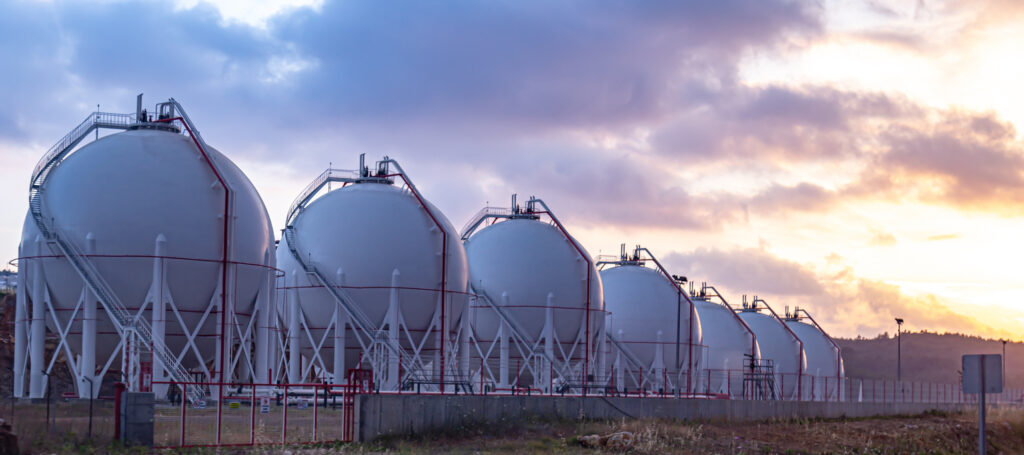
The U.S. liquefied natural gas (LNG) sector saw a significant operational development this week as Freeport LNG’s export plant in Texas demonstrated a robust return to higher natural gas intake. This signals that one of its critical liquefaction trains has resumed service after a brief shutdown. For investors, Freeport LNG’s operational status is a bellwether for global gas markets, where fluctuations can ripple through prices on both sides of the Atlantic. While this stability in LNG operations offers some relief to gas markets, the broader energy landscape, particularly crude oil, currently grapples with distinct and powerful downward pressures, setting up a complex environment for investors navigating their portfolios.
Freeport’s Pivotal Role in Global Gas Dynamics
Freeport LNG stands as one of the world’s most closely scrutinized U.S. LNG export facilities, primarily due to its capacity to influence global gas prices with even minor operational changes. When gas flows to Freeport decrease, domestic U.S. gas prices typically decline due to reduced demand for the fuel, while European prices often experience an upward swing as available LNG supplies to global markets tighten. This week, the plant made headlines not only for loading its 1,000th cargo but more immediately for overcoming a compressor system issue that had idled Train 1 on Thursday. By Friday, gas flows to the facility were on track to reach 1.9 billion cubic feet per day (bcfd), a notable increase from the 1.3 bcfd recorded on Thursday, aligning once again with its average intake over the prior seven days. Considering the plant’s full capacity across its three liquefaction trains stands at approximately 2.4 bcfd, this swift recovery brings a significant portion of its operational capability back online. To put this in perspective for our U.S. investors, one billion cubic feet of gas is sufficient to supply around five million American homes for a day, underscoring the scale of Freeport’s contribution to energy supply chains.
The Broader Energy Market Picture: Crude’s Retreat
While the Freeport LNG situation provides a localized, albeit significant, update for natural gas, the broader energy market is currently dominated by a different narrative, particularly concerning crude oil. As of late trading on April 17, the benchmark Brent Crude futures are trading around $90.7 per barrel, marking a substantial 8.74% decline today, with trading ranges extending from $86.08 to $98.97. WTI Crude mirrors this sentiment, down 8.84% to $83.11, having tested lows of $78.97 today. This daily drop extends a more significant trend, with Brent having shed $14, or 12.4%, from its March 27 peak of $112.57 to $98.57 by April 16. The simultaneous decline in gasoline prices, currently at $2.94 a gallon and down 4.85% for the day, further illustrates the widespread bearish sentiment gripping the petroleum complex. This divergence—a recovering LNG market contrasting with a sharply declining crude market—creates a complex and nuanced investment landscape, signaling that macro-economic factors and supply-demand imbalances beyond individual facility operations are exerting considerable influence.
Navigating Uncertainty: Investor Concerns and Future Outlook
Amidst these fluctuating market dynamics, our proprietary reader intent data from the week reveals a consistent theme: investors are seeking clarity on future price trajectories. A recurring question in our AI assistant’s interactions is, “what do you predict the price of oil per barrel will be by end of 2026?” This highlights the deep uncertainty surrounding crude’s long-term path, especially in light of the current downturn. Furthermore, inquiries about “OPEC+ current production quotas” underscore the importance investors place on supply-side management as a key determinant of future prices. The recent operational stability at Freeport LNG, while positive for gas, serves as a reminder that the global energy market is an intricate web. Investors understand that while specific events like a plant outage can cause immediate price swings, the overriding trends for crude are shaped by a confluence of geopolitical tensions, global demand outlooks, and collective production decisions. These larger forces necessitate a comprehensive analytical approach when attempting to forecast oil’s trajectory through the remainder of 2026.
Key Catalysts on the Horizon: Upcoming Events to Watch
For investors striving to answer those critical questions about future oil prices and navigate the current volatility, the immediate horizon is packed with potentially market-moving events. The energy market’s primary focus shifts to the upcoming OPEC+ meetings. The Joint Ministerial Monitoring Committee (JMMC) is scheduled to convene on April 17, followed by the full Ministerial meeting on April 18. These gatherings are particularly crucial given the significant decline in crude prices observed over the past two weeks and investor queries regarding production quotas. Any announcements regarding output levels or adherence to existing cuts could provide much-needed direction for a market currently searching for a floor. Beyond OPEC+, a series of weekly reports will offer ongoing insights into supply and demand fundamentals. The American Petroleum Institute (API) Weekly Crude Inventory reports are slated for April 21 and April 28, with the more comprehensive EIA Weekly Petroleum Status Reports following on April 22 and April 29. Additionally, the Baker Hughes Rig Count on April 24 and May 1 will provide a pulse on U.S. drilling activity. Collectively, these upcoming events and data releases will be instrumental in shaping investor sentiment and providing the necessary context to refine predictions for the energy market’s performance in the coming months.