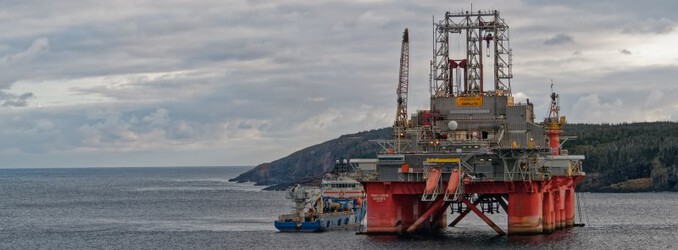
Investors closely monitoring Canada’s energy landscape are gaining critical clarity as federal political parties begin to articulate their strategic blueprints for the nation’s vital oil and gas sector, particularly the crucial offshore operations in Newfoundland and Labrador. A recent initiative spearheaded by Energy NL, a leading industry association, sought comprehensive policy positions from Canada’s major federal parties. Following their initial request on March 25, 2025, responses have now been provided by the New Democratic Party (NDP) and the Conservative Party of Canada (CPC), offering essential insights that will shape capital allocation and strategic planning across the country’s energy domain.
Charlene Johnson, CEO of Energy NL, emphasized the profound significance of these detailed submissions for the organization’s expansive membership. This network comprises over 500 companies globally, spanning the entire energy supply and service chain—from offshore vessel operators and engineering firms to innovators in sustainable technology and legal counsel. These diverse stakeholders are actively seeking transparency regarding the political backing and regulatory framework that will govern future energy projects. The comprehensive responses from both the NDP and CPC will undoubtedly serve as foundational documents for critical investment decisions within the Canadian energy sector.
Conservative Party: Championing Robust Oil & Gas Expansion
For investors primarily focused on the growth and expansion of traditional oil and gas operations, the Conservative Party’s platform presents a distinctly bullish outlook. Their proposals are squarely aimed at boosting production volumes and dismantling regulatory impediments, with the overarching goal of re-establishing Canada’s prominence as a reliable global energy supplier. A central tenet of their vision is an explicit commitment to double oil production in Newfoundland and Labrador. This ambitious target serves as a clear indication of their intent to attract substantial capital investment into the region’s prolific offshore assets, signaling a policy environment highly conducive to intensified exploration, development, and production activities.
To facilitate this accelerated growth, the CPC has indicated plans to eliminate what they describe as an “energy cap” on Canadian development, effectively removing any perceived ceiling on sector expansion. Furthermore, the party has pledged immediate action to repeal Bill C-69. This legislation has drawn considerable criticism from industry stakeholders for introducing regulatory uncertainty and significantly prolonging project timelines. The repeal of Bill C-69 alone could substantially de-risk major infrastructure and resource projects, thereby enhancing Canada’s appeal as a prime destination for energy investment. Complementing this, the Conservatives propose the implementation of a pre-permitting process for specific projects and the establishment of a dedicated Rapid Resources Project Office. This twin initiative, coupled with a commitment to cap approval wait times at a maximum of one year—with an aggressive target of six months—promises to dramatically accelerate project sanctioning and reduce the lead times for deploying significant capital into the sector. Additionally, the CPC intends to introduce expanded investment initiatives aimed at stimulating further growth.
New Democratic Party: Navigating Towards a Sustainable Energy Economy
In contrast, the New Democratic Party outlines a pathway centered on fostering a “sustainable energy economy,” presenting a more nuanced approach for energy investors. While acknowledging and supporting the continuation of existing energy projects, the NDP’s long-term strategy signals a deliberate pivot towards renewable energy sources. Their platform firmly commits Canada to achieving net-zero emissions by 2050, a target that underpins many of their proposed energy policies. Crucially, the NDP explicitly states its opposition to issuing new oil and gas exploration licenses and intends to discontinue public subsidies for fossil fuel industries. Instead, investment priorities would shift decisively towards clean energy initiatives and comprehensive energy efficiency programs.
The NDP’s vision includes a “Just Transition” plan, designed to support workers and communities impacted by the evolving energy landscape, ensuring a fair and equitable shift away from fossil fuel dependency. While advocating for this transition, the party acknowledges the role of carbon capture, utilization, and storage (CCUS) technologies, viewing them as a vital bridge in the interim period towards full decarbonization. Additionally, the NDP commits to supporting the Atlantic Loop project, an initiative aimed at strengthening Canada’s clean electricity grid in the Atlantic region. Unlike the Conservatives, the NDP intends to retain Bill C-69, though they plan to streamline and expedite the approval process specifically for “critical clean energy projects.” Their policy framework also places a strong emphasis on robust Indigenous consultation and stringent environmental protection measures, ensuring that energy development aligns with broader social and ecological responsibilities.
Investor Implications: Weighing Divergent Futures
For discerning investors, these starkly divergent policy platforms from Canada’s two prominent federal parties present distinct opportunities and risks. The Conservative Party’s proposals signal a clear bullish environment for traditional oil and gas producers, exploration companies, and the vast supply chain supporting offshore development, particularly in Newfoundland and Labrador. Their focus on regulatory efficiency, production growth targets, and the repeal of perceived barriers like Bill C-69 could unlock significant value and accelerate project timelines, making Canada a more attractive jurisdiction for conventional energy capital.
Conversely, the New Democratic Party’s stance indicates a strategic reorientation of federal support towards a decarbonized energy future. Investors in renewable energy, energy efficiency technologies, and CCUS solutions would likely find a more favorable policy environment under an NDP administration. However, for those with existing or planned investments in new oil and gas exploration, the NDP’s commitment to ending new licenses and fossil fuel subsidies presents a significant headwind, signaling a managed decline for the conventional sector in favor of green alternatives. The retention of Bill C-69, even with proposed streamlining for clean energy projects, suggests a continued emphasis on stringent environmental reviews that could impact traditional projects.
As the federal political landscape evolves, energy investors must carefully assess these detailed policy positions. The future trajectory of Canada’s oil and gas sector, particularly the robust offshore potential of Newfoundland and Labrador, hinges significantly on which political vision ultimately prevails. Strategic capital allocation decisions will increasingly depend on an astute understanding of these contrasting federal approaches to energy development and environmental stewardship, underscoring the imperative for vigilance in this dynamic market.