Trump Energy Policy: Investor Reality Check
Energy investors consistently monitor the political landscape for signals that could sway market stability and regulatory direction. Recent statements from former President Donald Trump offer a critical perspective for evaluating the potential environment for oil and gas investments should he return to the nation’s highest office. While his public discourse frequently emphasizes a significant boost to domestic energy production and extensive deregulation, a deeper examination of his broader political messaging reveals underlying dynamics that could profoundly influence the operational realities across the upstream, midstream, and downstream sectors of the industry.
Assessing the Political Climate for Energy Investments
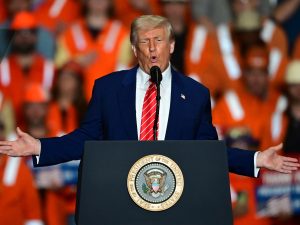
During a recent public appearance, reminiscent of a campaign rally, former President Trump reiterated familiar themes. These included a commitment to leveraging executive actions, a strategic reduction of the federal workforce, and the implementation of stringent immigration policies. For the oil and gas industry, the promise of a leaner, more efficient federal bureaucracy could translate directly into accelerated permitting processes and a substantial reduction in regulatory compliance burdens. Such changes would ideally quicken project development timelines and lower operating costs, enhancing profitability for energy companies.
However, the forceful nature of these declarations, coupled with a consistent focus on confrontational politics, introduces an inherent element of policy volatility. This uncertainty is a crucial factor that discerning investors must carefully weigh. His ongoing engagement in highly partisan rhetoric, including the use of derogatory terms for political opponents, suggests a political environment likely to remain deeply divided. Such profound divisions often manifest as significant uncertainty, particularly for long-term energy infrastructure projects and investment planning. The potential for policy reversals with future administrations or prolonged legislative stalemates could overshadow the immediate benefits of deregulation.
Decoding the Pro-Production Stance and Deregulation Ambitions
A cornerstone of Trump’s energy platform is an unwavering commitment to achieving “energy dominance” through maximized domestic oil and gas production. This agenda, if implemented, could provide substantial tailwinds for the industry. Upstream companies could anticipate expedited approvals for drilling permits on federal lands and waters, potentially opening new exploration frontiers and increasing proven reserves. This would directly support increased capital expenditure in exploration and production activities, driving higher output volumes.
For the midstream sector, the prospect of deregulation could significantly de-risk major infrastructure projects. Faster environmental reviews and streamlined permitting for new pipelines and processing facilities would reduce project delays and cost overruns, which have historically plagued large-scale energy transport initiatives. This could unlock substantial investment in crucial infrastructure bottlenecks. Similarly, downstream operations, including refining and petrochemical manufacturing, could benefit from a reduction in compliance costs associated with environmental regulations, potentially fostering new investments and capacity expansions. The cumulative effect of these changes would likely be a more competitive U.S. energy market globally, attracting further foreign and domestic investment.
Navigating Regulatory Streamlining and Bureaucratic Efficiency
The vision of a streamlined federal apparatus, with a reduced workforce and fewer bureaucratic hurdles, presents a compelling narrative for energy investors. In practical terms, this could mean significantly faster turnaround times for critical approvals from agencies such as the Environmental Protection Agency (EPA) and the Bureau of Land Management (BLM). These agencies play pivotal roles in the lifecycle of oil and gas projects, from initial site approval to operational compliance.
Reducing the red tape associated with project development and ongoing operations would directly impact companies’ capital efficiency and return on investment. Projects that currently face years of delays due to regulatory reviews could see their timelines drastically shortened, allowing for quicker monetization of assets. This shift could make the U.S. an even more attractive destination for energy capital, potentially drawing investment away from regions with more cumbersome regulatory environments. Investors would need to assess the practical implementation of these proposed changes, differentiating between rhetoric and actionable policy reforms that create a stable, predictable regulatory framework.
Geopolitical Volatility and Investor Risk Assessment
While the focus on domestic production is often framed as a stabilizing factor, the confrontational style of politics and a potential return to “America First” policies could introduce significant geopolitical volatility for energy markets. A deeply divided political environment within the U.S. might lead to legislative gridlock, making it difficult to pass comprehensive energy legislation and potentially relying heavily on executive orders, which are vulnerable to reversal by subsequent administrations. This instability could deter long-term capital allocation requiring policy certainty.
Furthermore, an assertive stance on international trade could lead to tariffs or other protectionist measures impacting global energy supply chains and demand dynamics. U.S. energy exports, particularly of LNG and crude oil, could be affected by retaliatory measures from trading partners or shifts in global alliances. Investors must consider how such policies could influence global commodity prices, the cost of imported equipment and services, and the overall competitiveness of U.S. energy products in international markets. A robust risk assessment must account for both the domestic policy shifts and their broader implications on the intricate global energy ecosystem.
Conclusion: Charting the Future Energy Investment Landscape
For oil and gas investors, a potential return of Donald Trump to the presidency presents a complex set of opportunities and challenges. On one hand, the explicit commitment to boosting domestic production, coupled with a drive for deregulation and bureaucratic streamlining, could provide significant operational advantages and cost reductions for energy companies across all segments. This could unlock new investment, accelerate project development, and enhance the profitability of U.S. energy assets.
On the other hand, the persistent political polarization and confrontational policy approach could inject a substantial degree of policy volatility and geopolitical uncertainty. Such an environment demands that investors look beyond the immediate rhetoric and conduct thorough due diligence on the practical implementability and long-term sustainability of proposed policy changes. Prudent capital allocation in this dynamic landscape will require a nuanced understanding of potential tailwinds alongside a robust framework for assessing and mitigating the inherent political and market risks. Staying informed and agile will be paramount for navigating the future of energy investing.