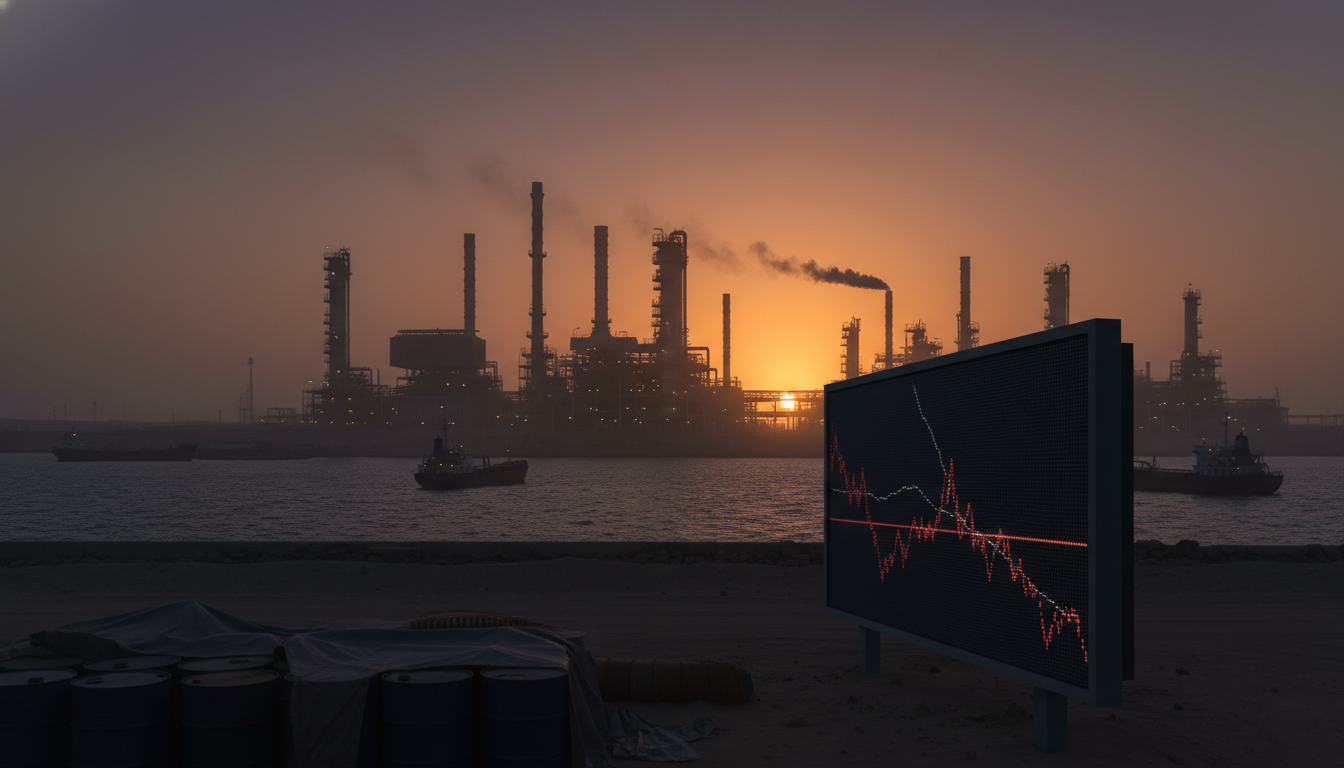
ExxonMobil, a cornerstone of the global energy landscape, has commenced the first quarter of 2026 facing significant operational headwinds, announcing a 6% reduction in its worldwide production volume. This substantial decline is directly attributable to the escalating conflict in the Persian Gulf, an area historically vital to the supermajor’s output. For investors, this revelation isn’t just about a single quarter’s numbers; it’s a stark reminder of the profound and often immediate impact geopolitical instability can have on critical energy infrastructure and, by extension, on shareholder value.
The Tangible Cost of Geopolitical Volatility on Production
The primary driver behind ExxonMobil’s production shortfall stems from a liquefied natural gas (LNG) complex in Qatar, a key partnership asset for the company. Explicit disclosures from the energy giant confirm that two LNG production lines sustained direct damage from missile strikes within the region. This is not merely a temporary inconvenience; public statements from ExxonMobil indicate that repairs to these essential facilities will demand an extended period. While a precise timeline awaits on-site evaluation, Qatari estimates suggest the severity of the damage could necessitate a restoration process stretching for as long as five years. This long-term disruption underscores a critical vulnerability in the global LNG supply chain, with ExxonMobil’s share of output from the volatile Persian Gulf region typically accounting for approximately one-fifth of its total global production. Such an extended outage has far-reaching implications for global gas markets, potentially tightening supply and supporting prices for years to come, fundamentally shifting the strategic outlook for LNG investors.
Market Dynamics and the Geopolitical Premium
Investor sentiment immediately reacted to these disclosures, with ExxonMobil’s shares experiencing a sharp 6.1% decline in pre-market trading in New York. This mirrors broader market concerns across the energy sector, as evidenced by similar signals from European peer Shell Plc regarding lower quarterly gas production due to the same conflict. While a recent two-week ceasefire announcement by US President Donald Trump offered a brief reprieve, leading to a general downturn in energy stocks as traders assessed a potential unwinding of geopolitical premiums, the underlying supply risks persist.
As of today, Brent crude trades at $93.85 per barrel, reflecting a 0.65% increase within the day’s range of $91.39-$94.86. Similarly, WTI crude stands at $89.99, up 0.36% within its daily range of $87.64-$91.41. While these prices represent a slight uptick today, a look at the broader trend reveals significant volatility. Over the past 14 days, Brent crude has seen a substantial decline of $7.07, dropping from $101.16 on April 1st to $94.09 on April 21st – a 7% reduction. This indicates that while the immediate “war premium” may have partially eroded with ceasefire hopes, the market remains on edge, with prices still elevated compared to pre-conflict levels, buoyed by the reality of tangible supply disruptions like those impacting ExxonMobil and Shell.
Addressing Investor Concerns: Stability and Future Returns
Our proprietary reader intent data reveals a clear focus among investors this week on price direction and the resilience of energy companies amidst geopolitical turmoil. Questions like “is WTI going up or down?” and “what do you predict the price of oil per barrel will be by end of 2026?” dominate the discourse. While direct predictions are inherently speculative, ExxonMobil’s situation provides critical context. The long-term production outages, particularly in LNG, introduce a bullish structural component to gas prices, while oil prices continue to balance geopolitical risk premiums against global demand outlooks.
Investors are keenly evaluating the stability of returns from energy majors, asking how companies like ExxonMobil and its peers will navigate such profound disruptions. The answer lies in their diversified portfolios and strategic re-evaluation of regional exposure. While the immediate hit is significant, the market will increasingly scrutinize how these companies de-risk their future operations and where they choose to allocate capital. This current environment emphasizes the importance of a nuanced investment strategy, focusing on companies with robust asset bases, geographical diversity, and strong balance sheets capable of weathering prolonged periods of instability and significant capital expenditure for repairs or new developments.
Navigating the Future: Upcoming Events and Strategic Re-evaluation
The implications of the Persian Gulf disruptions extend far beyond ExxonMobil’s immediate balance sheet, forcing a strategic re-evaluation across the entire energy investment landscape. The company’s Chief Financial Officer, Neil Hansen, has characterized some of the financial impacts on refining and trading — an anticipated $3.7 billion lower earnings for the energy-products division compared to Q4 2025 due to price volatility and cargo timing — as largely temporary “timing effects.” However, the multi-year production outage in Qatar is undeniably a structural shift, not a temporary blip.
Looking ahead, market participants will closely monitor a series of upcoming events for further insights into global supply and demand dynamics. The EIA Weekly Petroleum Status Reports, scheduled for April 22nd, April 29th, and May 6th, alongside the API Weekly Crude Inventory releases on April 28th and May 5th, will be crucial in assessing how global stockpiles are reacting to persistent disruptions and any shifts in demand. Furthermore, the Baker Hughes Rig Count reports on April 24th and May 1st will offer an indication of North American supply response and capital expenditure trends. Perhaps most critically, the EIA Short-Term Energy Outlook on May 2nd will provide updated forecasts that will undoubtedly attempt to integrate the long-term impact of Mideast Gulf disruptions into broader market expectations, offering a vital benchmark for investor planning. These data points, coupled with ongoing geopolitical developments, will shape investment decisions for the foreseeable future, particularly as energy majors like ExxonMobil consider accelerating investments in less volatile regions.