Equinor’s $1.3 Billion Sverdrup Boost: A Long-Term Bet on European Energy Stability
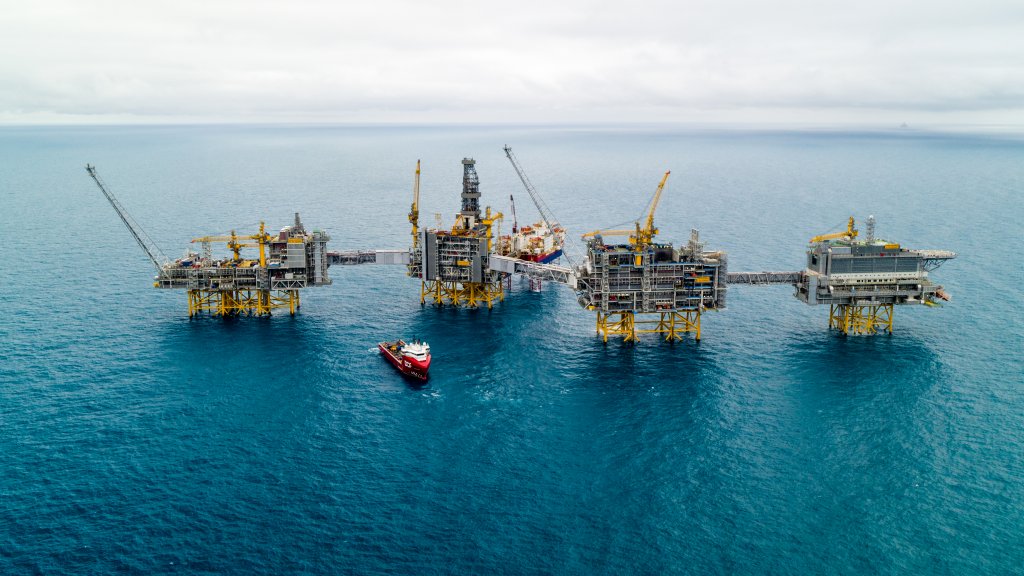
Equinor and its partners are committing a substantial NOK 13 billion, approximately $1.3 billion USD, to the third phase of the Johan Sverdrup field development. This significant capital injection underscores a robust long-term vision for one of the world’s most carbon-efficient oil fields, signaling confidence in sustained demand and the strategic imperative of energy security. With plans to unlock an additional 40-50 million barrels of oil equivalent (boe) and achieve first production by Q4 2027, this investment is not merely an expansion; it’s a calculated move to reinforce a critical energy artery for Europe, leveraging advanced technology and existing infrastructure to maximize value and recovery.
Sustaining a Nordic Powerhouse: The Sverdrup Expansion’s Strategic Depth
The Johan Sverdrup field has already established itself as a cornerstone of Norwegian continental shelf (NCS) production, setting a record in 2024 with 260 million barrels of oil, representing fully one-third of all oil produced from the NCS. Phase 3 builds directly on the success and infrastructure of its predecessors, demonstrating a highly capital-efficient approach. The development includes two new subsea templates tied into existing systems via new pipelines, a strategy that minimizes greenfield risks and accelerates the path to production. Notably, Equinor utilized artificial intelligence to optimize field layouts and well paths, leading to an impressive NOK 130 million in cost savings for this phase. This technological edge, combined with a projected recovery rate ambition of 75%—significantly above the NCS average of 47%—highlights a commitment to optimal resource utilization and sustained high production levels from the field well into the next decade.
Investment Horizon in a Volatile Market: Equinor’s Long-Term Conviction
This substantial investment by Equinor comes at a time when crude markets, while strong, have shown recent volatility. As of today, Brent crude trades at $94.94, representing a modest increase of 0.16% on the day, with WTI not far behind at $91.58. However, an examination of the 14-day trend reveals Brent has seen a notable pullback, dropping from $102.22 on March 25th to $93.22 just yesterday—an 8.8% decline. Such fluctuations often prompt investors to question the durability of higher prices, a sentiment reflected in investor inquiries about building a base-case Brent price forecast for the next quarter and the consensus 2026 Brent forecast. Equinor’s $1.3 billion commitment, with production commencing in late 2027, clearly signals a strategic decision predicated on long-term fundamentals rather than short-term price swings. It suggests a strong belief that global oil demand will remain robust for years to come, justifying significant capital allocation to high-quality, low-carbon intensity assets like Johan Sverdrup, which can deliver stable returns irrespective of near-term market noise.
Navigating Future Catalysts: OPEC+ and Inventory Dynamics
While Equinor’s investment horizon stretches years into the future, the near-term market landscape continues to be shaped by critical events that influence sentiment and price discovery. Investors are keenly watching upcoming energy catalysts, which will undoubtedly impact perceptions of supply-demand balances. These include the highly anticipated OPEC+ Joint Ministerial Monitoring Committee (JMMC) meeting on April 18th, followed by the full OPEC+ Ministerial Meeting on April 20th. Decisions from these gatherings often dictate short-to-medium term supply strategies and can send ripples across the global oil market. Furthermore, weekly data releases such as the API Weekly Crude Inventory (April 21st, 28th) and the EIA Weekly Petroleum Status Report (April 22nd, 29th) will provide crucial insights into immediate supply and demand dynamics, including the health of refinery runs. While these events focus on the immediate future, Equinor’s Sverdrup Phase 3 investment is a powerful counter-narrative, illustrating that long-cycle projects are anchored by a fundamental belief in enduring energy demand and the necessity of maintaining robust production capacity to meet global requirements, irrespective of the weekly inventory ebbs and flows or the latest OPEC+ pronouncements. This long-term perspective is vital for investors seeking to understand the underlying stability of future supply.
Strategic Impact and Future Value Creation
The third phase of Johan Sverdrup is more than just an investment in barrels; it’s an investment in the future value creation potential of the entire field. By adding extra well slots and providing opportunities for connecting additional subsea templates, Equinor is laying the groundwork for further recovery enhancements beyond the immediate 40-50 million boe target. This forward-thinking approach ensures that Johan Sverdrup can continue to adapt and optimize its output for decades. The awarding of the NOK 5.3 billion EPCI contract for subsea development to TechnipFMC signifies immediate economic ripple effects, while additional contracts for platform modifications and the drilling of eight wells, slated for 2025, promise continued industrial activity and job creation. Equinor’s stated ambition to maintain a high level of oil and gas production on the NCS towards 2035 is directly supported by projects like Sverdrup Phase 3, reinforcing Norway’s role as a reliable energy provider, particularly for European markets. For investors, this represents a commitment to maximizing returns from a world-class asset through continuous innovation and strategic expansion, ensuring long-term portfolio stability and growth in a transitioning energy landscape.


