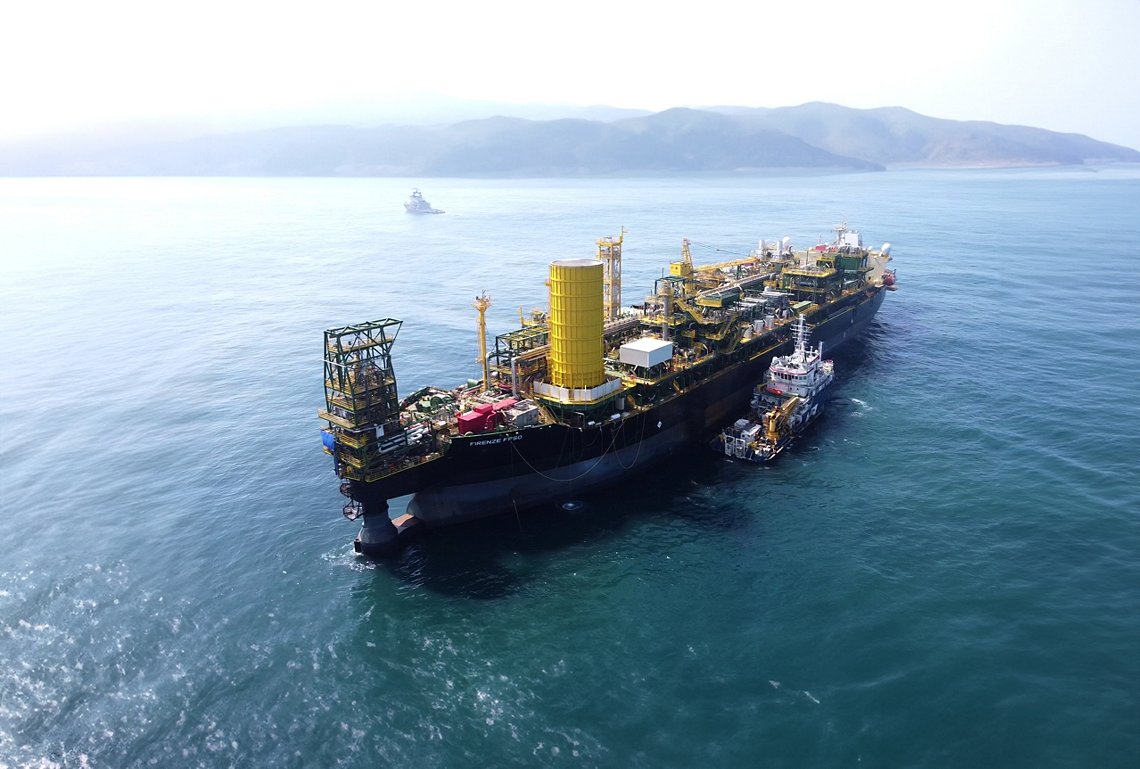
Eni’s recent gas and condensate discovery offshore Côte d’Ivoire marks a significant milestone for the Italian energy major and further solidifies the West African nation’s burgeoning role in global energy markets. The Murene South-1X exploration well in Block CI-501 has unearthed the Calao South discovery, estimated to hold a substantial 5 trillion cubic feet (Tcf) of gas and 450 million barrels (MMbbl) of condensate. This colossal find, now the second-largest in the country after Eni’s own Baleine field, underscores the immense potential of the Calao channel complex and is poised to become a major catalyst for Eni’s long-term growth trajectory in the region. For investors, this discovery represents a strategic asset, offering significant future production potential and a diversified revenue stream in an evolving global energy landscape.
The Strategic Depth of Calao South: Eni’s West African Masterstroke
The Calao South discovery is more than just another find; it’s a strategic expansion of a proven hydrocarbon system. Encountering hydrocarbons within high-quality Cenomanian sand reservoirs and confirming approximately 50 meters of gross hydrocarbon-bearing interval with strong petrophysical properties speaks volumes about the reservoir quality. The well, drilled to an impressive total depth of approximately 5,000 meters in 2,200 meters of water using the Saipem Santorini drillship, highlights the technical prowess required for deepwater exploration. Eni’s 90% operating interest in Block CI-501, alongside partner Petroci Holding’s 10%, grants the company significant control over future development and monetization strategies. This dominance is crucial for optimizing capital expenditure and accelerating project timelines. The Calao South discovery’s proximity, about 8 km southwest of the Murene-1X discovery in the adjacent CI-205 block, suggests a broader, interconnected geological system, de-risking further exploration within the Calao channel complex and potentially unlocking even more reserves. For an integrated player like Eni, such large-scale, high-quality resources provide a robust foundation for long-term production and value creation, particularly in a region where the company has demonstrated consistent operational success since 2015.
Navigating Volatility: Investment Implications Amidst Shifting Crude Markets
In a global energy market characterized by persistent volatility, a major discovery like Calao South takes on added significance. As of today, Brent crude trades at $92.45, reflecting a +2.23% gain within a day range of $89.11-$94.68. This rebound follows a notable period of fluctuation, with Brent having shed nearly 20% from its March 31 peak of $118.35 down to $94.86 just yesterday, highlighting significant market uncertainty. Such swings lead many investors to ask, “Is WTI going up or down?” – a common sentiment echoed in recent queries to our platform’s AI assistant. While crude prices remain sensitive to geopolitical events and supply-demand dynamics, a substantial gas and condensate discovery offers a distinct investment proposition. Condensate, a high-value light crude, typically tracks Brent and WTI, providing exposure to liquid hydrocarbon upside. However, the vast gas reserves offer a more stable, long-term revenue stream, often less directly impacted by the daily gyrations of the crude market. This diversification helps de-risk Eni’s portfolio against crude price shocks, enhancing the overall attractiveness of its exploration and production assets. Investors are increasingly seeking energy investments that blend growth potential with resilience, and Calao South fits this profile by offering both material condensate volumes and significant natural gas resources for future energy security.
What’s Next for Calao South? Unpacking Development Timelines and Future Catalysts
The immediate next step for the Calao South discovery is a full drill stem test (DST). This critical appraisal activity will be instrumental in assessing the field’s production capacity and providing crucial data to support the broader appraisal of the Calao complex. A successful DST could significantly de-risk the project, paving the way for accelerated development planning. For investors, the timeline for bringing such a massive asset online is key. Given Eni’s existing infrastructure and operational experience with the nearby Baleine field, there’s potential for a relatively swift transition from appraisal to development, leveraging synergies and established supply chains in Côte d’Ivoire. Looking ahead, several upcoming market events could influence the broader investment climate for projects like Calao South. The EIA Weekly Petroleum Status Reports, scheduled for April 22nd and 29th, will provide fresh insights into U.S. inventory levels and demand trends, while the EIA Short-Term Energy Outlook on May 2nd will offer critical projections for global oil and gas markets through 2026. Furthermore, the OPEC+ Joint Ministerial Monitoring Committee (JMMC) meeting today, April 21st, could signal adjustments in supply policy that impact long-term price assumptions for new development projects. A robust outlook for natural gas demand, particularly in Europe and Asia, could further bolster the economic viability of monetizing Calao South’s gas reserves, potentially via LNG exports, making these forward-looking data points crucial for investors assessing Eni’s future capital allocation.
Côte d’Ivoire: A Rising Star in West African Energy and Eni’s Regional Dominance
Côte d’Ivoire is rapidly emerging as a significant player in the West African energy landscape, and Eni has been a pioneering force in this transformation since establishing its presence in 2015. The Baleine field, already producing oil and gas from its initial development phases, serves as a testament to the country’s hydrocarbon potential and Eni’s operational capabilities. Calao South further solidifies Côte d’Ivoire’s position as an attractive frontier for deepwater exploration and development. This sustained success is critical for the nation’s energy independence and economic development, providing both domestic energy supply and potential export revenues. For investors evaluating Eni, the company’s established footprint, deep understanding of the local geology, and strong government relationships in Côte d’Ivoire represent a significant competitive advantage. The expansion of the Calao channel complex through discoveries like Calao South reinforces the long-term value proposition of Eni’s West African portfolio. As global energy demand continues to evolve, particularly with a growing emphasis on natural gas as a transition fuel, strategic, large-scale gas and condensate assets in politically stable and operationally favorable regions like Côte d’Ivoire become increasingly valuable, positioning Eni for sustained growth and shareholder returns.