Newfoundland & Labrador’s (NL) offshore oil and gas sector stands at a critical juncture, presenting both significant opportunities and notable headwinds for investors. While the region boasts substantial untapped potential, as highlighted by Energy NL CEO Charlene Johnson, the path to unlocking this value is complicated by policy uncertainties and the ever-present volatility of global energy markets. For astute investors eyeing long-term plays in the North Atlantic, understanding these dynamics, juxtaposed with immediate market signals and upcoming events, is paramount.
Bay du Nord: A Critical Catalyst for Offshore Development
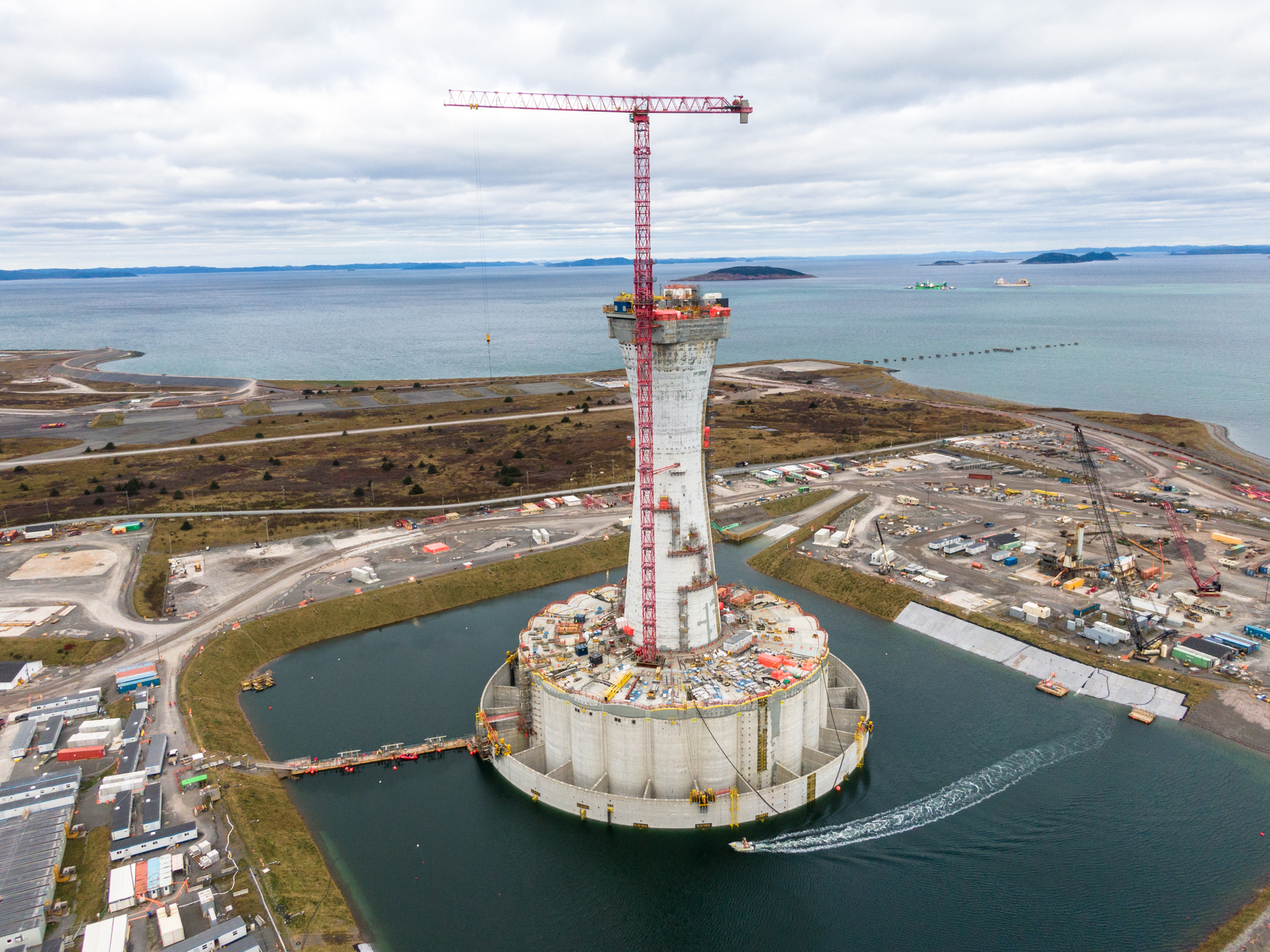
The proposed Bay du Nord project is undoubtedly the focal point for NL’s offshore future, acting as a crucial bellwether for the entire region. Discovered in 2013, the project is now approaching a pivotal decision gate two, anticipated in December of this year. Equinor, the project operator, has expressed cautious optimism, a sentiment that resonates through the local supply chain. This project is not merely another field development; it represents an estimated $80 billion benefit to the provincial GDP and promises to generate thousands of jobs, significantly stimulating further interest and investment in NL’s offshore capabilities. The planned detailed supplier development sessions in the fall, including B2B meetings, underscore the project’s advanced planning and potential for widespread economic impact. For investors, Bay du Nord’s progression will signal the viability of large-scale, long-cycle offshore projects in a region with considerable geological prospectivity, influencing capital allocation decisions across the basin.
Navigating Policy Headwinds: Emissions Caps and Exploration Incentives
Despite the promise of projects like Bay du Nord, the investment landscape in NL is complicated by a tension between provincial support and federal regulatory pressures. A primary concern for industry players is the federal emissions cap, which Energy NL views as a de facto production cap. This policy creates significant uncertainty for companies considering the substantial capital commitments required for offshore development. Investing $150 million to $200 million for exploration and then an additional $10 billion to $12 billion for infrastructure becomes a high-stakes gamble if future production volumes are capped, jeopardizing the return on investment. Energy NL continues to advocate for the elimination of this cap, recognizing its chilling effect on investor confidence. Counterbalancing this federal stance, the provincial government has introduced a $90 million exploration incentive fund in its latest budget, designed to attract new drilling activity by offsetting the high costs associated with offshore wells. The specifics of this fund are pending, but a bidding round is scheduled for November. While a positive step, the effectiveness of this provincial initiative in stimulating long-term investment will largely depend on resolving the overarching federal policy uncertainties.
Global Market Dynamics and Investor Sentiment
The attractiveness of NL’s offshore projects is inextricably linked to the broader global oil market and prevailing investor sentiment. As of today, Brent Crude is trading at $96.13, marking a 1.41% increase within a day range of $91-$96.36. WTI Crude also saw positive movement, standing at $92.36, up 1.18% within a range of $86.96-$92.72. While these immediate gains are encouraging, it is crucial to note the recent 14-day trend, which saw Brent decline by $9, or 8.8%, from $102.22 on March 25th to $93.22 on April 14th. This volatility underscores the importance of a robust price environment for massive, long-term offshore investments. Our proprietary reader intent data reveals that investors are actively asking, “What is the consensus 2026 Brent forecast?” and seeking to “Build a base-case Brent price forecast for next quarter.” These questions highlight the critical need for price stability and predictable long-term outlooks when evaluating projects that require multi-year development cycles and billions in capital. Sustained prices above the $90 threshold tend to de-risk these investments, but any significant downward pressure could temper enthusiasm for new, capital-intensive ventures.
Forward Outlook: Key Events Shaping Near-Term Investment Decisions
The coming weeks are packed with events that will shape the near-term trajectory of global oil markets and, by extension, the investment climate for regions like NL. Investors will be closely monitoring the OPEC+ Joint Ministerial Monitoring Committee (JMMC) meeting on April 18th, followed by the full OPEC+ Ministerial Meeting on April 20th. These gatherings are crucial for deciphering future production policy, which directly impacts global supply-demand balances and crude price stability. Any signals of production adjustments could significantly influence market sentiment. Additionally, the weekly API Crude Inventory reports (April 21st, 28th) and the EIA Weekly Petroleum Status Reports (April 22nd, 29th) will provide granular insights into U.S. inventory levels, a key indicator of market tightness or surplus. Furthermore, the Baker Hughes Rig Count, scheduled for April 17th and April 24th, offers a real-time pulse on drilling activity and capital expenditure within the industry. These upcoming data points and policy decisions will collectively contribute to the risk-reward calculus for investors evaluating new exploration and development opportunities in NL, particularly in the lead-up to the Bay du Nord decision gate and the provincial exploration bidding round.
Conclusion: Balancing Opportunity with Uncertainty
Newfoundland & Labrador’s offshore sector presents a compelling paradox for energy investors: immense potential for resource development and economic benefit, tempered by significant policy and market uncertainties. The Bay du Nord project is a lynchpin, its progress closely watched as a test case for future large-scale investments. While provincial incentives aim to attract new exploration, the shadow of federal emissions caps creates a disincentive that demands resolution. Investors are keenly focused on global crude price stability, with current Brent and WTI levels providing a supportive, albeit recently volatile, backdrop. The confluence of upcoming OPEC+ decisions and weekly inventory data will offer crucial insights into the near-term market direction. For NL to fully capitalize on its offshore wealth, a clear, predictable, and supportive policy framework, coupled with sustained global demand and pricing, is essential to attract and retain the long-term capital required for these frontier projects.