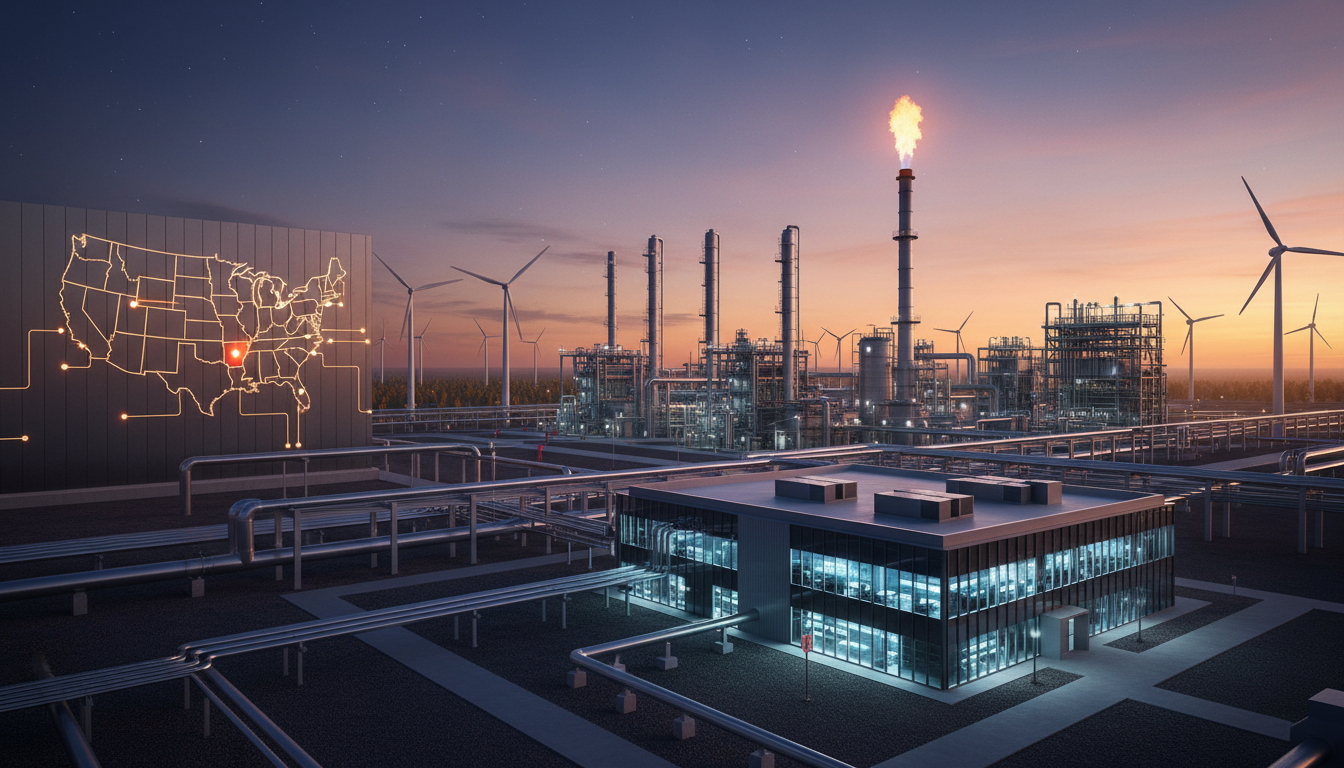
The relentless march of Artificial Intelligence is not just reshaping how we live and work; it’s profoundly reconfiguring the energy landscape across the United States. As AI’s computational demands skyrocket, the digital infrastructure supporting it requires an unprecedented surge in reliable power, creating a compelling, long-term demand catalyst for natural gas. This isn’t merely an incremental increase; it’s a structural shift driving data centers away from traditional tech hubs towards energy-rich regions like Texas and the American Midwest, presenting a unique and increasingly critical investment theme for the oil and gas sector.
The New Geography of Power-Hungry Data Centers
For decades, the digital backbone of America was concentrated in areas like Northern Virginia. However, the sheer energy intensity of modern AI and cloud computing is forcing a strategic relocation. Our proprietary analysis indicates a significant pivot, with Texas and the American Midwest emerging as the primary destinations for the next generation of hyperscale computing infrastructure. These two regions, which collectively housed one-third of hyperscale data center capacity by the close of 2025, are now projected to host a staggering 53% of all new ultra-large data processing facilities slated to come online in the near future. This migration isn’t driven by lower land costs or fiber access alone; it’s a calculated move to secure readily available, affordable, and, most importantly, dependable electricity. The insatiable appetite of these facilities, which can consume as much power as small cities, is testing the limits of existing electricity grids, making robust energy supply the paramount factor in site selection.
Natural Gas: Fueling the AI Revolution On-Site
Texas has swiftly positioned itself as a leader in this new wave of data center development, leveraging its attractive business climate, ample land, and prodigious energy resources. A key innovation driving this dominance is the widespread adoption of a “bring your own power” (BYOP) strategy. Rather than solely relying on the often-strained public grid, numerous data center projects within the state are proactively developing their own dedicated, on-site power generation facilities. A prime example is the formidable Stargate campus near Abilene, which operates with significant energy independence. These bespoke power plants are predominantly fueled by natural gas, capitalizing on Texas’s prolific shale gas production and extensive pipeline infrastructure. This approach offers enhanced energy security, greater cost predictability, and superior reliability for mission-critical operations, cementing natural gas’s role as an indispensable asset in the expanding digital economy.
Market Dynamics and Natural Gas’s Enduring Appeal
While the broader crude oil market experiences its typical volatility, the structural demand for natural gas from data centers presents a distinct investment narrative. As of today, Brent crude trades at $95.19, reflecting a significant daily gain of 5.32%, while WTI crude sits at $87.05, up 5.4% within the day’s range of $85.45-$89.6. This daily surge comes after a notable downturn, with Brent having declined by $22.4, or nearly 20%, from $112.78 on March 30 to $90.38 by April 17. Our readers are keenly watching these price swings, with common questions surfacing about the future direction of WTI and overall oil prices by year-end 2026. However, for natural gas, the story is less about short-term geopolitical shocks and more about fundamental, burgeoning industrial demand. The consistent, non-cyclical nature of data center power requirements offers a compelling stability for natural gas producers and midstream operators, potentially insulating them from some of the wider energy market’s more speculative swings. This underlying demand acts as a robust floor, providing a unique resilience in the energy investment portfolio.
Forward Outlook and Investment Implications
Looking ahead, the trajectory for natural gas demand from data centers appears firmly upward, a trend that will be further illuminated by upcoming market signals. While the OPEC+ JMMC Meeting today and the subsequent Ministerial Meeting on April 25 will primarily focus on crude oil production quotas, their outcomes will influence the general sentiment across the energy complex. More directly relevant to natural gas, the API Weekly Crude Inventory reports on April 21 and April 28, along with the EIA Weekly Petroleum Status Reports on April 22 and April 29, will provide crucial insights into overall energy consumption trends and inventory levels. Of particular interest will be the Baker Hughes Rig Count on April 24 and May 1. Any sustained increase in natural gas-directed drilling activity, or even a stabilization in a volatile market, could signal producers responding to this new, significant demand source. Investors seeking exposure to this secular growth trend should consider entities involved in natural gas production, particularly those with assets in Texas and the Midwest, as well as midstream companies with pipeline infrastructure connecting these prolific basins to new data center hubs. Furthermore, companies specializing in distributed power generation solutions and gas-fired turbine technology stand to benefit substantially from this “bring your own power” paradigm. This is a long-term play on the digital future, where natural gas is not just an energy source, but a foundational component of modern computing infrastructure.


