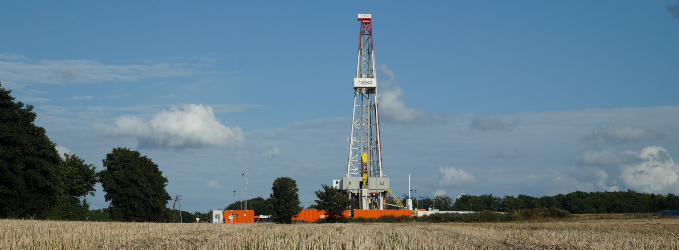
Condor Energies is embarking on a pivotal multi-well drilling campaign in Uzbekistan, signaling an aggressive push to significantly expand natural gas production and bolster its reserve base across Central Asia. This strategic initiative, centered on eight conventional gas-condensate fields under a Production Enhancement Services Contract (PEC) where Condor holds a commanding 51% interest, represents a critical growth catalyst. For investors monitoring the evolving energy landscape, Condor’s methodical approach to unlocking substantial gas resources, coupled with strategic infrastructure development and diversification into Liquefied Natural Gas (LNG), positions the company as a compelling player in a region of increasing geopolitical and energy importance. This deep dive will explore the specifics of the drilling program, its integration with broader market dynamics, and the forward-looking implications for stakeholders.
Unlocking Uzbekistan’s Deep Gas Potential
The current drilling campaign commences with a foundational vertical well, designed to meticulously probe both established carbonate reservoirs and deeper, unproven clastic and basement formations, targeting depths of approximately 3,000 meters. This initial phase is crucial, as the drilling and comprehensive evaluation of this well are anticipated to conclude by October 2025. The insights gleaned from this foundational well will directly inform a subsequent 12-well horizontal drilling initiative. Each of these horizontal wells is projected to deliver between 13 and 20 MMcf/d, with an estimated cost of around $3.3 million per well once operational efficiencies and a drilling learning curve are fully realized. Crucially for investors, the significant performance potential of these horizontal wells is not yet incorporated into the company’s current reserves reports, implying substantial upside for material upgrades once production metrics are established and verified.
Further bolstering the long-term potential of this program, Condor has proactively integrated 1,462 square kilometers of reprocessed 3D seismic data and advanced inversion attributes. This sophisticated analysis has dramatically expanded its prospect inventory to 18 distinct targets, suggesting a robust pipeline of opportunities that could sustain drilling operations well into, and potentially beyond, 2026. Furthermore, to accelerate production timelines and capitalize on these expanded targets, discussions are actively underway regarding the potential for contracting a second drilling rig. This multi-pronged strategy underscores Condor’s commitment to maximizing the value of its Uzbek assets.
Strategic Infrastructure, Production Growth, and Market Realities
Beyond the drill bit, Condor is proactively addressing future operational challenges and optimizing long-term production through significant infrastructure investments. The company is advancing a field compression project, targeting implementation in 2026, which is specifically designed to counteract increasing pipeline pressures and maintain consistent output. Engineering assessments project that this compression could boost base production by an impressive 25% to 55%, with estimated capital expenditures between $12 million and $20 million, depending on the final technical configuration. Condor’s existing Uzbek operations have consistently delivered, averaging 10,284 boe/d through early September, a performance level steady with the preceding quarter. Future output expansion is firmly linked to the successful commissioning of these new wells and the operationalization of the planned compression infrastructure.
These ambitious capital programs are unfolding against a backdrop of significant volatility in global energy markets. As of today, Brent crude trades at $90.38 per barrel, marking a sharp 9.07% decline within the day, having ranged from $86.08 to $98.97. Similarly, WTI crude stands at $82.59, down 9.41% today, fluctuating between $78.97 and $90.34. This daily downturn extends a broader bearish trend, with Brent having shed over $20 per barrel in the last 14 days, falling from $112.78 on March 30th to $91.87 on April 17th. Gasoline prices reflect this sentiment, currently at $2.93, a 5.18% drop today. While Condor’s primary focus is natural gas, such significant crude market swings often impact overall energy sector sentiment and investor appetite. However, a stable, long-term gas production profile, enhanced by strategic compression, could offer a degree of insulation from immediate crude price fluctuations, especially given the underlying demand for natural gas.
Diversification into LNG and Addressing Investor Outlook
Beyond its robust Uzbek gas program, Condor is making significant strides with a modular Liquefied Natural Gas (LNG) project in Kazakhstan. This initiative represents a strategic diversification, tapping into the growing global demand for natural gas and providing a valuable hedge against regional market dynamics. Fabrication of the inaugural plant is progressing as planned, with completion anticipated by late 2025 and initial LNG production slated for the second quarter of 2026. The long-term vision for this site includes a substantial expansion, targeting an ultimate production capacity of 150,000 gallons per day.
Our proprietary reader intent data reveals that investors are keenly focused on the future direction of energy prices, with many asking, “what do you predict the price of oil per barrel will be by end of 2026?” and “What are OPEC+ current production quotas?”. Condor’s strategy, leaning heavily into gas and LNG, offers a distinct investment proposition in this uncertain environment. While crude price forecasts are inherently challenging, with significant events like the upcoming OPEC+ Joint Ministerial Monitoring Committee (JMMC) meeting today, April 18th, and the full Ministerial Meeting tomorrow, April 19th, poised to influence market direction, Condor’s long-term gas assets provide a different risk profile. The company’s projects, with their multi-year development timelines, rely more on sustained regional gas demand and global LNG market fundamentals than day-to-day crude price volatility. Upcoming market data, such as the API Weekly Crude Inventory on April 21st and the EIA Weekly Petroleum Status Report on April 22nd, will provide further insights into supply-demand balances, but Condor’s gas-centric approach aims to capture value in a structurally growing gas market.
Investment Implications and Catalysts Ahead
Condor Energies’ multi-faceted strategy in Central Asia presents a compelling investment case, characterized by significant production and reserve upside, cost-effective drilling, and strategic diversification. The Uzbek drilling program, with its potential for material reserve upgrades and the expansion to 18 targets, lays a strong foundation for organic growth. The planned field compression project for 2026 will further enhance base production, ensuring long-term asset value. Concurrently, the Kazakhstan LNG project, with its first plant coming online by Q2 2026 and significant expansion potential, positions Condor to capitalize on global LNG demand, offering a valuable revenue stream independent of local pipeline constraints.
While the overall energy market faces headwinds, as evidenced by recent crude price declines, Condor’s focus on natural gas and LNG offers a differentiated opportunity. Investors should closely monitor the drilling results from the initial vertical well by October 2025, the progress on the 12-well horizontal program, and the commissioning of the Kazakhstan LNG plant in Q2 2026. These specific operational milestones, rather than short-term crude price fluctuations, will be the primary catalysts for value creation. With a controlling 51% stake in the Uzbek PEC, Condor is well-positioned to drive these projects forward and translate its ambitious plans into tangible returns for shareholders, making it an intriguing play for those seeking exposure to Central Asia’s growing energy sector.