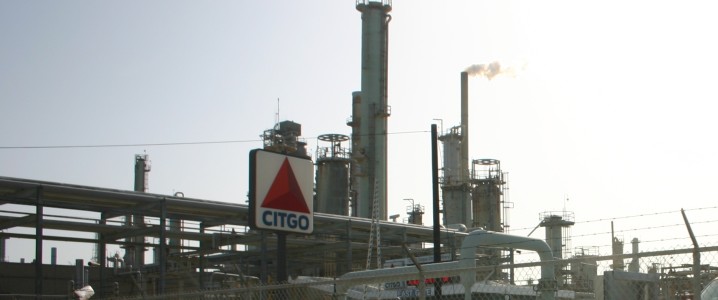
The high-stakes auction for PDV Holding, the U.S.-based parent company of Citgo Petroleum, has taken a dramatic turn, injecting fresh uncertainty and potential upside into an already compelling energy investment story. What was recently seen as a nearing conclusion with a $7.38 billion bid now faces a surprise challenge from an undisclosed “Bidder B,” throwing a wrench into the process and potentially driving the final valuation even higher. For investors tracking strategic refining assets and the broader oil and gas market, this development is not merely procedural; it reflects intense competition for critical infrastructure and offers a real-time gauge of investor confidence in the refining sector’s future profitability. As the U.S. federal court weighs its options, the outcome will reverberate through the refining landscape, setting a precedent for asset valuations in an increasingly complex global energy market.
The Strategic Value of Citgo: A Refining Powerhouse
Citgo Petroleum represents a cornerstone of U.S. refining capacity, boasting an impressive 770,000 barrels per day across its facilities in Louisiana, Texas, and Illinois. This substantial footprint makes it a strategic player in the domestic fuel market, a factor that underpins the aggressive bidding witnessed in the ongoing auction. The court-appointed special master previously endorsed a $7.38 billion offer from a consortium led by Gold Reserve Ltd. and Dalinar Energy, significantly surpassing the court’s initial $3.7 billion floor price. This indicates a strong market appetite for such robust assets. The auction itself is the culmination of years of legal battles, stemming from creditor claims against Venezuela’s state-owned PDVSA for expropriations and unpaid debts. Long shielded by intricate legal firewalls, Citgo’s ownership now hangs precariously, marking what could become one of the most consequential creditor seizures of a refining asset in U.S. history.
Market Dynamics and the Escalating Bidding War
The emergence of “Bidder B,” an unnamed entity reportedly engaged in the process since July, adds a layer of complexity and potential delay to a decision expected later this month. While not yet deemed “superior” by the special master, the new proposal signals a robust competition that could push the final sale price beyond the current $7.38 billion recommendation. This bidding intensity unfolds against a dynamic crude market backdrop. As of today, Brent crude trades at $99.46, marking a notable 4.77% gain for the day, with WTI crude similarly strong at $91.23, up 3.52%. Gasoline prices are also elevated at $3.08. However, this recent upswing follows a period of significant volatility; Brent, for instance, has shed 12.4% over the past two weeks, falling from $108.01 on March 26 to $94.58 by April 15. The willingness of bidders to engage in a high-stakes battle despite this crude price fluctuation underscores a strong belief in the enduring value and profitability of well-positioned refining assets, irrespective of short-term commodity price swings.
Forward Outlook: Upcoming Events Influencing Refining Valuations
The judicial ruling on Citgo’s ownership is expected later this month, but its implications will extend far beyond the immediate decision, especially when viewed against a backdrop of critical upcoming energy events. Investors are closely monitoring the OPEC+ Joint Ministerial Monitoring Committee (JMMC) meeting on April 18, followed swiftly by the full Ministerial meeting on April 20. These gatherings hold the potential to reshape global crude supply policies, directly influencing feedstock costs and, consequently, refining margins. Further guiding market sentiment will be the regular API and EIA weekly inventory reports, scheduled for April 21, 22, 28, and 29. These reports offer vital insights into U.S. demand and supply dynamics, which are foundational to assessing refining sector performance. Additionally, the Baker Hughes Rig Count on April 17 and 24 will provide a real-time gauge of North American production activity. These collective events could introduce significant volatility or much-needed clarity into the market, directly impacting the perceived long-term value of refining assets like Citgo and informing strategic investment decisions.
Investor Sentiment and the Quest for Price Stability
Our proprietary reader intent data offers a clear window into investor priorities this week, highlighting a pronounced focus on crude price stability and future forecasts. Investors are actively seeking to build “base-case Brent price forecasts for the next quarter” and understand the “consensus 2026 Brent forecast.” This intense interest directly reflects the paramount importance of predictable feedstock costs for refining operations. The escalating bidding war for Citgo, therefore, is more than just a contest for a single asset; it serves as a critical litmus test for the perceived long-term value and resilience of integrated refining capacity within a dynamic oil market. The willingness of bidders to push valuations past the $7.38 billion mark suggests a robust conviction in sustained refining margins, even amidst the backdrop of fluctuating crude prices. This investor focus on future crude price trajectories directly informs their appetite for refining assets that promise consistent returns, irrespective of broader market volatility.
The Road Ahead: Strategic Implications for the Refining Sector
The current impasse surrounding Citgo’s sale highlights the complex interplay of legal, geopolitical, and market forces shaping the energy sector. The emergence of a new bidder, while potentially delaying a final decision, could ultimately drive the sale price higher, setting a new benchmark for refining asset valuations. For investors, this scenario presents both an opportunity and a challenge: an opportunity to witness a competitive valuation process for a strategic asset, and a challenge to accurately forecast the ultimate financial outcome. Should the price continue to escalate, it would underscore a strong long-term outlook for U.S. refining capacity, despite the ongoing energy transition narratives. The eventual resolution will not only determine the fate of one of the last profitable Venezuelan-linked energy assets in the West but will also offer critical insights into the strategic appetite for essential energy infrastructure in today’s volatile global market.


