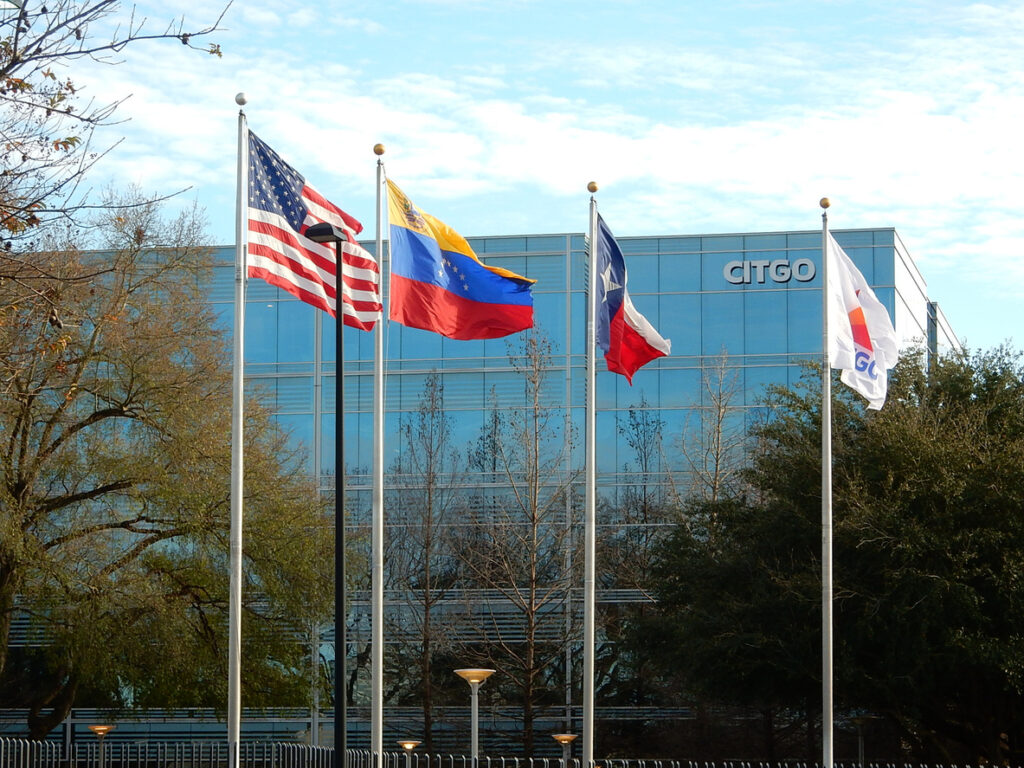
The highly complex and contentious auction for shares in Citgo Petroleum’s parent company has received a crucial green light from a U.S. judge, denying motions by Venezuela and miner Gold Reserve to disqualify the overseeing judge, a court officer, and two advising firms. This decision clears a significant procedural hurdle, allowing the sale process of PDV Holding to move forward and bringing the resolution of up to $19 billion in creditor claims closer to fruition. For investors tracking distressed assets and the refining sector, this development signals a clearer, albeit still intricate, path toward a final outcome for one of the most valuable energy assets currently on the block.
The Citgo Auction: A Critical Juncture for Distressed Asset Investors
The Delaware court’s ruling marks a pivotal moment in the multi-billion dollar legal saga surrounding Citgo. Judge Leonard Stark firmly denied the motions alleging conflicts of interest, deeming them “procedurally defective” due to untimeliness and lack of merit. This move dispels immediate challenges to the integrity of the auction process, which aims to satisfy 15 creditors seeking compensation for Venezuela’s debt defaults and expropriations. Elliott Investment Management’s Amber Energy has already put forward a recommended bid of $5.9 billion, a figure that, while substantial, represents only a fraction of the total claims. With the judge’s stated intention to render a final decision on the auction’s winner by the end of November, investors now have a more defined timeline for this high-stakes resolution. The continued legal maneuvering by Gold Reserve in other courts, however, underscores the persistent complexity that typically characterizes such significant distressed asset sales.
Navigating Market Volatility Amidst Refining Sector Uncertainty
The judicial clarity on the Citgo auction comes at a time of heightened volatility in the global crude markets, a critical factor influencing the valuation and attractiveness of refining assets. As of today, Brent crude trades at $90.38 per barrel, a sharp 9.07% decline within the day, ranging from $86.08 to $98.97. WTI crude has mirrored this trend, falling 9.41% to $82.59, with a daily range between $78.97 and $90.34. This significant downturn is part of a broader trend, with Brent having plummeted by nearly 20% over the last 14 days, from $112.78 on March 30th to its current level. Such dramatic swings in crude prices directly impact refining margins, the lifeblood of operations like Citgo. While lower crude input costs can sometimes boost downstream profitability, severe price instability creates a challenging environment for assessing long-term asset value, adding another layer of complexity for potential bidders and investors evaluating the refining sector.
Upcoming Energy Events: A Catalyst for Crude and Refining Outlooks
Looking ahead, the immediate future holds several key events that could significantly influence crude price stability and, by extension, the perceived value of refining assets like Citgo. Investors will be closely watching the OPEC+ Joint Ministerial Monitoring Committee (JMMC) Meeting this Sunday, April 19th, followed by the crucial OPEC+ Ministerial Meeting on Monday, April 20th. Given the recent steep decline in crude prices, any signals or decisions from these gatherings regarding production levels could either stabilize the market or exacerbate current trends. Further insights into supply and demand dynamics will come from the API Weekly Crude Inventory report on Tuesday, April 21st, and the EIA Weekly Petroleum Status Report on Wednesday, April 22nd. The Baker Hughes Rig Count on Friday, April 24th, will offer a snapshot of upstream activity. These upcoming data points and policy decisions are not merely abstract figures; they directly feed into the financial models and strategic considerations of entities eyeing valuable assets such as Citgo, impacting everything from cash flow projections to competitive bidding strategies.
Investor Sentiment and the Future of Refining Assets
Our proprietary reader intent data reveals a consistent focus on crude price direction, with investors frequently asking about the short-term trajectory of WTI and broader oil price predictions for the end of 2026. This reflects a deep concern about market stability and future profitability, especially for companies heavily reliant on commodity prices. The ongoing Citgo auction, with its substantial refining capacity and strategic U.S. footprint, serves as a high-profile case study for how investors are valuing such assets amidst this uncertainty. The judge’s ruling, by providing clarity on the auction’s path, allows investors to better focus on the fundamental market drivers. Despite the current crude volatility, the eventual sale of Citgo will be a bellwether for investor confidence in the long-term strategic value of integrated refining and petrochemical operations. As the market digests both the auction’s progression and forthcoming supply/demand signals, the investment community will be keenly observing for signs of stability and opportunity within the downstream sector.