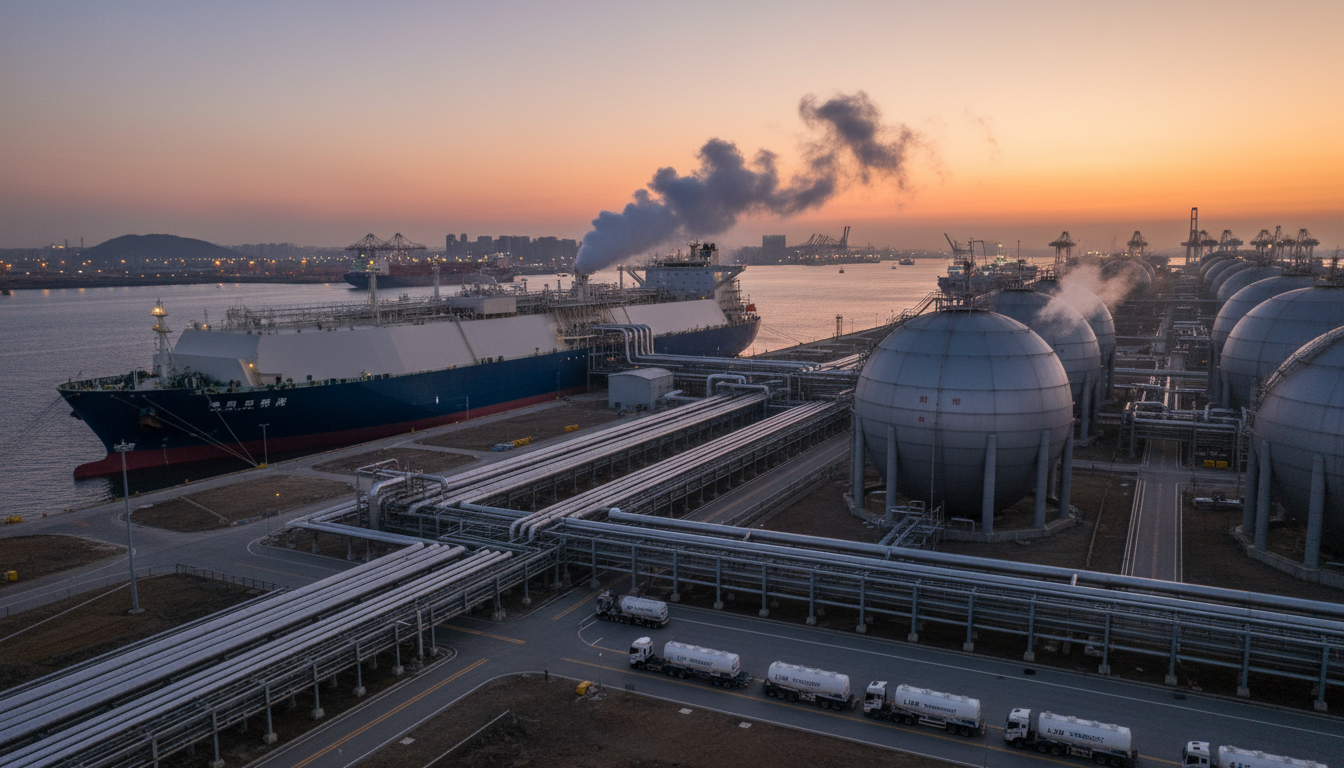
China’s LNG Imports Rebound Amid Geopolitical Tension and Domestic Demand Surge
Investors in the global natural gas market are closely monitoring a notable shift in China’s liquefied natural gas (LNG) procurement strategy. After a period of significant contraction, LNG deliveries to China are now showing clear signs of recovery, driven by strategic replacement efforts in response to supply disruptions emanating from the Middle East. This resurgence presents a complex interplay of geopolitical risk, evolving domestic demand, and compelling pricing dynamics that demand investor attention.
Recent ship-tracking data reveals a significant uptick in China’s LNG imports. The 30-day moving average for these shipments has climbed to its highest point since late February, indicating a robust rebound in procurement activity. While this metric still trails the five-year average, the deficit has narrowed dramatically, shrinking to roughly half the gap observed in early April. This quick recovery underscores the agility of China’s energy sector in adapting to external shocks.
The Middle East Vortex: A Global Supply Squeeze
The ongoing geopolitical instability in the Middle East has had a profound impact on global LNG flows, with the closure of the Strait of Hormuz effectively choking approximately one-fifth of the world’s total LNG supply. Qatar, a critical player in the global LNG arena, historically supplied around 30 percent of China’s LNG requirements last year. However, the current situation has compelled Qatar to halt its exports, creating a substantial void in supply chains.
This disruption directly translated into a sharp decline in China’s seaborne gas purchases, which plummeted to an eight-year low last month, according to insights from analytics firm Kpler. The scale of this reduction highlights the immediate vulnerability of even large, diversified energy consumers to regional conflicts impacting key transit points and producers.
China’s Strategic Resilience: Mitigating Initial Shocks
Despite the severe pressures on global supply, China’s gas sector has demonstrated a superior degree of insulation compared to many other Asian nations. This resilience stems from a multi-pronged strategy. Firstly, China rapidly diversified its sourcing, securing replacement volumes from a broad spectrum of sellers spanning from Canada to Nigeria. This global procurement network proved instrumental in offsetting the lost Qatari volumes.
Secondly, China possesses a robust domestic production base and extensive overland pipeline infrastructure, which significantly reduces its reliance on seaborne LNG. These internal supply channels provide a crucial buffer during periods of international market volatility. Furthermore, Chinese utilities maintain a diverse portfolio of alternative fuels, including substantial coal reserves and a rapidly expanding renewable energy capacity, offering flexibility to maintain grid stability and meet industrial demand even when gas supply is constrained.
Mounting Domestic Pressures Drive Spot Market Engagement
However, even China’s robust insulation has its limits. A confluence of factors is now compelling some Chinese energy companies to actively engage the spot market for LNG shipments to secure crucial supplies. Declining natural gas inventories across the nation, coupled with the imminent prospect of hotter weather, have created an urgent need for additional volumes.
Meteorological forecasts from the European Centre for Medium-Range Weather Forecast predict above-normal temperatures across southern China throughout the remainder of May. This early onset of intense heat promises to elevate demand for air conditioning, placing additional strain on energy resources. Compounding this outlook, the El Niño weather phenomenon is projected to develop later this year, threatening to further amplify temperatures across China and consequently boost overall fuel demand.
The Arbitrage Opportunity: Domestic Prices Outpace Overseas Spot
A pivotal factor underpinning the renewed appetite for spot LNG imports is the dramatic surge in Chinese domestic gas prices. The cost of domestic trucked LNG in Guangdong, a vital industrial hub in southern China heavily reliant on gas, has skyrocketed by nearly 70 percent since early March. This benchmark price, tracked by Argus Media, has reached its highest level since 2023, creating a compelling economic incentive for importers.
Crucially, the current domestic price in Guangdong now surpasses the prevailing overseas spot LNG prices. This price disparity creates a clear arbitrage opportunity, making it economically attractive for buyers to import seaborne LNG and sell it into the higher-priced domestic market. This dynamic is a powerful driver for increased spot market activity, signaling to investors the potential for robust margins for those able to secure and deliver cargoes.
Active Market Participants and Future Outlook
Evidence of this increased activity is already visible in the market. Guangdong Energy Group Co. executed significant cargo purchases earlier this month, while Zhejiang Provincial Energy Group Co. recently concluded a tender for June and July shipments. These transactions underscore the immediate demand and the strategic shift by major energy players to secure supply ahead of the peak summer demand season.
Despite this encouraging uptick, the sustainability of China’s increased LNG appetite remains subject to significant external pressures. As long as the Strait of Hormuz remains a bottleneck and global spot LNG prices maintain their elevated levels, the Chinese market will continue to operate under a cloud of uncertainty. Investors should temper expectations, as the recent surge in imports could potentially moderate or even reverse course once the intense summer demand period concludes. The interplay of geopolitical stability, global supply chain integrity, and China’s domestic demand dynamics will continue to define the trajectory of this crucial energy market.