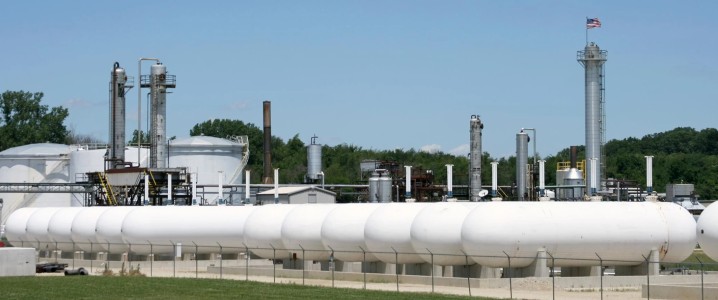
China’s relentless pursuit of energy security is reshaping global natural gas markets, with its aggressive expansion of underground storage capacity leading the world since 2022. This strategic pivot, detailed in recent industry reports, signals a profound shift in how the world’s second-largest economy insulates itself from the inherent volatility of international energy prices. For sophisticated investors, understanding the implications of China’s domestic gas strategy extends far beyond mere capacity numbers; it points to a future where spot LNG markets may experience reduced pressure, supply chains are reconfigured, and the very definition of energy resilience takes on new meaning.
China’s Unrivaled Storage Build-Out and Strategic Imperatives
In a landscape where many developed nations are seeing stagnating or only modest growth in their underground gas storage (UGS) facilities, China stands out with a remarkable expansion trajectory. Since 2022, China has added a significant 6 billion cubic meters (bcm) to its gas storage capacity, propelling it to the sixth position globally. This surge is a substantial contributor to the worldwide increase of 10 bcm in UGS capacity since 2022, bringing the total working gas volume to 424 bcm across 699 operational facilities. This move is not merely about capacity; it’s a calculated strategic play by Beijing to diminish its reliance on the often-turbulent spot LNG market. By enhancing its domestic buffer, China gains greater control over its supply, ensuring stability for its vast industrial and residential demand, and mitigating the impact of sudden price spikes or supply disruptions.
Concrete actions underpin this strategy. Earlier this year, PetroChina, a key state-owned energy giant, acquired the Xinjiang, Xiangguosi, and Liaohe gas storage sites from its parent, CNPC. This consolidation tightens control over the entire gas value chain, aligning corporate operations with national energy security objectives. Furthermore, China recently brought its first underground salt cavern gas storage facility online after a major expansion. Such advanced infrastructure significantly boosts the nation’s ability to manage peak demand, particularly during harsh winters, and further solidifies its energy independence. Beijing views natural gas not just as a fuel, but as a crucial “security hedge and a lower-emission bridge” fuel, with CNPC anticipating demand acceleration through the latter half of the decade, even as electric vehicles impact road fuel sales.
Navigating Volatility: Market Signals and Investor Concerns
The strategic importance of energy storage is underscored by the inherent volatility prevalent in global commodity markets. As of today, Brent crude trades at $90.38, reflecting a significant decline of 9.07% within the day, while WTI crude follows a similar trend at $82.59, down 9.41%. This sharp correction contrasts with Brent’s position just two weeks ago, when it stood at $112.78, marking a nearly 20% drop in less than a fortnight. Such dramatic price swings, also seen in gasoline prices which are down 5.18% to $2.93, highlight the unpredictable nature of global energy supply and demand dynamics. It’s precisely this kind of market instability that China’s gas storage strategy aims to counter.
Against this backdrop of fluctuating prices, OilMarketCap.com readers are actively seeking clarity and forward guidance. A recurring question this week is, “what do you predict the price of oil per barrel will be by end of 2026?” This long-term perspective is vital for investors evaluating the durability of energy investment themes, including the implications of China’s storage build-out. Another pertinent inquiry revolves around “OPEC+ current production quotas?”, reflecting the market’s constant need to understand supply-side management. China’s move to enhance domestic gas security, while distinct from crude oil production decisions, indirectly contributes to the broader energy supply narrative. A more self-sufficient China in natural gas could alleviate demand pressure on global LNG, allowing for greater supply availability for other markets and potentially stabilizing pricing, which in turn influences overall energy investment sentiment.
Forward Outlook: Upcoming Events and Global Supply Implications
The strategic significance of China’s gas storage expansion will continue to unfold against a backdrop of critical upcoming energy events. Investors should mark their calendars for the OPEC+ JMMC Meeting on April 19th and the subsequent OPEC+ Ministerial Meeting on April 20th. While these gatherings primarily focus on crude oil production policy, their outcomes invariably set the tone for broader energy market sentiment. Decisions regarding oil supply can indirectly influence capital allocation towards other energy sectors, including natural gas infrastructure. A tightening oil market, for instance, could intensify the focus on gas as a complementary energy source, making storage capacity even more valuable.
Closer to home, the weekly API and EIA crude inventory reports on April 21st/22nd and April 28th/29th, respectively, offer granular insights into North American energy stockpiles. While these reports focus on oil, they are indicators of overall market inventory health, a principle that China is applying aggressively to its gas sector. A robust domestic gas storage network means China can navigate potential supply chain disruptions or sudden demand surges with greater agility, potentially reducing its reliance on prompt LNG cargoes. This shift could have long-term implications for global LNG liquefaction projects, potentially moderating the pace of new Final Investment Decisions (FIDs) if a major buyer like China signals reduced future spot market exposure. Furthermore, the Baker Hughes Rig Count on April 24th and May 1st will provide insights into drilling activity, which, while primarily oil-focused, also reflects broader trends in upstream investment and resource availability, impacting the long-term gas supply picture.
Investment Implications: Strategic Positioning in a Reshaped Gas Market
For investors, China’s aggressive gas storage strategy presents both challenges and opportunities. On one hand, a more self-reliant China could temper the explosive growth seen in spot LNG prices during periods of extreme demand, potentially impacting the profitability outlook for pure-play LNG exporters heavily reliant on flexible cargoes. Companies with significant exposure to long-term LNG contracts may face less direct impact, but the overall market dynamic could shift towards greater stability. On the other hand, this trend highlights the enduring value of robust energy infrastructure. Investment opportunities may emerge in technologies and services related to underground gas storage construction, maintenance, and optimization, both within China and in other nations seeking to emulate its energy security drive.
Furthermore, the emphasis on gas as a “lower-emission bridge” fuel in China underscores the ongoing transition narrative. Companies involved in natural gas production, transportation, and distribution, particularly those with diversified portfolios or strategic partnerships in regions seeing similar infrastructure development, could find sustained growth. As China continues to prioritize domestic supply chain control, investors should assess the geopolitical implications for major gas exporters and the potential for a redistribution of global LNG trade flows. Ultimately, China’s storage expansion is a testament to the enduring importance of energy security, a theme that will continue to drive significant capital allocation decisions across the oil and gas landscape for years to come.


