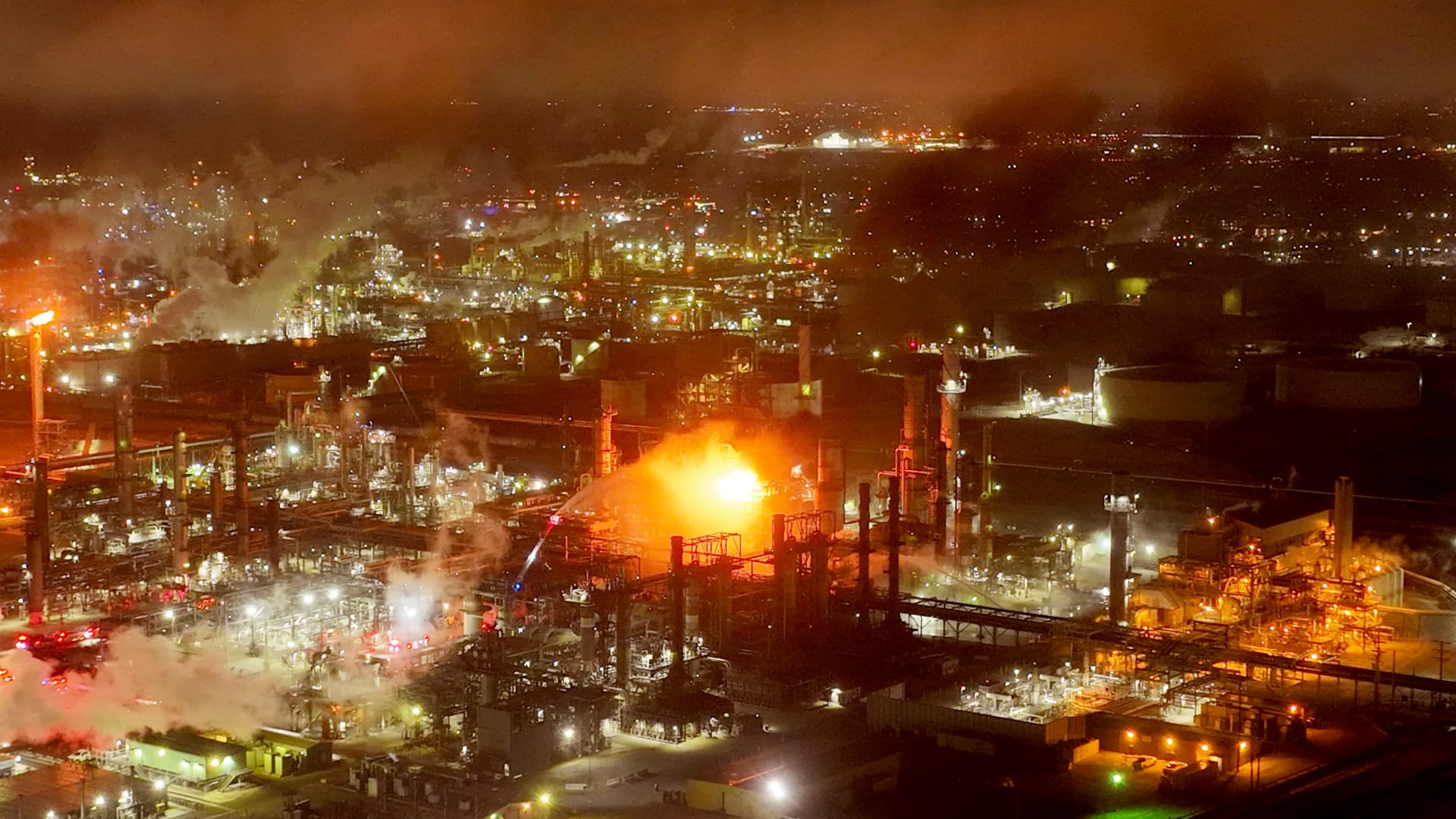
The energy market, ever-sensitive to supply disruptions, continues to process the long-term implications of the significant incident at Chevron’s El Segundo refinery on October 2, 2025. While thankfully no injuries were reported from the blaze that impacted a critical jet fuel production unit, the event underscored the inherent vulnerabilities in a tightly constrained refining system, particularly on the U.S. West Coast. For investors tracking the intricate dance between crude supply, refining capacity, and product demand, understanding the downstream effects of such an outage remains paramount, especially as global crude markets navigate their own choppy waters.
West Coast Refining Capacity Under Scrutiny
The El Segundo facility, a cornerstone of California’s refining infrastructure, experienced a substantial fire in one of its jet fuel production units last fall. This incident, occurring on October 2, 2025, brought immediate attention to the state’s already constrained refining capacity. While Chevron quickly mobilized emergency services and reported no injuries or off-site impacts, the temporary reduction in processing capabilities from such a large plant can have a ripple effect across the region. California’s unique environmental regulations and geographical isolation mean its refined product markets are often insulated, making them highly susceptible to local supply shocks. Any prolonged reduction in output, even from a single unit, can tighten product availability and influence localized pricing dynamics for jet fuel and potentially spill over into the gasoline market, where the refinery is also a major producer. Investors frequently scrutinize regional refining margins, and an event like this serves as a stark reminder of the operational risks inherent in the sector and the potential for temporary margin boosts for unaffected competitors.
Navigating Current Market Volatility Amidst Regional Disruptions
As of today, April 19, 2026, the broader crude oil market is experiencing notable downward pressure. Brent Crude currently trades at $90.38 per barrel, marking a significant 9.07% decline within the day, with its range spanning $86.08 to $98.97. Similarly, WTI Crude has fallen to $82.59, down 9.41%, trading between $78.97 and $90.34. This broader market weakness follows a pronounced trend; Brent has shed nearly 20% over the last 14 days, falling from $112.78 on March 30, 2026, to its current level. This global decline contrasts sharply with the localized supply concerns that can arise from incidents like the El Segundo fire. While the average U.S. gasoline price stands at $2.93, down 5.18% today, the West Coast market, still feeling the aftershocks of the October 2025 refinery incident, might exhibit different dynamics. Reduced regional capacity could provide a floor for local gasoline prices, even as crude input costs fall, potentially widening regional crack spreads for operational refineries. Investors must weigh these macro trends against specific regional supply-demand imbalances when assessing refining sector performance.
Forward-Looking Analysis: OPEC+ and Inventory Reports Critical
The market’s attention is firmly fixed on a series of critical upcoming events that will shape the near-term trajectory of oil and gas prices. The full Ministerial OPEC+ Meeting scheduled for today, April 19, 2026, is a pivotal moment, with investors keenly awaiting any announcements regarding production quotas. Our proprietary data indicates that many readers are asking about OPEC+’s current production levels and future intentions, highlighting the significant influence the cartel holds over global supply. Decisions made at this meeting could either exacerbate the recent crude price decline or provide a much-needed boost, directly impacting refiners’ feedstock costs. Furthermore, the API Weekly Crude Inventory reports on April 21 and April 28, followed by the EIA Weekly Petroleum Status Reports on April 22 and April 29, will offer crucial insights into U.S. crude and product inventories. These reports will be particularly scrutinized for refined product levels on the West Coast, where any lingering impacts from the El Segundo incident could manifest as tighter supplies. The Baker Hughes Rig Count on April 24 and May 1 will also provide forward guidance on U.S. production trends, further influencing the supply side of the equation. These events collectively paint a complex picture for oil price predictions towards the end of 2026, a key concern for many investors.
Investor Sentiment and Regional Plays
The recent volatility in crude prices, coupled with localized refining challenges, has naturally led to a flurry of questions from our investor community. Beyond broad oil price predictions for late 2026, there’s significant interest in how individual companies, particularly those with substantial West Coast refining footprints, might perform. The El Segundo incident, while specific to Chevron, highlights a systemic risk across the refining sector. Investors are not just asking about the direction of crude but also about the resilience and strategic positioning of refiners. Companies with diverse geographical operations or robust logistics networks might be better positioned to weather regional supply shocks. Furthermore, the event underscores the importance of operational integrity and safety measures, as unplanned outages can severely impact profitability and market share. For those looking at specific regional plays, understanding the repair timelines and recovery of facilities like El Segundo becomes critical for assessing future supply stability and potential for regional price spikes in refined products.
In conclusion, while global crude markets grapple with macroeconomic headwinds and oversupply concerns, the October 2025 incident at Chevron’s El Segundo refinery serves as a potent reminder that localized supply disruptions can create distinct regional market dynamics. Investors must remain vigilant, integrating both global macro factors and specific regional events into their investment theses, especially with a packed calendar of critical energy events on the horizon. The interplay between OPEC+ decisions, inventory data, and refinery operational status will dictate the landscape for oil and gas investing in the coming months.