Chariot’s Strategic Re-consolidation in Morocco: A Calculated Move for Gas Growth
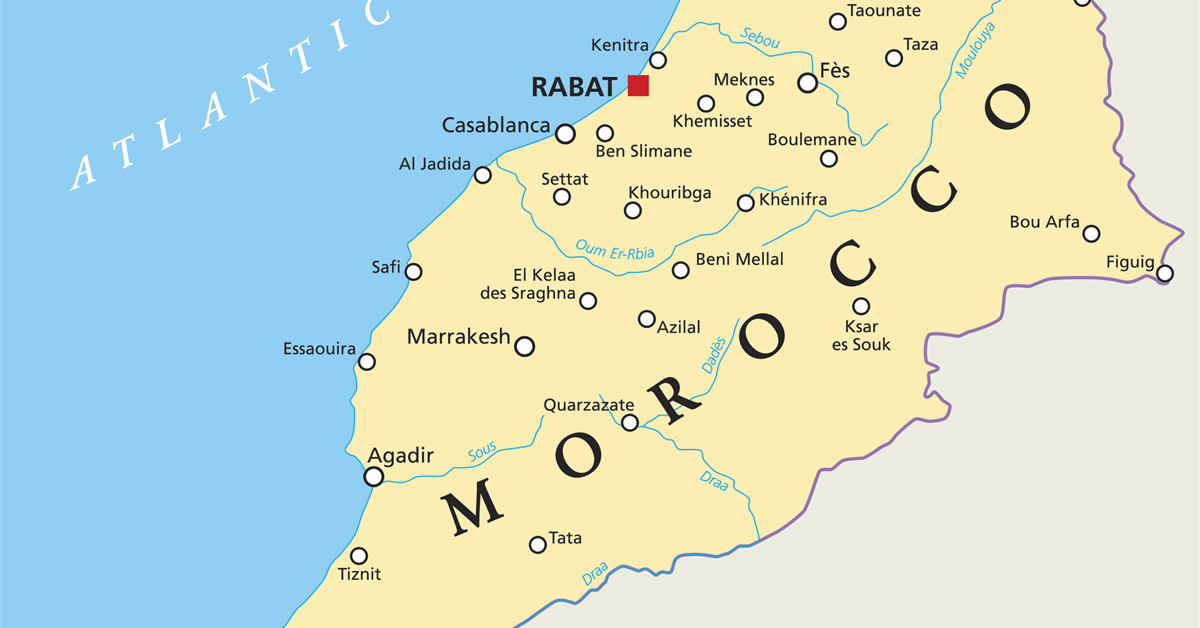
Chariot Limited has significantly deepened its footprint in Morocco, a strategic move that fundamentally reshapes its risk-reward profile in the region. The company has re-acquired full operatorship and an increased working interest in the Lixus Offshore and Rissana Offshore licenses, securing a 75 percent stake in each. This consolidation, facilitated by the acquisition of Energean’s subsidiary, positions Chariot as the dominant player in these crucial blocks, with Morocco’s National Office of Hydrocarbons and Mines (ONHYM) retaining its consistent 25 percent share. For investors, this move signals a clear intent to accelerate the development of the Anchois gas field, the cornerstone asset within the Lixus license, and to fully control the strategic direction of these prospective areas.
While the recent Anchois-3 appraisal well did not yield the additional volumes needed for an expansion of the initially envisioned development, it successfully confirmed multiple quality gas-bearing reservoirs within the main B sand interval. This outcome now pivots Chariot towards a “rescaled development plan” for Anchois. This recalibration is not a setback but rather a pragmatic adaptation, potentially leading to a more streamlined, cost-effective project with a clearer path to production. The company’s commitment to collaborating with ONHYM to assess and adapt this plan, leveraging prior work on engineering, environmental approvals, financing, and gas sales, suggests a focus on optimizing discovered resources for a robust domestic gas market. Morocco’s strong internal gas demand, coupled with attractive fiscal terms, underpins the commercial viability of even a recalibrated Anchois project, offering a compelling proposition for energy security in the region.
Navigating Volatility: Anchois Gas Amidst Shifting Crude Markets
In a global energy landscape characterized by pronounced volatility, Chariot’s intensified focus on Moroccan gas offers a degree of insulation from the turbulent crude markets. As of today, Brent crude trades at $90.38 per barrel, marking a sharp decline of over 9% from its opening and a significant drop from the $112.78 observed on March 30th. Similarly, WTI crude has fallen to $82.59, down over 9% today, reflecting broad market anxieties. This rapid unwinding of prices, with Brent shedding nearly $21 in just over two weeks, underscores the inherent risks of pure crude oil exposure. Investors are keenly watching these swings, with many asking about the trajectory of oil prices by the end of 2026, highlighting the prevalent uncertainty.
Against this backdrop of fluctuating global crude benchmarks, a domestic gas project like Anchois, aimed at satisfying a country’s internal energy needs, presents a more stable investment thesis. Morocco’s robust gas demand and favorable fiscal regime create a captive market, potentially shielding Chariot from the extreme price movements that impact internationally traded commodities. This strategic pivot towards domestic gas development, coupled with Chariot’s broader diversification into renewables, positions the company to capitalize on stable, in-country demand, rather than being solely exposed to the unpredictable currents of the global oil market.
Catalysts on the Horizon: Chariot’s Path Forward and Broader Market Signals
For investors monitoring Chariot, the immediate focus shifts to the detailed assessment and adaptation of the Anchois development plan. This internal process, which will define the project’s scale, capital requirements, and timeline, represents the next significant catalyst for the company. While Chariot refines its gas strategy, the broader energy market continues to offer important signals. In the coming days, investors will be closely watching the OPEC+ Joint Ministerial Monitoring Committee (JMMC) meeting on April 18th, followed by the Full Ministerial meeting on April 19th. While primarily focused on crude oil production quotas – a topic frequently asked by our readers – the outcomes of these meetings will influence overall market sentiment and perceptions of global supply-demand dynamics, which can indirectly impact investment appetite across the energy sector.
Further insights into the North American energy picture will emerge with the API Weekly Crude Inventory report on April 21st and the EIA Weekly Petroleum Status Report on April 22nd, followed by their subsequent releases on April 28th and 29th, respectively. These reports offer critical data on inventory levels, refining activity, and demand trends, providing a macro context for Chariot’s gas-focused strategy, particularly concerning global natural gas market fundamentals. Additionally, the Baker Hughes Rig Count reports on April 24th and May 1st will indicate drilling activity, reflecting the broader industry’s capital expenditure and exploration intentions. Chariot’s stated commitment to “assess the additional potential of the wider Lixus and Rissana license areas” suggests that future exploration activities could also be on the calendar, with these industry-wide indicators providing a useful benchmark for comparison.
Diversification and Investor Focus: Answering Key Questions
Chariot’s strategic direction directly addresses several core questions and concerns currently expressed by investors, particularly those seeking resilience in a volatile energy sector. Our reader intent data shows a significant interest in future oil price predictions and the stability of production quotas, underscoring a demand for robust, diversified energy plays. Chariot’s dual-pronged strategy – advancing gas development in Morocco while simultaneously growing its renewable energy portfolio in South Africa – offers just such a proposition.
The progress of Etana Energy, Chariot’s 49 percent-owned South African electricity trading platform, is a case in point. The recent signing of a 20-year power purchase agreement (PPA) for the entire supply from the 75-megawatt Du Plessis Dam PV2 solar project marks a critical milestone. This project, which has now reached financial close and is set to commence construction in the second quarter, will begin generating meaningful revenues for Etana upon production. This long-term PPA, coupled with oversubscribed demand from industrial and commercial sectors for Etana’s power offerings, demonstrates a validated market for renewable energy solutions in South Africa. For investors grappling with questions about long-term energy transition risks or seeking to understand how companies like Repsol will navigate market shifts, Chariot offers a clear, actionable strategy: leveraging domestic gas for near-term energy security and actively building a scalable renewable energy business for sustainable future growth. This blend of traditional and new energy assets provides a compelling narrative for a company positioning itself for the evolving global energy landscape.


