The global energy landscape is undergoing a profound transformation, with nuclear power emerging as a critical component of future energy security and decarbonization efforts. However, this ambitious shift faces a significant bottleneck: the supply of enriched uranium. As nations like the United States push for a dramatic expansion of nuclear capacity, the vulnerability of current fuel supply chains, heavily dominated by foreign state-owned enterprises, is coming into sharp focus. This scenario positions companies like Centrus Energy, the only publicly traded uranium enricher, at the nexus of a strategic imperative to re-establish domestic capabilities, presenting a unique long-term investment thesis for those tracking the evolving energy sector.
The Looming Nuclear Fuel Gap and Domestic Imperative
The United States is charting an ambitious course for its nuclear energy future, with presidential directives aiming to quadruple the sector’s capacity to 400 gigawatts by 2050. This bipartisan push underscores a recognition of nuclear power’s role in a stable, low-carbon energy mix. Yet, the current reality presents a glaring challenge: in 2023, the U.S. relied on foreign nations for approximately 70% of its reactor fuel. A significant portion of this, around 27%, came from Russia, a relationship now severed by legislation banning Russian uranium imports by 2028 at the latest. This imminent ban creates a substantial supply deficit that Western enrichment capacity is currently ill-equipped to fill.
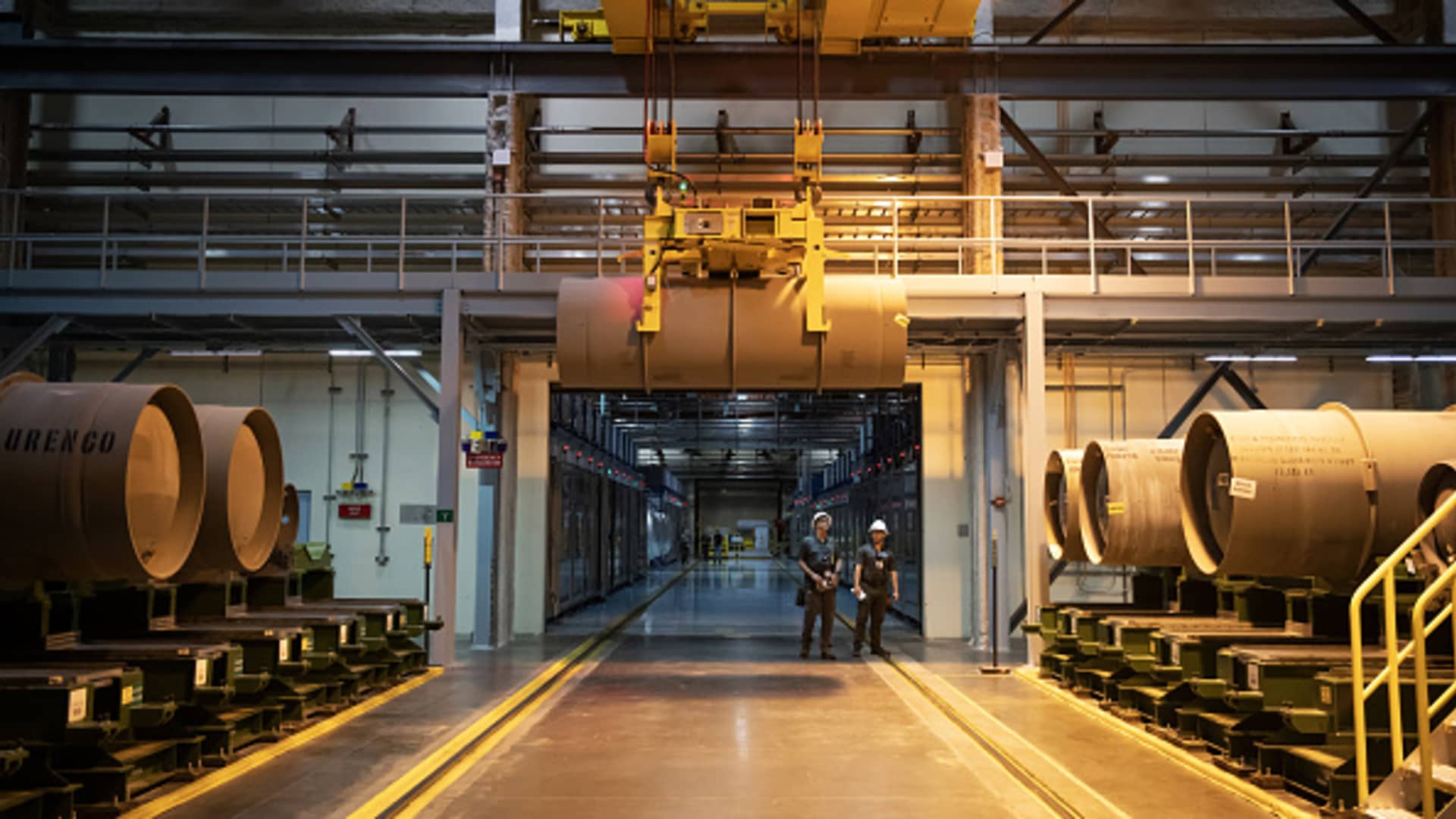
Western enrichment is largely controlled by two major non-American players: France’s Orano and the Urenco consortium (British-Dutch-German). While these partners have historically been reliable, the geopolitical climate and the sheer scale of projected demand necessitate a diversified and secure domestic supply. Currently, the only commercial enrichment facility operating on U.S. soil is owned by Urenco. The call from industry leaders for additional, American-owned enrichment capacity is not merely an economic aspiration but a strategic imperative to ensure the viability of the nation’s nuclear ambitions and safeguard its energy independence.
Geopolitical Tensions and the Race for Supply Chain Resilience
The drive to rebuild the U.S. nuclear fuel supply chain is intrinsically linked to escalating geopolitical tensions and the broader quest for energy security. Investors are increasingly concerned with fundamental drivers and geopolitical impacts on energy prices, as evidenced by questions surrounding market data sources and production quotas. The reliance on foreign, often state-backed entities for critical energy components introduces inherent risks, from trade disputes to direct supply disruptions. The situation with Russian uranium serves as a stark reminder of these vulnerabilities, forcing a proactive re-evaluation of national supply resilience.
Re-establishing domestic enrichment capabilities goes beyond mere economic opportunity; it is a strategic response to these complex dynamics. A presidential directive issued in May specifically tasked federal agencies with developing a plan to expand uranium enrichment in the U.S., encompassing both civilian and defense requirements. This top-level support signals a long-term commitment to de-risking the nuclear fuel cycle and fostering a competitive domestic industry, directly addressing investor concerns about the stability and predictability of future energy supplies.
Navigating Volatility: Nuclear’s Role in a Dynamic Energy Landscape
While the long-term outlook for nuclear energy strengthens, the broader energy market continues to exhibit significant volatility. As of today, Brent crude trades at $90.38, reflecting a substantial 9.07% decline from yesterday’s close and navigating a day range between $86.08 and $98.97. This sharp correction follows a broader 14-day downtrend, with Brent shedding over $20 per barrel since late March, moving from $112.78 to $91.87. Similarly, WTI crude is down 9.41% at $82.59, and gasoline prices have fallen 5.18% to $2.93.
This ongoing fluctuation in fossil fuel prices underscores the appeal of stable, baseload power sources like nuclear energy. Investors keenly follow market signals, often asking about crude oil price predictions for the year-end. The upcoming OPEC+ Joint Ministerial Monitoring Committee (JMMC) meeting on April 18th and the full Ministerial meeting on April 19th will be critical events, potentially offering insights into future production quotas that could significantly influence crude markets. Additionally, the recurring API and EIA weekly inventory reports, scheduled for April 21st/22nd and April 28th/29th, will provide crucial data on demand health and supply levels. Amidst this short-term volatility and these immediate catalysts, the strategic push for domestic nuclear fuel offers a long-term hedge against fossil fuel price swings and geopolitical disruptions, appealing to investors seeking resilience and stability in their energy portfolios.
Centrus: A Strategic Bet on Domestic Nuclear Revival
In this evolving landscape, Centrus Energy stands out. As the only publicly traded uranium enricher, the company is uniquely positioned to capitalize on the urgent need for domestic capacity. Its CEO has explicitly stated the belief that “the market needs another enricher” and “it needs competition,” indicating a strategic decision to aggressively pursue this opportunity. With the U.S. facing a clear supply gap and a presidential mandate to expand domestic capabilities, Centrus is making a significant play to break the historical stranglehold of foreign, state-owned entities over the nuclear fuel supply chain.
Investing in Centrus represents a strategic bet on the revitalization of the U.S. nuclear industry and the re-establishment of a secure, domestic fuel cycle. While the path to expanding enrichment capacity is capital-intensive and requires significant lead times and regulatory navigation, the strong bipartisan political support and the undeniable supply deficit create a compelling long-term investment thesis. Investors should closely monitor Centrus’s progress in securing government contracts, scaling its operations, and attracting necessary capital, as these will be key indicators of its ability to realize its potential as a cornerstone of America’s renewed nuclear energy independence.