Pioneering CO2 Conversion: A New Horizon for Oil and Gas Investment
The global energy landscape is actively seeking innovative solutions to decarbonize heavy industries while simultaneously fortifying critical supply chains. A groundbreaking electrochemical generator, recently unveiled, presents a compelling investment opportunity by transforming industrial waste CO2 into valuable chemical products, thereby mitigating emissions and reducing reliance on traditional fossil-fuel-intensive manufacturing processes. This development signals a strategic pathway for the oil and gas sector to enhance sustainability profiles and unlock new revenue streams from existing operations.
Developed by a team of leading chemical engineers, including Professor Xiwang Zhang, Dr. Mike Tebyetekerwa, and PhD student Rizal Evans, this generator operates on a deceptively simple yet powerful principle. Utilizing readily available inputs—electricity, water, and captured carbon dioxide—the system efficiently produces formate, the foundational compound for formic acid. This innovative approach directly addresses the dual challenge of managing industrial emissions and meeting the growing demand for essential chemicals through a cleaner production method.
Transforming Waste into Value: The Formic Acid Advantage
The implications of this technology for industrial operators and investors are significant. Professor Zhang articulated the core value proposition, stating that with fundamental ingredients and straightforward operation, the system yields chemicals crucial across numerous sectors. He emphasized the profound shift in perception this technology enables: viewing carbon dioxide not merely as a problematic waste product but as a reusable feedstock. This connection between industries generating substantial CO2 and those requiring formic acid creates a symbiotic economic and environmental opportunity.
Formic acid itself is indispensable across diverse industrial applications, ranging from agriculture and livestock production to the intricate processes of leather tanning and rubber manufacturing. For economies like Australia, which currently depends heavily on imported formic acid, this innovation offers a robust solution to enhance domestic supply security and reduce susceptibility to global market fluctuations. Establishing localized production capabilities could significantly de-risk supply chains for many local industries.
Scalability and Strategic On-Site Production
A key design feature enhancing the generator’s investment appeal is its modularity. Dr. Tebyetekerwa highlighted this aspect, explaining that the system can be scaled to precisely match the specific demands of any industrial setting. This inherent flexibility paves the way for on-site formic acid production, a paradigm shift from the conventional model of transporting and storing large volumes of the chemical.
The advantages of localized production are multifaceted. By eliminating the need for extensive transportation and bulk storage, industries can significantly reduce logistical costs, enhance operational safety, and dramatically lower associated carbon emissions. This is particularly impactful for heavy industries that already produce substantial CO2 as part of their operational footprint, offering them a direct pathway to circular economy principles within their existing infrastructure.
Diverse Applications and Commercialization Outlook
The potential applications for this electrochemical generator span a broad spectrum of critical sectors. Rizal Evans identified opportunities in agriculture, livestock management, and notably, the resource and energy sectors. The technology’s versatility is underscored by early industry interest; a resource company has already explored its use for producing formic acid as an antifreeze, vital for pipeline operations in colder climates. Such inquiries highlight the immediate, practical value proposition for companies seeking integrated solutions.
While the technology holds immense promise, it remains in its testing phase and has not yet reached commercial readiness. The next crucial steps involve conducting comprehensive field trials with industry partners. These real-world assessments will be vital for evaluating the generator’s performance under diverse operational conditions and adapting it to meet the specific requirements of various industrial environments. This phased approach underscores a prudent development strategy, building confidence for future commercial deployment and subsequent investor interest.
Investing in the Future: Decarbonization and Resource Optimization for O&G
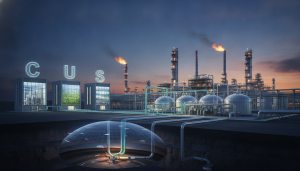
For investors tracking the oil and gas sector, this CO2 conversion technology represents a tangible asset in the broader energy transition narrative. As companies face increasing pressure to reduce their carbon footprint and diversify operations, solutions that convert waste into high-value products become incredibly attractive. Imagine an oil refinery or a natural gas processing plant transforming its captured CO2 emissions into a revenue-generating chemical, rather than merely storing or releasing it. This directly contributes to Scope 1 and 2 emissions reductions.
Furthermore, the ability to produce essential industrial chemicals on-site enhances operational resilience and independence from volatile global supply chains. This aligns perfectly with the strategic objectives of many integrated energy companies looking to optimize resource utilization, foster innovation within their portfolios, and establish leadership in sustainable industrial practices. The support from organizations like the Australian Research Council (ARC) through its Centre of Excellence for Green Electrochemical Transformation of Carbon Dioxide (GETCO2) also lends significant credibility and long-term research commitment to the initiative.
In conclusion, this advanced electrochemical CO2 generator offers more than just environmental benefits; it presents a robust economic proposition. By transforming industrial waste into vital chemicals and enhancing supply chain security, this technology paves the way for significant investment returns in the burgeoning green chemicals market and the ongoing industrial decarbonization efforts. Investors with a forward-looking perspective on the oil and gas sector should closely monitor the commercialization pathway of this transformative innovation, as it could redefine operational efficiency and profitability in a carbon-constrained world.