

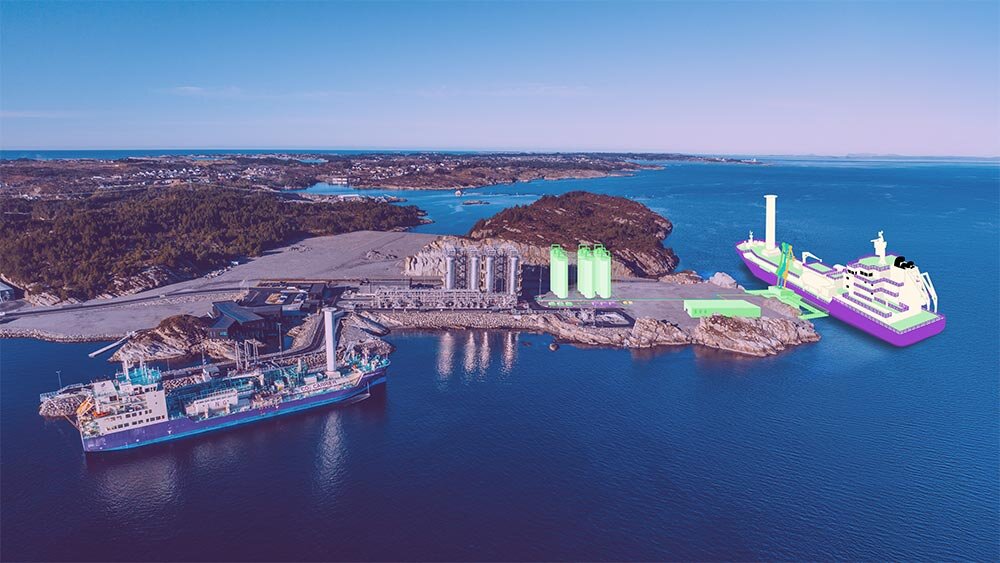
On January 29, MOL concluded shipbuilding contracts with HD Hyundai Heavy Industries Co., Ltd. and long-term charter contracts with Northern Lights. Starting around 2028, the vessels will transport CO2 collected across Europe to a receiving terminal in Norway.
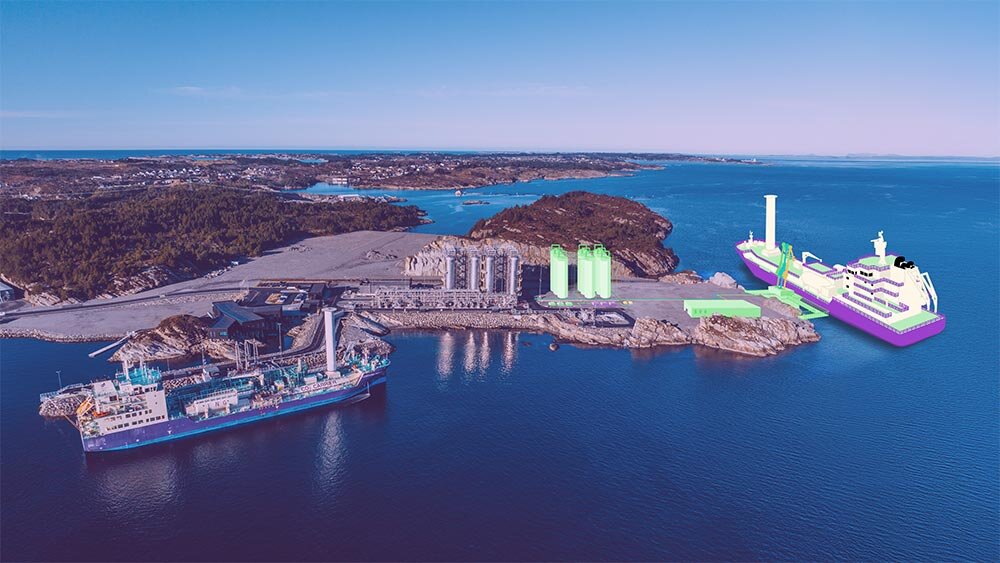 Concept image of the expansion of the receiving terminal in Norway (Courtesy of Northern Lights)
Liquefied CO2 shipping plays a critical role in efficiently connecting capture sites with storage sites in the CCS value chain.
Northern Lights transports CO2 collected across Europe by ship to the Øygarden terminal on Norway’s west coast, from where the CO2 is exported via a 100-kilometer subsea pipeline and permanently stored about 2,600 meters beneath the seabed of the North Sea.
This is the world’s first cross-border CO2 transport and storage project. Northern Lights began full-scale operations in 2025, with a transport and storage capacity of 1.5 million tons of CO2 per year and plans to expand its capacity to a minimum of 5 million tons annually by 2028.
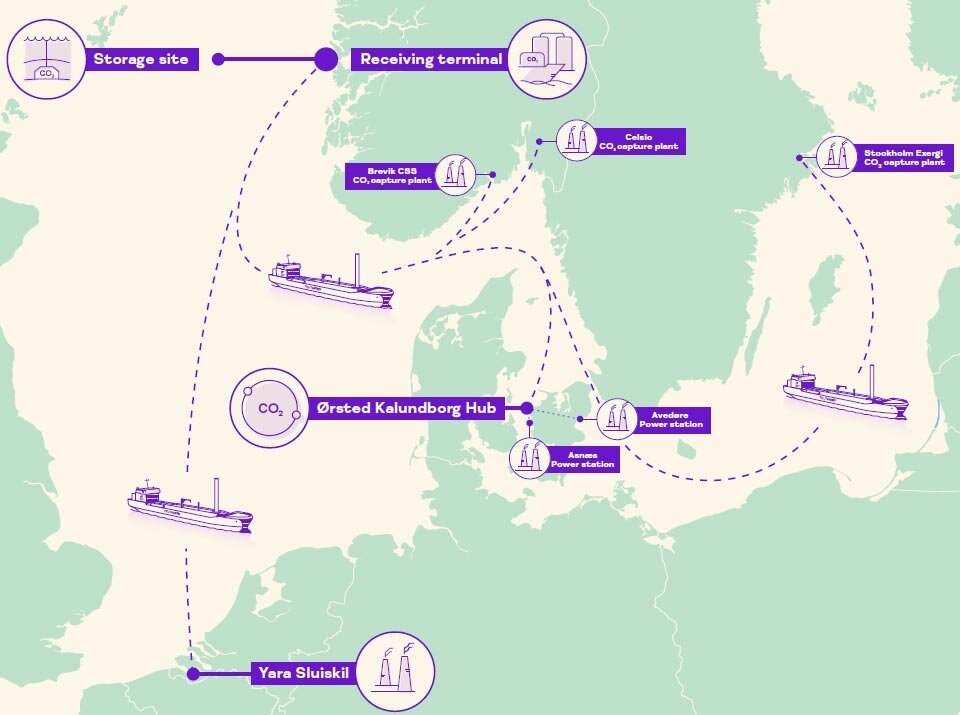
CO2 transport route in the Northern Lights’ project (Courtesy of Northern Lights)
The two liquefied CO2 carriers will mainly transport CO2 from the Stockholm Exergi CO2 capture plant in Sweden to the designated receiving terminal in Øygarden
In hard-to-abate industrial sectors, the volume of CO2 captured, transported by ship, and stored is expected to increase significantly. With a proven global share and track record in liquefied gas shipping, particularly in LNG carriers, MOL group continues to strengthen its capabilities in liquefied CO2 shipping.
In 2021, MOL invested in Larvik Shipping AS, a Norwegian ship management company with over 35 years of experience in liquefied CO2 shipping in Europe and have continued to actively engage in this business. MOL said it is committed to meeting the growing demand for liquefied CO2 shipping and contributing to the development of the CCS value chain as a trusted partner.
