

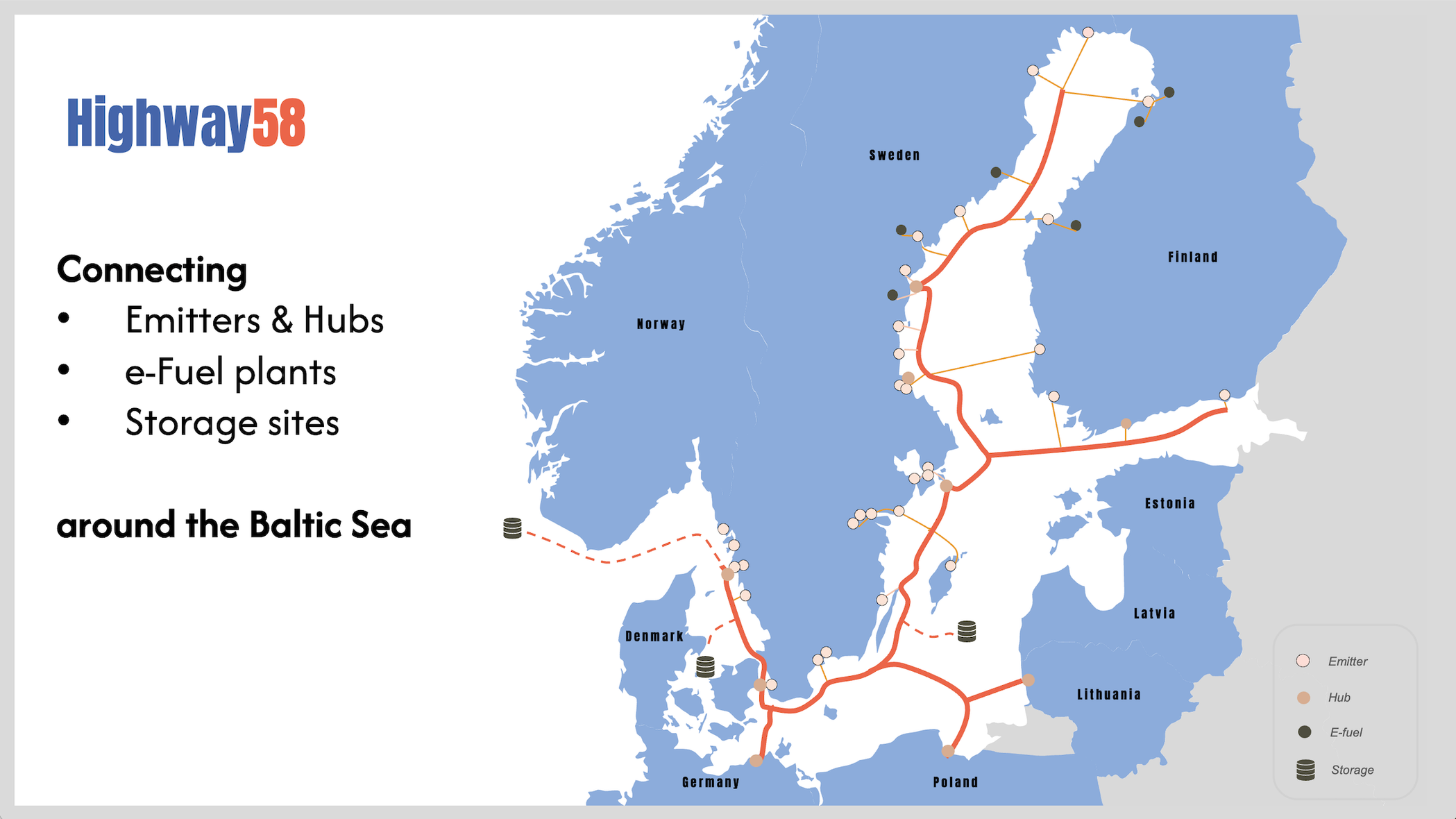
Highway58 aims to establish a new, shared CO2 transport network, connecting industrial emitters around the Baltic Sea to permanent storage (CCS) as well as utilisation facilities such as e-Fuel producers (CCU). The project is intended to provide industries with access to safe, reliable, and cost-effective carbon transport, enabling a scalable pathway to net zero.
“Pipe58 has already brought Highway58 from early research through feasibility, building deep regional insight, strong stakeholder relationships, and a clear strategic focus on CO2 infrastructure tailored to the Baltic Sea region,” said David Parkin, Director, Progressive Energy Ltd. “We see clear similarities with the industrial cluster projects we have helped develop in the UK, and we look forward to advancing Highway58 together with Pipe58.”
Across Sweden, Finland and the wider Baltic Sea region, industries face growing pressure to decarbonise while sustaining long-term competitiveness. With approximately two-thirds of Sweden’s and Finland’s CO2 emissions being biogenic, the region is uniquely positioned to deploy carbon capture at scale and deliver net-negative outcomes.
Highway58 is designed to unlock this opportunity at a large scale by enabling collective action through shared infrastructure. By bringing together CO2-emitting industries across national borders, Highway58 is envisioned as the backbone of a new Baltic Sea CCUS ecosystem – one that supports national climate strategies, strengthens European cooperation, and contributes to reducing atmospheric carbon levels.
“Progressive Energy brings extensive experience from the development of complex low carbon infrastructure projects, including its leading role in the HyNet North West and Peak Cluster initiatives in the UK. That experience will be highly valuable as we advance Highway58 towards commercialisation,” said Johan Beckmann, CEO, Pipe58 AB.
Together, the partners aim to work closely with industry, governments, and regulators to mature Highway58 from concept to a bankable infrastructure project, delivered at the scale and pace required to support Europe’s climate ambitions.

