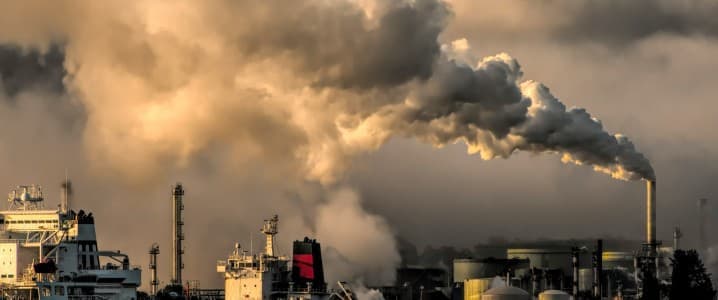
Canada’s energy sector stands at a pivotal juncture, with the federal government signaling a significant strategic pivot on its approach to oil and gas emissions. The newly unveiled Budget 2025’s Climate Competitiveness Strategy marks a departure from the contentious, production-limiting emissions cap proposed by the previous administration. This shift, prioritizing market-based mechanisms, enhanced methane regulations, and technological adoption like carbon capture and storage (CCS) over outright production restrictions, presents a nuanced and potentially more favorable landscape for investors. For those tracking global energy dynamics and seeking opportunities in a sector often navigating complex regulatory environments, this Canadian policy evolution warrants close attention, offering both challenges and clear pathways for growth in a sustainability-focused future.
Canadian Policy Shift: A New Horizon for O&G Investment
The core of the new government’s strategy is a move away from the “prohibition” mindset of the former emissions cap, which Alberta’s provincial government and the industry itself widely criticized as a de facto production limit. Instead, the Climate Competitiveness Strategy explicitly aims to drive investment and achieve tangible results through economic incentives rather than prescriptive mandates. This means a renewed focus on building effective carbon markets, strengthening methane emission controls, and accelerating the deployment of mature technologies such as carbon capture and storage at scale. The budget document suggests that if these measures prove effective in reducing emissions, the need for a standalone oil and gas emissions cap would diminish, rendering it of “marginal value.”
For investors, this represents a crucial de-risking of the Canadian energy landscape. The previous cap, which sought a 35% reduction in greenhouse gas pollution from 2019 levels, cast a shadow of uncertainty over long-term production viability and return on capital. By emphasizing investment in cleaner production methods rather than forcing output cuts, the new policy could unlock significant capital deployment into sustainable technologies within the sector. Companies that have already invested heavily in methane abatement or are exploring large-scale CCS projects could see their efforts validated and potentially amplified by a more supportive federal framework, aligning Canada’s energy goals with global market demands for lower-carbon intensity fuels.
Navigating Current Market Headwinds with Policy Tailwinds
This policy shift arrives at a time of considerable volatility in global crude markets. As of today, Brent Crude trades at $90.38, reflecting a significant 9.07% decline from its opening, with a day range spanning $86.08 to $98.97. Similarly, WTI Crude is at $82.59, down 9.41% within a range of $78.97 to $90.34. Gasoline prices have also dipped to $2.93, a 5.18% decrease. This daily snapshot reflects broader market unease, underscored by a notable 14-day Brent trend showing a decline from $112.78 on March 30th to today’s $90.38 – a substantial $22.4 or 19.9% drop. Such pronounced market corrections typically trigger investor caution.
However, Canada’s evolving regulatory environment offers a counter-narrative. In a market characterized by price instability, a more predictable and investment-centric climate policy can enhance the attractiveness of Canadian energy assets. While global prices dictate revenue, domestic policy heavily influences the cost structure and operational flexibility for producers. The move away from a production cap means Canadian producers could be better positioned to capitalize on future price rebounds without the immediate threat of federal curtailment. This stability could prove particularly appealing to long-term investors looking for jurisdictions that balance environmental responsibility with economic viability, mitigating some of the external market pressures.
Upcoming Catalysts and Investor Outlook for Canadian Energy
Looking ahead, the interplay of global energy events and Canada’s evolving policy framework will be critical for investors. The upcoming OPEC+ JMMC and Ministerial Meetings on April 19th and 20th, respectively, are highly anticipated, as decisions on production quotas directly impact global supply and, consequently, crude prices. Investors are keenly asking, “What are OPEC+ current production quotas?” and the outcomes of these meetings will undoubtedly influence market sentiment for the coming months. A stable regulatory environment in Canada, freed from the strictures of a production cap, allows Canadian producers greater flexibility to respond to these global supply dynamics, potentially filling any market gaps or scaling production in line with demand signals, provided they meet their emissions intensity targets.
Furthermore, regular data releases such as the API Weekly Crude Inventory (April 21st, 28th) and the EIA Weekly Petroleum Status Report (April 22nd, 29th) will provide crucial insights into North American supply and demand balances. The Baker Hughes Rig Count (April 24th, May 1st) will offer a real-time pulse on drilling activity, reflecting producer confidence and future supply trajectories. In this context, Canada’s focus on carbon markets and technological solutions positions its energy sector as a more sustainable long-term player, potentially attracting capital even as broader investor sentiment questions the future of traditional oil and gas. This forward-looking approach addresses investor concerns about “what do you predict the price of oil per barrel will be by end of 2026?” by fostering a more robust and adaptable production base, capable of thriving within an evolving global energy mix.
Addressing Investor Questions: Sustainability, Market Access, and Future Value
The shift in Canadian policy directly addresses several core questions we’ve seen from our readers concerning the long-term viability and investment appeal of the oil and gas sector. The previous cap raised significant concerns about market access, with Alberta’s Minister of Environment and Protected Areas explicitly stating it was “about the federal government wanting to cut oil and gas production.” By focusing on a “Climate Competitiveness Strategy” that drives investment rather than imposing prohibitions, the new government seeks to ensure Canada’s energy products maintain access to global markets increasingly prioritizing sustainability. This focus on carbon markets and enhanced methane regulations is not merely an environmental imperative but an economic one, aimed at making Canadian oil and gas competitive in a decarbonizing world.
For investors, this means that capital allocated to Canadian energy companies could yield returns not just from commodity price exposure, but also from the valuation uplift associated with improved environmental performance and market acceptance. The deployment of technologies like CCS, while capital intensive, offers a pathway to future-proof assets by significantly reducing their carbon footprint. This proactive approach to emissions reduction, embedded within an investment-driven framework, provides a clearer trajectory for growth and value creation. It differentiates Canada as a jurisdiction committed to maintaining its energy sector’s role while actively working towards lower carbon intensity, directly answering implicit investor questions about the enduring value of oil and gas assets in a net-zero ambition era.


