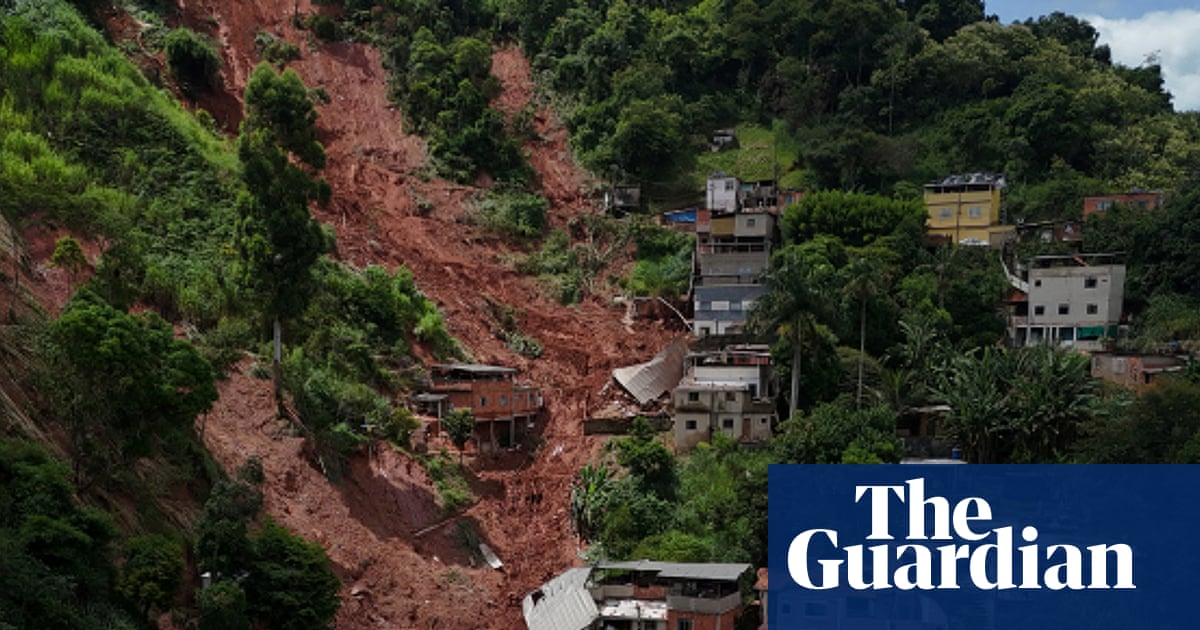
The devastating floods that recently engulfed Brazil’s coffee heartland serve as a stark reminder of escalating climate risks, a factor that is increasingly permeating the investment calculus for the global energy sector. While localized, the extreme weather event in Juiz de Fora — experiencing its wettest February on record with over 750mm of rainfall, three times the expected amount — underscores a growing vulnerability to climate disruption. For oil and gas investors, these events are not just humanitarian tragedies; they are potent signals of systemic risks that can influence everything from operational costs and regulatory landscapes to long-term asset valuations and capital allocation strategies. Understanding how these amplified climate risks interact with market fundamentals, upcoming catalysts, and evolving investor sentiment is critical for navigating the complex energy landscape.
Climate Extremes and the Long Shadow on Energy Infrastructure
The unprecedented rainfall in Juiz de Fora, deemed a one-in-several-hundred-year event by experts, highlights the direct and indirect challenges posed by a warming planet. Scientists project that downpours in the region could become 7% more severe if global temperatures reach 2.6C above preindustrial levels, compared to the current 1.3C. While the immediate focus of the tragedy points to inadequate urban planning and inequality as primary causes for the widespread landslides and loss of life, the underlying intensification of weather events carries significant implications for energy infrastructure worldwide. Imagine the potential for similar disruptions to critical pipelines, refineries, or export terminals located in coastal areas or along major river systems. Such events can lead to operational shutdowns, increased maintenance costs, and supply chain bottlenecks, directly impacting profitability and reliability for energy companies. The scientific community’s call to “phase out planet-heating gases from oil, gas and coal use as rapidly as possible” is not merely an environmental plea; it is an urgent assessment of the financial and physical risks confronting the very industries responsible for these emissions.
Current Market Dynamics Amidst Rising Climate Concerns
In the immediate term, market participants grapple with a confluence of factors, with climate risk often acting as a background hum rather than a leading indicator for daily price movements. As of today, Brent crude trades at $92.83, registering a modest daily decline of 0.44%, while WTI crude sits at $89.30, down 0.41%. This stability comes after a more significant shift over the past two weeks, where Brent retreated from $101.16 on April 1st to $94.09 by April 21st, representing a notable $7.07, or 7%, drop. This recent downtrend largely reflects a recalibration of geopolitical premiums and evolving global demand outlooks. However, the underlying vulnerability to extreme weather events, like the Brazil floods, introduces an unpredictable element into the supply equation. Many investors are currently asking about the trajectory of WTI, wondering if prices are set for an ascent or decline. While short-term movements are driven by traditional supply/demand fundamentals, the increasing frequency and intensity of climate-related disruptions add a layer of long-term uncertainty that can translate into volatility and higher risk premiums for energy assets, even as current prices react to more immediate catalysts.
Navigating Future Volatility: Upcoming Catalysts and Strategic Positioning
For investors seeking clarity on the future direction of the energy markets, a series of key data releases and events are on the horizon, offering critical insights that can help inform portfolio decisions. The EIA Weekly Petroleum Status Reports, scheduled for April 22nd, April 29th, and May 6th, will provide crucial updates on crude oil, gasoline, and distillate inventories, offering real-time snapshots of the U.S. supply-demand balance. These reports are pivotal for assessing short-term price pressure. Similarly, the Baker Hughes Rig Counts, due on April 24th and May 1st, serve as leading indicators for future production activity, reflecting the industry’s investment appetite and potential supply growth. Perhaps most significant for longer-term outlooks will be the EIA Short-Term Energy Outlook (STEO) on May 2nd. This comprehensive report offers detailed projections for global and domestic energy markets, directly addressing questions from our readers, such as “what do you predict the price of oil per barrel will be by end of 2026?” The STEO’s analysis of supply, demand, and price forecasts will be instrumental in shaping investment strategies, particularly for companies like Repsol, which face unique regional and operational challenges. While these reports primarily focus on conventional market drivers, savvy investors will interpret their findings through the lens of growing climate risk, considering how potential disruptions from extreme weather or accelerating energy transition policies might impact the projections.
Investor Questions and the Emerging Climate Risk Premium
Our proprietary reader intent data reveals a strong interest in fundamental market movements, with specific inquiries about the trajectory of WTI and the performance outlook for individual companies like Repsol. Investors are also seeking guidance on broader market predictions, such as the price of oil per barrel by the end of 2026. While no analyst can offer a definitive crystal ball, these questions underscore the need for a comprehensive framework that integrates both traditional market analysis and the increasingly tangible impacts of climate change. The Brazil floods are not an isolated incident but rather a potent example of the “record-shattering months” that scientists warn could become the norm. For energy companies, this translates into an accelerating “climate risk premium” or a potential discount on assets. The calls for “urgent action” to prevent further warming directly challenge the long-term viability of high-carbon assets. Investors must consider how these intensifying climate risks will influence regulatory environments, carbon pricing schemes, and the cost of capital for fossil fuel projects. Companies that proactively adapt to these evolving risks, investing in resilient infrastructure and transitioning towards lower-carbon energy solutions, are likely to weather the storm more effectively. Ultimately, the question for investors is not just how well Repsol or any other energy major will perform in the coming months, but how well their business models are positioned to thrive in a world increasingly defined by climate volatility and the imperative to decarbonize.


