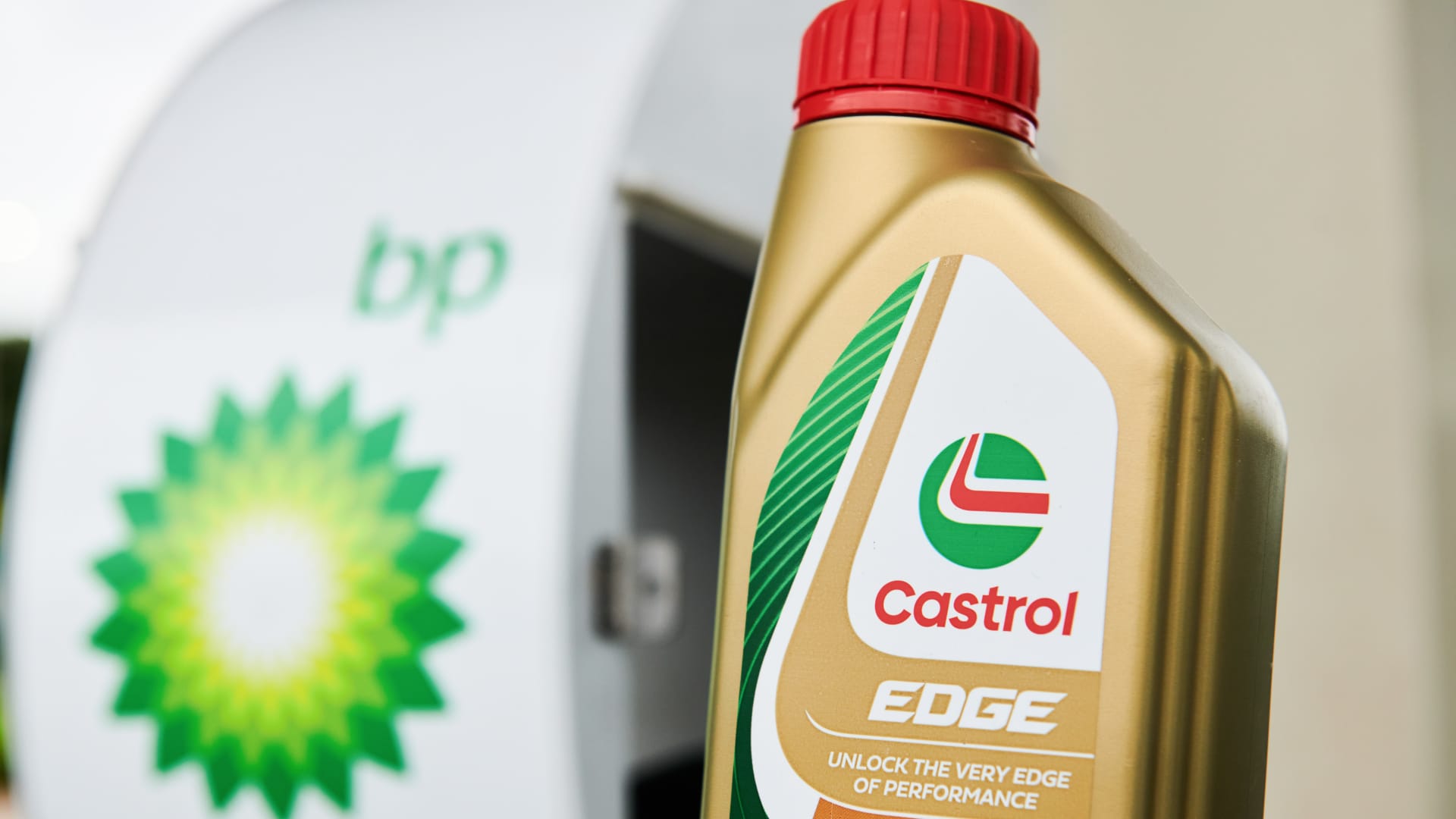
BP plc finds itself at a critical juncture, navigating a complex landscape of strategic repositioning, activist investor pressure, and persistent takeover speculation. At the heart of its current strategy lies a fundamental reset, including a notable “green strategy” pivot and an aggressive target to divest $20 billion in assets by the close of 2027. This ambitious plan is underscored by reports of a potential sale of its Castrol lubricants business, an asset widely regarded as one of the company’s “crown jewels.” The divestment, potentially fetching between $8 billion and $10 billion, is not merely a balance sheet exercise but a strategic gambit to streamline operations, reduce debt, and fortify its defenses against prospective acquirers, even as major energy players and private equity firms reportedly circle for Castrol.
BP’s Strategic Reset: Divestment as Defense
The decision to explore the sale of Castrol, initiated by a strategic review in late February, signals BP’s commitment to its new direction. This direction, which includes a renewed focus on its traditional oil and gas businesses, follows a period of intense scrutiny and pressure from activist investors. The company’s management views the successful execution of its divestment strategy, of which Castrol is a significant component, as crucial to delivering on its promises and restoring investor confidence. Reports suggest a diverse array of interested parties for the Castrol unit, including energy giants Reliance Industries and Saudi Aramco, alongside private equity powerhouses Apollo Global Management and Lone Star Funds. The interest in such a high-performing asset is indeed a positive signal, indicating robust market demand for quality energy infrastructure. However, the true test will be BP’s ability to secure an attractive valuation in a dynamic macroeconomic environment, a factor that could significantly influence its overall valuation and, by extension, its vulnerability to a takeover bid.
Market Headwinds and Investor Focus on Future Prices
The backdrop for BP’s strategic maneuvers is a commodity market demonstrating both strength and volatility. As of today, Brent crude trades at $96.13, reflecting a 1.41% increase within a day range of $91 to $96.36. This recent uptick follows a more challenging 14-day trend where Brent experienced an 8.8% decline, moving from $102.22 to $93.22. This fluctuating price environment adds a layer of complexity to BP’s asset divestment efforts. A strong oil price can bolster BP’s financial position, potentially allowing it to command a higher price for Castrol and making the company itself a more expensive takeover target. Conversely, sustained weakness could compel BP to accept a less optimal valuation for its assets, inadvertently making the broader company a more attractive proposition for a suitor. Our proprietary reader intent data underscores this market sensitivity, revealing a keen investor focus on future price movements. Many are actively asking for a base-case Brent price forecast for the next quarter and seeking the consensus 2026 Brent forecast. This investor sentiment highlights the direct correlation between crude oil price stability and the perceived value of major energy players like BP, influencing not only asset sale negotiations but also the broader M&A landscape.
Upcoming Events and the Takeover Calculus
The coming weeks are packed with events that could shape the broader energy market and directly impact BP’s strategic positioning. Crucially, the OPEC+ Joint Ministerial Monitoring Committee (JMMC) meeting is scheduled for April 18th, followed by the full Ministerial meeting on April 20th. Any decisions from OPEC+ concerning production quotas will have immediate ramifications for global crude prices, directly influencing the valuation of BP’s assets and its overall market capitalization. Stronger prices could empower BP in its divestment negotiations for Castrol, while a loosening of supply could introduce downward pressure. Furthermore, weekly industry data points, such as the Baker Hughes Rig Count on April 17th and April 24th, alongside API and EIA weekly inventory reports starting April 21st and April 22nd respectively, will provide ongoing insights into supply-demand dynamics. These reports offer a granular view of market health, which potential acquirers of Castrol, or indeed BP itself, will be meticulously analyzing. For BP, these events represent both opportunities and risks, influencing the momentum of its strategic reset and its ability to effectively fend off continued takeover speculation, especially with activist investors like Elliott Management already holding a significant stake.
Valuation Challenges and the Path Forward
While the sale of Castrol is seen as a positive step towards BP’s strategic goals, the path to a successful divestment is fraught with challenges. Analysts note that ongoing macroeconomic uncertainty could make it difficult for BP to achieve an “attractive valuation” for Castrol. A lower-than-expected sale price for this “crown jewel” could negatively impact BP’s overall valuation, potentially making the entire company a cheaper proposition for a prospective buyer. This highlights a delicate balance: while the sale would reduce BP’s debt, making it theoretically more attractive, an undervaluation could counter this benefit by making BP appear more vulnerable. Moreover, Castrol, despite its strategic importance, is considered a relatively small part of BP’s overall sprawling business. Therefore, while its sale is significant for debt reduction, it may not fundamentally alter BP’s core business profile or definitively deter a determined industrial acquirer. The company is walking a tightrope, attempting to demonstrate strong execution of its strategic reset and asset divestment plan, all while managing investor expectations and the persistent shadow of a potential blockbuster mega-merger.