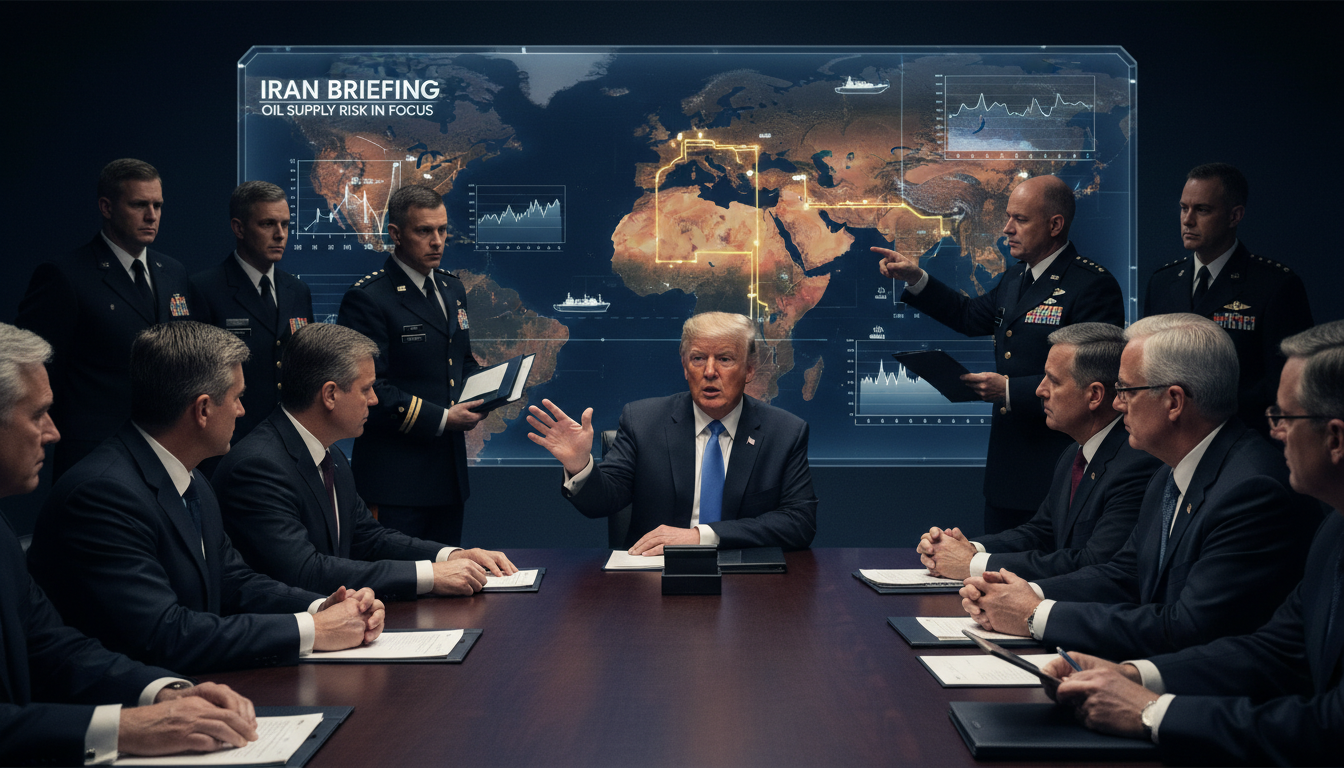
Investors are bracing for heightened volatility in global oil markets as President Donald Trump prepares to receive a critical briefing on potential military actions against Iran. This high-stakes meeting, scheduled for Thursday, involves U.S. Central Command’s Admiral Brad Cooper and other senior military officials, underscoring the escalating tensions that could dramatically reshape the energy landscape.
The urgency of the situation is compounded by a looming legal deadline. Washington faces a 60-day timer mandating the withdrawal of U.S. armed forces from the region unless Congress formally authorizes continued military engagement. With no such authorization yet secured, the administration finds itself at a pivotal juncture, forcing a decision on whether to escalate or de-escalate operations amidst a rapidly deteriorating geopolitical environment.
Strait of Hormuz Stalemate: A Chokepoint for Crude
The briefing comes on the heels of a fragile ceasefire that has failed to pave the way for a lasting peace agreement between the United States and Iran. Instead, both nations have intensified their focus on inflicting economic pain, primarily through their respective actions concerning the Strait of Hormuz. This narrow waterway, a critical artery for international oil trade, has become the epicenter of an economic standoff, with each side attempting to force concessions from the other.
Since the U.S. and Israel initiated conflict on February 28, the Strait has experienced severe disruptions. Iran has implemented a de facto stoppage of ship traffic, threatening vessels and effectively impeding the flow of crude. In retaliation, the U.S. has imposed a naval blockade on Iranian ports, aiming to cripple Tehran’s ability to export its oil. These tit-for-tat measures have resulted in a dangerous deadlock, with global crude supplies hanging precariously in the balance.
The ongoing blockage, which commenced with Iran’s threats against shipping shortly after hostilities began, has already triggered a significant global oil supply shock. This disruption has sent crude prices soaring, adding a layer of inflationary pressure to the world economy and directly impacting the bottom line of oil and gas companies, as well as energy-dependent industries.
Military Options and Escalation Risks
To break this strategic logjam, U.S. Central Command has reportedly developed a plan for a “short and powerful” wave of strikes. This military option is designed to compel Iran to adopt a more flexible stance in its demands and negotiations. The potential for such a decisive military intervention introduces a substantial layer of geopolitical risk for investors, signaling the possibility of a rapid and unpredictable escalation in the region.
Beyond broad-based strikes, other targeted military actions are also under consideration. Discussions include a specialized special forces operation aimed at securing Iran’s reserves of highly enriched uranium. Another option involves taking steps to assert greater U.S. control over the Strait of Hormuz, which could have profound implications for global maritime security and oil transit routes. The White House has not yet commented on these reported discussions, and CENTCOM has similarly declined to provide a statement.
Economic War of Attrition
The economic dimensions of this conflict are equally critical for energy investors. Iran has steadfastly refused to engage in further negotiations unless the U.S. blockade is lifted. President Trump, however, has maintained a firm stance, insisting that the blockade will remain in place until Tehran agrees to a comprehensive deal addressing its nuclear ambitions.
President Trump recently boasted about the efficacy of the U.S. blockade, characterizing it as “genius” and asserting that Iran’s economy is “really in trouble.” He publicly challenged Tehran, stating, “Now they have to cry uncle, that’s all they have to do. Just say, ‘We give up.'” Such strong rhetoric underscores the administration’s confidence in its economic pressure campaign.
Earlier claims by the President suggested that Iran’s oil infrastructure was on the verge of “exploding” within days due to the inability to export crude. However, industry experts offer a more nuanced perspective. They indicate that Iran likely possesses weeks, if not months, of capacity before its oil storage backup becomes truly intolerable. This longer timeline could challenge the administration’s strategy, especially given that President Trump’s economic approval ratings have reportedly dipped to new lows amidst the ongoing conflict.
Investor Outlook: Navigating Uncertainty
For investors in the oil and gas sector, the current geopolitical environment presents a complex interplay of risk and opportunity. While the immediate supply shock from the Strait of Hormuz has boosted crude prices, the prospect of military escalation introduces severe downside risks, including potential disruptions to wider regional stability and unforeseen impacts on global demand.
Monitoring the upcoming briefing, congressional actions regarding the 60-day deadline, and any shifts in diplomatic engagement will be paramount. The outcome of this standoff between Washington and Tehran will not only dictate the future trajectory of crude prices but also significantly influence the operational landscape for oil majors, independent producers, and energy service companies worldwide. As the situation remains highly fluid, market participants must continue to adapt to a rapidly evolving geopolitical narrative that directly impacts energy market fundamentals.