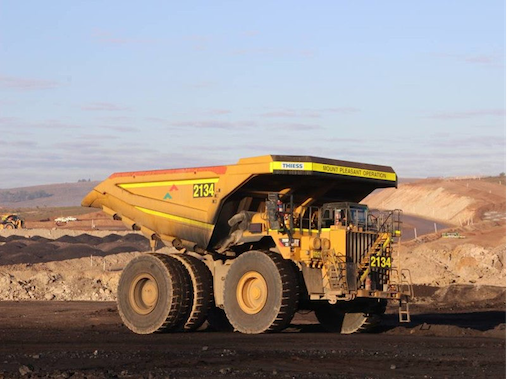
A landmark climate ruling in Australia has sent ripples through the global energy investment landscape, highlighting an escalating trend of project risk for fossil fuel ventures. Less than a day after the International Court of Justice issued its historic pronouncement on the legal obligations of nations to act on climate change, the New South Wales Court of Appeal delivered a significant blow to a major coal expansion project. This decision, impacting Mach Energy’s plan to extend the life of the Mount Pleasant coal mine for another 22 years, signals a new era of intensified scrutiny on indirect emissions and sets a formidable precedent for future project approvals. For investors navigating the complexities of energy markets, this development underscores the growing interplay between legal challenges, environmental policy, and fundamental project viability.
Mount Pleasant Ruling Establishes New Hurdles for Project Approvals
The full bench of the New South Wales Court of Appeal effectively struck down the permission for Mach Energy to extend its Mount Pleasant coal mine near Muswellbrook. The core of the court’s decision hinged on the Independent Planning Commission’s failure to adequately consider the impacts of all emissions associated with the project, crucially including Scope 3 emissions – those generated when the exported coal is burned overseas. This is a game-changer. The proposed expansion, which aimed to extract an additional 247 million tonnes of coal by 2048, was projected to generate emissions equivalent to 876 megatonnes of carbon dioxide, with the vast majority stemming from these Scope 3 activities. This ruling mandates a far more comprehensive environmental assessment for energy projects, directly impacting their economic viability and approval timelines. Environmental advocates, who had previously seen a challenge to the extension rejected, hailed this second bid as a critical victory, suggesting it could have broad implications for the 18 other coal proposals currently at various stages within the NSW planning system.
Navigating Volatile Markets Amidst Rising Regulatory Risk
This escalating regulatory risk arrives at a time when the broader energy market is experiencing significant price volatility. As of today, Brent crude trades at $90.38, marking a notable -9.07% decline within the day, with its range fluctuating between $86.08 and $98.97. Similarly, WTI crude has seen a -9.41% drop to $82.59, moving within a day range of $78.97 to $90.34. This downturn is particularly striking when considering Brent’s broader 14-day trend, which saw it fall from $112.78 on March 30th to $91.87 yesterday, representing an 18.5% decrease. Gasoline prices have also dipped, currently at $2.93, down -5.18%. While these immediate market movements are largely driven by supply-demand dynamics and macroeconomic factors, the Australian climate ruling introduces a compounding layer of long-term uncertainty. Investors must now weigh the potential for strong short-term returns against the increasing probability of project delays, increased compliance costs, and outright rejections due to evolving environmental legislation and judicial interpretations. The divergence between immediate market price action and long-term regulatory headwinds presents a complex challenge for capital allocation in the fossil fuel sector.
Investor Focus: Projecting Future Prices and Understanding Supply Dynamics
Our proprietary reader intent data reveals a keen interest from investors in understanding the long-term trajectory of energy markets, with many asking “what do you predict the price of oil per barrel will be by end of 2026?” While a definitive forecast is elusive, the Australian ruling provides critical context. By raising the bar for project approvals, particularly on Scope 3 emissions, it signals a potential tightening of future supply, especially in the coal sector, but also with possible spillover effects to other fossil fuels. This regulatory pressure, if widely adopted, could act as a structural impediment to supply growth, thereby influencing future price ceilings. Another prevalent question among our readers is “What are OPEC+ current production quotas?” This highlights the market’s ongoing preoccupation with supply-side management. The Australian court’s decision is a direct challenge to the supply pipeline from a regulatory standpoint, adding another layer of complexity to the global energy balance alongside traditional supply management by key producers. Investors are clearly attempting to synthesize these disparate forces – direct regulatory intervention, long-term climate policy, and immediate production decisions – to form a coherent investment thesis.
Upcoming Events to Shape the Immediate Horizon
As investors grapple with these long-term regulatory shifts, the immediate energy calendar is packed with events that will shape short-term market dynamics. Tomorrow, April 18th, the OPEC+ Joint Ministerial Monitoring Committee (JMMC) convenes, followed by the Full Ministerial Meeting on Sunday, April 19th. These meetings are critical for any adjustments to production quotas, which could significantly impact oil price volatility in the coming weeks. Any signals from OPEC+ regarding their outlook on global demand, especially in light of increasing climate policy pressures, will be closely scrutinized. Furthermore, the weekly rhythm of market data continues with the API Weekly Crude Inventory reports scheduled for April 21st and 28th, complemented by the EIA Weekly Petroleum Status Reports on April 22nd and 29th. These provide vital snapshots of U.S. supply-demand balances. The Baker Hughes Rig Count on April 24th and May 1st will offer insights into drilling activity and future production capacity. Taken together, these upcoming events represent the immediate catalysts for market movement, while the Australian ruling underscores the growing importance of environmental and legal factors in assessing the long-term viability and risk profile of energy investments.
Growing Project Risk: A New Paradigm for Fossil Fuel Investors
The Australian climate ruling is more than just a local setback for a single coal mine; it is a powerful indicator of an evolving global legal and regulatory environment that is increasingly hostile to new fossil fuel projects. The explicit focus on Scope 3 emissions sets a new benchmark for environmental impact assessments, directly challenging the economics of projects reliant on export markets. For oil and gas investors, this signals a need to recalibrate risk assessments, factoring in heightened legal challenges, extended approval processes, and the potential for outright project cancellations. While crude prices may fluctuate based on immediate supply-demand fundamentals and OPEC+ decisions, the long-term structural risk for fossil fuel assets is undeniably increasing. Capital allocation decisions must now comprehensively account for these deepening layers of regulatory and judicial scrutiny, making due diligence on environmental compliance and future-proofing strategies paramount.