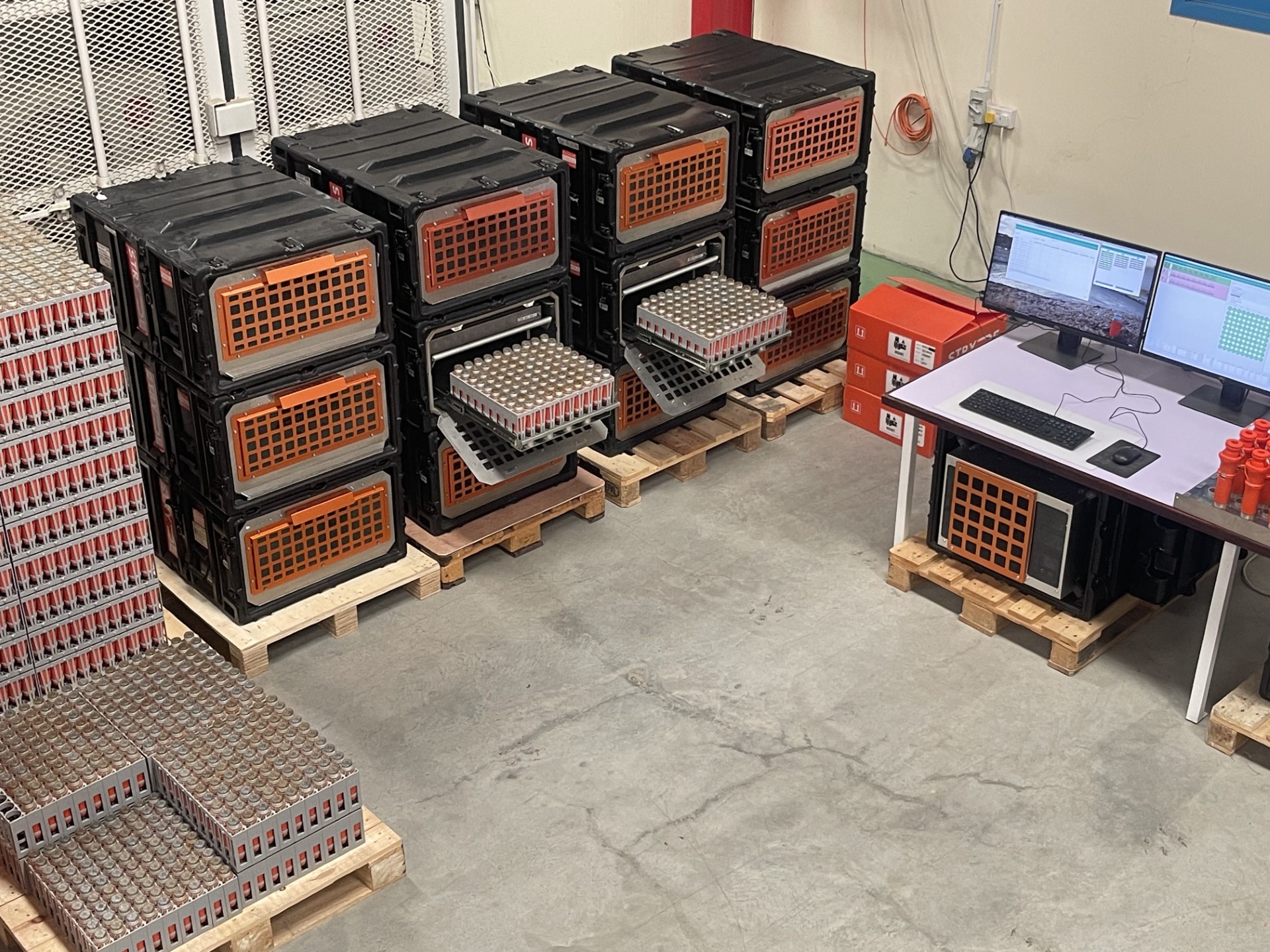
ARGAS Deploys STRYDE for Egypt’s First Onshore Seismic
The recent acquisition by ARGAS of STRYDE’s nodal seismic technology for deployment in Egypt represents a pivotal moment for the nation’s upstream sector and offers a compelling case study for investors monitoring efficiency gains across the global oil and gas landscape. This landmark move, marking Egypt’s inaugural onshore use of nodal seismic systems, promises to revolutionize exploration capabilities within highly prospective sedimentary basins. For sophisticated investors, this isn’t merely a technology upgrade; it’s a strategic investment in accelerated resource discovery, operational de-risking, and enhanced data quality, all critical factors in today’s dynamic energy market. Our analysis delves into the immediate implications for Egypt, the broader investment signals for the industry, and how these technological advancements intersect with prevailing market conditions and future energy outlooks.
Technological Superiority Meets Market Volatility
In an environment where operational efficiency directly impacts profitability, the adoption of advanced seismic technology by ARGAS carries significant weight. The STRYDE Range+ nodes and Nimble system are engineered for rapid deployment, substantially reducing the manpower and logistical footprint typically associated with conventional seismic acquisition. This translates into tangible cost savings and improved safety profiles – a non-negotiable for investors prioritizing ESG factors and robust balance sheets. Moreover, the promise of higher-quality, denser subsurface imaging offers a clearer path to identifying viable hydrocarbon reserves, minimizing dry hole risk, and optimizing future development strategies. These advantages become particularly salient when considering the current crude price environment. As of today, Brent Crude trades at $98.17, reflecting a 1.23% daily decline and mirroring a broader trend that saw Brent shed $14, or 12.4%, over the past 14 days. This volatility underscores the urgency for E&P firms to maximize every dollar spent on exploration, making investments in technologies that boost efficiency and success rates increasingly attractive. For WTI, the picture is similar, with prices at $89.76, down 1.55% today, while gasoline prices have seen a more modest dip to $3.08.
Egypt’s Upstream Ambitions and Frontier Unlock
Egypt has long been a key player in the regional energy matrix, and this technological leap signals a renewed push to modernize its exploration workflows and unlock untapped potential. The deployment in highly prospective sedimentary basins is not incidental; it targets frontier oil and gas resources, particularly in the south of the Liberia Basin. For investors, this represents an expansion of accessible acreage and a potentially accelerated timeline for bringing new discoveries to market. The capacity of nodal systems to operate with reduced environmental impact and greater flexibility in challenging terrains positions Egypt favorably for sustainable resource development. This strategic investment by ARGAS reinforces its position as a regional innovator, but more broadly, it flags Egypt as an increasingly attractive destination for upstream capital. Companies operating in or looking to enter the Egyptian E&P space will benefit from this foundational enhancement in data acquisition, potentially leading to a wave of follow-on investment in drilling and production infrastructure. The long-term implications for Egypt’s energy independence and its role as a regional energy exporter are considerable, meriting close attention from portfolio managers focused on emerging markets and energy security.
Investor Focus: Efficiency, Data, and Market Intelligence
Our proprietary reader intent data reveals a consistent theme among investors this week: a deep-seated need for precise market intelligence, robust data sources, and tools that offer competitive analytical edges. Questions frequently revolve around the current Brent crude price, the models powering these responses, and the specific data feeds our AI assistant utilizes. Investors are also keenly interested in understanding OPEC+ current production quotas, highlighting the critical role geopolitical and organizational decisions play in market dynamics. This intense focus on accurate, timely data directly aligns with the benefits promised by advanced seismic technology. Just as investors demand higher-resolution market insights, E&P companies require higher-resolution subsurface imaging to make informed capital allocation decisions. The ARGAS deployment is a microcosm of this broader industry trend: a drive towards data-driven efficiency across the entire value chain. For firms that can leverage such innovations to de-risk exploration and accelerate time to production, the investment thesis strengthens considerably, particularly in a market grappling with supply uncertainties and the ongoing energy transition.
Navigating Future Headwinds and Opportunities
Looking ahead, the impact of improved exploration capabilities in Egypt will intersect with several key upcoming market events. The immediate focus for many investors will be the OPEC+ Joint Ministerial Monitoring Committee (JMMC) meeting tomorrow, April 17th, followed by the full Ministerial meeting on April 18th. While direct linkages between an Egyptian seismic survey and immediate OPEC+ policy are not explicit, any significant new resource discovery facilitated by this technology could subtly influence regional supply narratives over the medium term. Moreover, the enhanced prospectivity of Egyptian basins could eventually translate into increased exploration and appraisal drilling, which would be reflected in future Baker Hughes Rig Count reports, scheduled for April 24th and May 1st. These rig counts serve as important leading indicators for E&P activity and capital expenditure. Furthermore, the weekly API and EIA petroleum status reports (April 21st/22nd and April 28th/29th) will continue to provide crucial insights into global supply-demand balances and inventory levels. For investors, the long-term opportunity lies in identifying companies that are not only exposed to promising geological plays but are also actively adopting technologies that ensure capital is deployed with maximum efficiency and minimal risk. ARGAS’s move in Egypt is a clear signal of this forward-thinking approach, setting a precedent for how exploration and production will evolve in the coming years.


