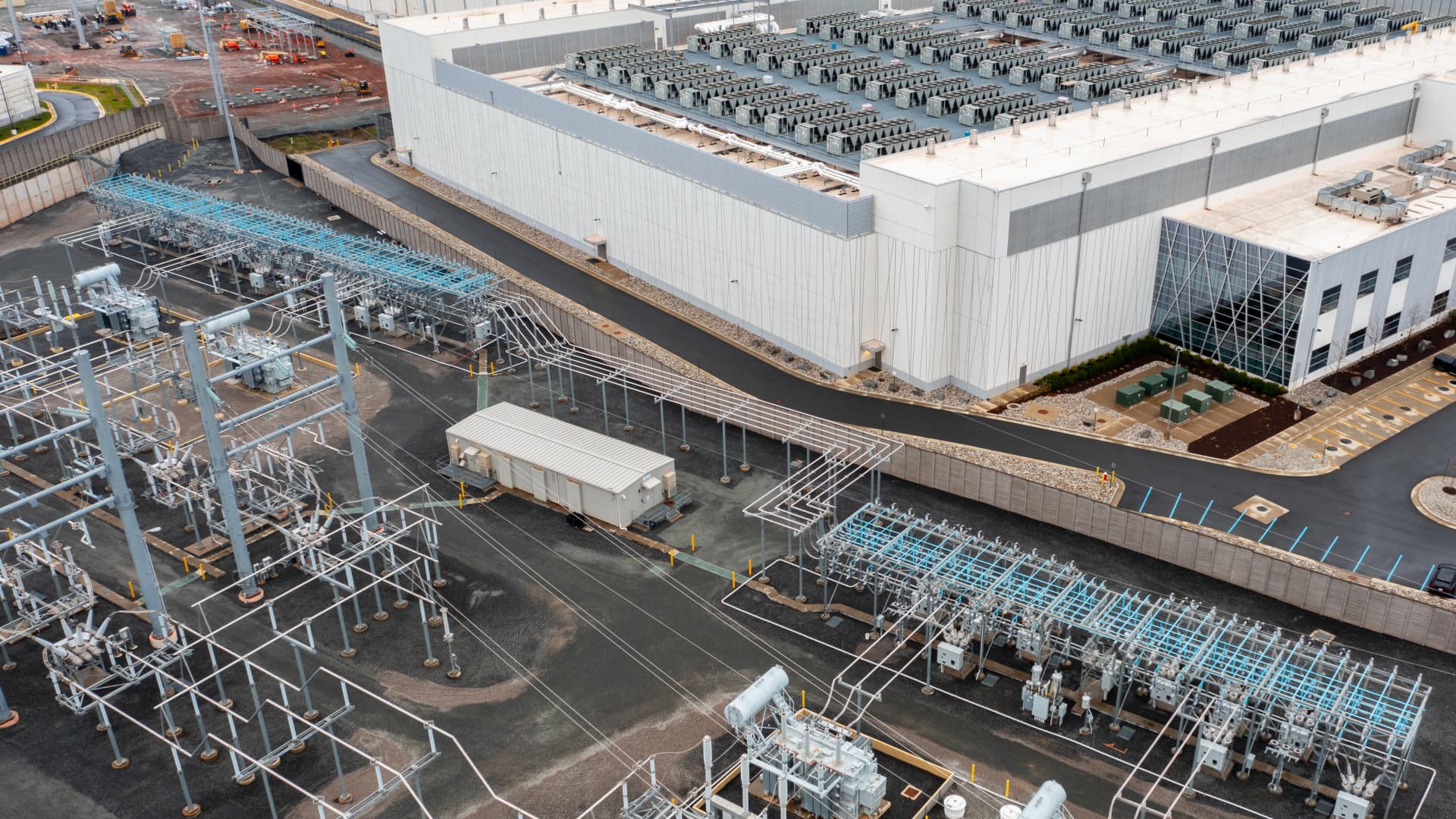
The global energy landscape is undergoing a profound transformation, and while the daily gyrations of crude oil prices often dominate headlines, a more localized yet equally significant energy crisis is rapidly unfolding, driven by the insatiable power demands of artificial intelligence. This emerging challenge, centered around escalating electricity costs and growing political backlash against data centers, presents a critical new dimension for oil and gas investors to consider. It’s no longer just about supply and demand for hydrocarbons; it’s about grid stability, policy risk, and the economic ripple effects of rapidly rising power bills across key regions. Understanding this dynamic is crucial for anticipating shifts in energy policy, regional demand patterns, and the broader investment climate.
AI’s Unchecked Appetite Sparks Grid Instability and Political Ire
The escalating demand from AI-driven data centers is fundamentally reshaping regional electricity markets, particularly within the PJM Interconnection grid, which serves a vast swathe of the Mid-Atlantic, Midwest, and Southern U.S. Experts note that these data centers are effectively adding “a Philadelphia’s worth of new electricity users to the grid every year, starting in 2025,” signaling a demand surge with no clear end in sight. This unprecedented load growth has directly translated into soaring electricity prices for residential consumers. In August, U.S. residential prices climbed an average of 6% nationwide compared to the same period last year. However, the impact has been far more severe in data center hubs: prices surged approximately 21% in New Jersey, 13% in Virginia, and 5% in Georgia.
This rapid increase in household energy costs has ignited a fierce political backlash. Recent election cycles saw candidates successfully campaign on platforms promising to rein in the AI industry and force it to “pay their own way and their fair share” of rising electricity costs. In Virginia, home to the world’s largest concentration of data centers, Abigail Spanberger’s gubernatorial victory was partly fueled by this sentiment. Similarly, New Jersey’s governor-elect Mikie Sherrill has pledged to declare a state of emergency over electric bills. Even in Georgia, new Democratic commissioners on the utility regulatory body gained traction by linking data centers to price hikes. This mounting political pressure, extending to Washington D.C. where senators are accusing the administration of “sweetheart deals” with Big Tech, indicates that regulatory and legislative interventions are not just possible, but increasingly probable. Investors must recognize this as a significant and growing policy risk that could impact not only data center operators but also the broader energy infrastructure and suppliers.
A Tale of Two Energy Markets: Local Grid Stress Amidst Global Crude Volatility
The current energy market presents a fascinating dichotomy for investors. On one hand, localized electricity markets are under immense pressure from AI-driven demand, leading to soaring consumer prices and intensifying political scrutiny. On the other, global crude oil markets are exhibiting significant volatility and a notable bearish trend. As of today, Brent Crude trades at $90.38 per barrel, experiencing a sharp 9.07% decline on the day. WTI Crude mirrors this weakness, settling at $82.59, a 9.41% drop within the same trading session. This sharp daily decline extends a significant bearish trend observed over the last two weeks, with Brent shedding nearly 20% of its value, falling from $112.78 on March 30 to its current level. Gasoline prices are also feeling the pressure, trading at $2.93, down 5.18% today. This divergence creates a complex environment: while consumers are grappling with expensive electricity, potentially dampening overall economic activity, the primary input cost for many industries – crude oil – is becoming cheaper, at least temporarily.
For energy investors, this situation demands a nuanced perspective. While lower crude prices might ease inflationary pressures in some sectors, the localized and politically charged electricity crisis poses a unique set of risks. Capital allocated to power generation assets, particularly those serving data center clusters, could face increased regulatory burdens or even direct cost pass-through limitations. Conversely, natural gas producers, whose product is a primary fuel for electricity generation, might see sustained demand, albeit potentially constrained by political caps on consumer prices. This interplay between global commodity prices and localized policy risks highlights the need for a granular understanding of regional energy market dynamics.
Investor Queries and the Long-Term Outlook for Oil & Gas Demand
Our proprietary reader intent data reveals a clear focus on future price trajectory and market stability. Many of our readers are asking about the future of oil prices, with questions like “what do you predict the price of oil per barrel will be by end of 2026?” and “is WTI going up or down?”. These questions underscore investor anxiety amidst current volatility and the search for clarity in a rapidly evolving market. The escalating AI power demand and its associated policy risks add a new layer of complexity to these forecasts. If the political backlash intensifies, leading to stricter regulations, higher taxes on data centers, or even direct intervention in electricity pricing, the economic implications could be substantial. Higher electricity costs act as a hidden tax on businesses and consumers, potentially stifling economic growth and, by extension, overall energy demand for transportation and industrial processes.
Conversely, the sheer scale of energy required by AI could also present opportunities. If grid infrastructure struggles to keep pace, there could be increased demand for flexible, dispatchable power sources, potentially benefiting natural gas generation. Furthermore, the development of new, more efficient power solutions for data centers could spur innovation across the energy sector. However, the immediate concern for investors is the policy risk. Any legislative action that makes data centers “pay their fair share” could involve new levies, carbon pricing, or even limitations on new data center construction in high-demand regions. Such measures could impact the profitability of related infrastructure investments and influence the long-term demand growth projections for various energy commodities.
Upcoming Calendar Events and Their Interplay with Emerging Risks
As investors navigate these complex dynamics, several key upcoming events warrant close attention. The global oil market will be keenly focused on the OPEC+ Joint Ministerial Monitoring Committee (JMMC) meeting scheduled for April 19, immediately followed by the full OPEC+ Ministerial Meeting on April 20. These meetings will dictate the cartel’s production policy, which could significantly influence global crude supply and prices. A decision by OPEC+ to maintain or even deepen production cuts could further tighten global oil markets, potentially creating upward pressure on prices. This scenario would clash with the localized electricity price surges, potentially exacerbating the economic burden on consumers if energy costs continue to climb across multiple fronts.
Conversely, if OPEC+ opts for a more accommodative stance, perhaps fearing a global economic slowdown partly driven by high energy costs, it could temper crude price volatility. Beyond OPEC+, weekly data releases such as the API Weekly Crude Inventory on April 21 and 28, and the EIA Weekly Petroleum Status Report on April 22 and 29, will provide critical insights into U.S. supply-demand balances. The Baker Hughes Rig Count on April 24 and May 1 will offer a pulse on domestic production activity. While these events primarily focus on traditional oil and gas metrics, their outcomes will interact with the unfolding AI power demand narrative. For example, robust U.S. production growth could help stabilize overall energy markets, potentially mitigating some of the economic impact from soaring electricity prices, while any signs of slowdown could amplify investor concerns about energy security and affordability in an increasingly complex environment.


