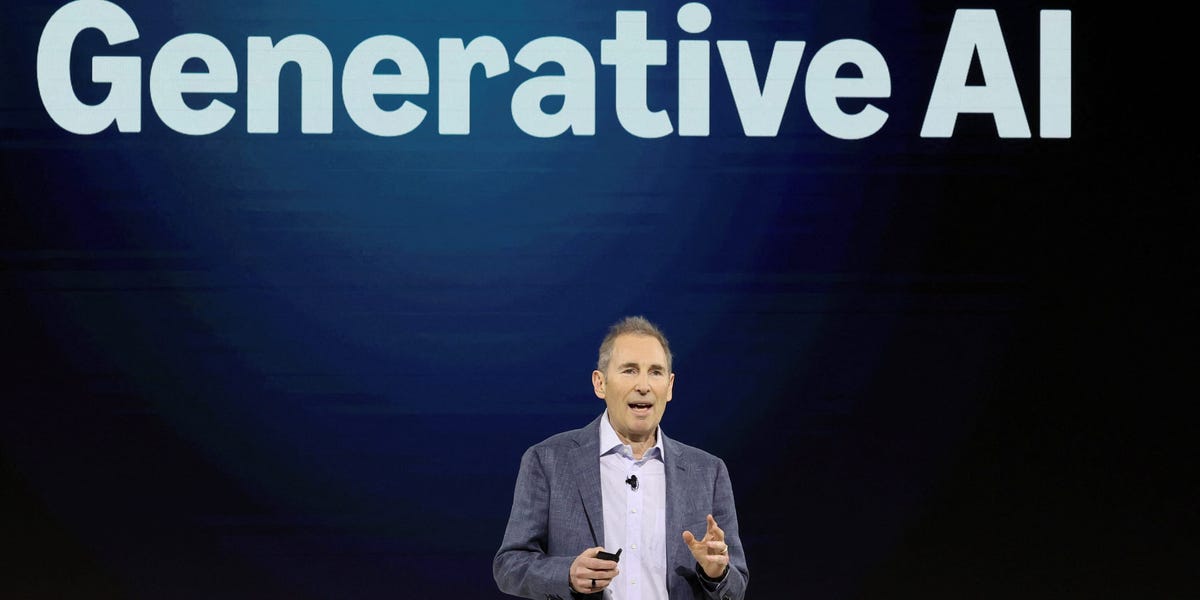
A new wave of candor is sweeping through corporate boardrooms, with top executives openly discussing artificial intelligence’s profound impact on the workforce. Amazon’s CEO recently articulated what many have suspected: AI will lead to a reduction in corporate headcount, urging teams to become “scrappier.” This directness, echoed by leaders at Shopify, Klarna, and OpenAI, signals a significant shift in how businesses view efficiency and talent allocation. For oil and gas investors, this isn’t just a tech industry anecdote; it represents a fundamental economic recalibration that will ripple through all sectors, including energy, influencing everything from operational costs to long-term demand models and, critically, investment thesis construction.
AI’s Efficiency Imperative: A New Lens for O&G Operations
The explicit acknowledgment from major corporate leaders that AI will streamline operations and reduce existing workforces is more than just a headline; it’s a blueprint for efficiency that will inevitably permeate the oil and gas sector. While the immediate focus of these announcements has been on white-collar corporate roles, the underlying principle of leveraging AI to “get more done with scrappier teams” holds immense relevance for energy companies. From optimizing exploration data analysis and refining operational logistics to predictive maintenance on complex infrastructure, AI promises to unlock substantial cost savings and enhance productivity across the O&G value chain. Investors should begin evaluating companies not just on their current operational efficiencies but on their strategic roadmap for AI integration. Those that proactively embrace AI for tasks like geological modeling, drilling optimization, and supply chain management will likely gain a significant competitive edge, translating into improved margins and sustained value creation. This isn’t merely about automation; it’s about a systemic shift in how capital and human resources are deployed, demanding a forward-looking perspective on talent acquisition and technological investment within the industry.
Navigating Volatility: Brent’s Current Trajectory Amidst Structural Shifts
The broader economic implications of AI-driven workforce changes introduce a new layer of complexity for oil and gas investors, even as they grapple with traditional market volatility. As of today, Brent crude trades at $93.22, marking an 8.8% decline from $102.22 just 14 days ago. This recent dip underscores the market’s sensitivity to a myriad of factors, from geopolitical tensions to demand outlooks. However, while these immediate price movements capture headlines, the underlying structural shift driven by AI demands equal attention. If major economies see widespread workforce restructuring and efficiency gains, it could influence overall energy demand in unforeseen ways. A more productive, leaner global economy might consume energy differently – perhaps less for traditional commuting and office spaces, but potentially more for data centers powering AI infrastructure. Investors are actively seeking a base-case Brent price forecast for the next quarter and consensus 2026 Brent forecasts. This current uncertainty around AI’s long-term economic impact adds a layer of complexity to these projections, compelling analysts to consider how a fundamentally more efficient global economy, powered by AI, might recalibrate baseline energy consumption and, consequently, crude demand trajectories.
Investor Focus: Forecasting in an AI-Driven Future
Our proprietary reader intent data reveals a strong focus from investors on forward-looking price discovery, with frequent queries about next quarter’s Brent forecast and the consensus for 2026. This desire for clarity is understandable in a market known for its volatility. However, the emerging candidness from corporate leaders regarding AI’s impact on jobs introduces a new, long-term variable into these forecasting models. How do we model global energy demand when the very nature of work and economic output is being redefined by AI? Traditional inputs like GDP growth, industrial output, and transportation trends will likely need recalibration to account for AI-driven efficiencies and shifts in consumption patterns. For instance, if corporate workforces shrink and remote work becomes even more prevalent due to AI tools, transportation fuel demand might be affected. Conversely, the massive computational power required for AI development and deployment could lead to increased electricity demand, potentially boosting natural gas or other power generation fuels. Investors must begin to integrate these macro-level AI impacts into their long-term O&G investment theses, understanding that the future demand curve for hydrocarbons may not follow historical patterns.
Upcoming Catalysts: Balancing Immediate Signals with Long-Term Trends
While the long-term structural shifts driven by AI unfold, oil and gas investors must also navigate a packed calendar of immediate market-moving events. The upcoming OPEC+ Joint Ministerial Monitoring Committee (JMMC) meeting on April 18th, followed by the Full Ministerial Meeting on April 20th, will be critical in shaping near-term supply expectations and, consequently, crude prices. Any signals regarding production quotas or compliance levels will send ripples through the market. Furthermore, the regular cadence of inventory data, with API Weekly Crude Inventory reports on April 21st and 28th, and EIA Weekly Petroleum Status Reports on April 22nd and 29th, will provide crucial insights into demand and supply balances within the United States. These events, alongside the Baker Hughes Rig Count reports on April 17th and 24th, offer vital short-term directional cues. Successful O&G investing in this evolving landscape requires a dual perspective: astute analysis of these immediate, high-impact events for tactical positioning, coupled with a strategic understanding of how AI is fundamentally reshaping economic structures and long-term energy demand, forcing a re-evaluation of traditional growth drivers and operational paradigms.


