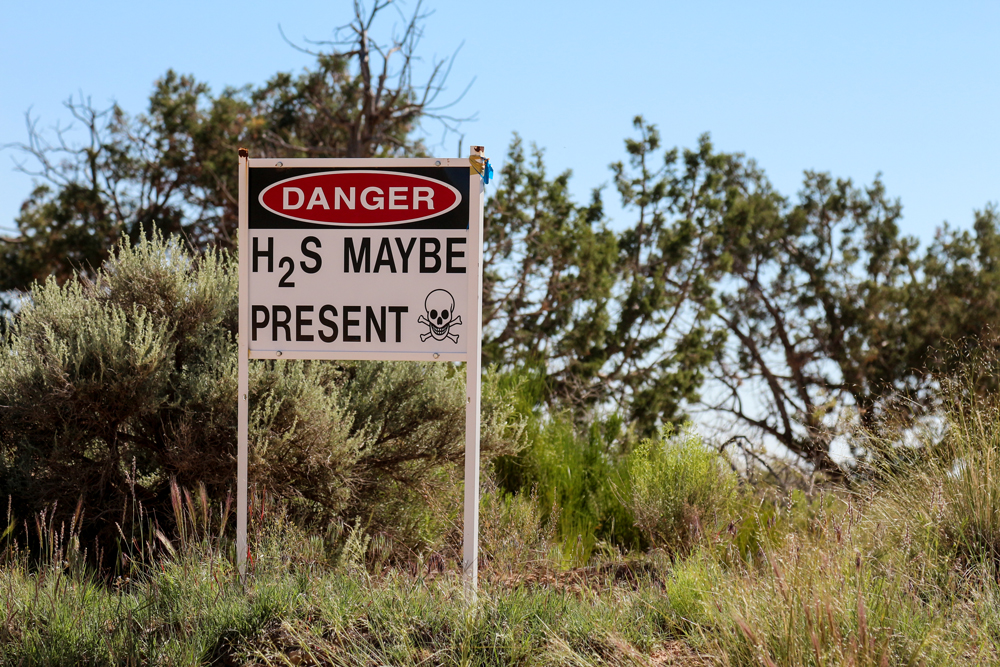
The oil and gas industry continually navigates a complex web of market forces, geopolitical shifts, and operational challenges. Yet, some risks hit closer to home, directly impacting human lives and, by extension, corporate bottom lines and investor confidence. The tragic incident at an Aghorn Operating facility in October 2019, where Jacob and Natalee Dean lost their lives due to fatal hydrogen sulfide (H2S) exposure, serves as a stark reminder of these critical operational risks. The subsequent legal and financial repercussions, culminating in a $1 million fine for Aghorn Operating Inc. on April 15, 2025, alongside a five-month prison sentence for its vice president, Trent Day, and a $400,000 fine for Kodiak Roustabout Inc., underscore a vital lesson for investors: operational safety failures are not merely humanitarian concerns but significant financial liabilities that demand rigorous due diligence.
The Invisible Threat with Visible Financial Scars
Hydrogen sulfide, a naturally occurring and often lethal gas in many hydrocarbon reserves, poses unique and severe safety challenges. Its colorless, invisible nature and ability to rapidly incapacitate individuals make early detection and effective response critical. The Aghorn tragedy highlighted profound failures in safety protocols, including malfunctioning H2S monitors that provided no warning of deadly gas levels. This incident, unfortunately, is not isolated; reports indicate at least ten additional Texas oilfield worker deaths from H2S exposure since the Deans’ tragedy. For investors, these incidents translate directly into quantifiable risks: substantial fines, legal costs, potential operational shutdowns, and severe reputational damage. The $1 million fine levied against Aghorn Operating Inc. under the Clean Air Act and OSHA standards, alongside criminal charges for an executive, illustrates the severe legal and financial consequences when safety standards fall short. These costs are material, directly impacting a company’s financial health and long-term viability, making robust safety management a non-negotiable aspect of responsible energy investment.
Navigating Operational Risk in a Shifting Market Landscape
In the current market environment, the imperative for operational excellence and risk mitigation is amplified. As of today, Brent crude trades at $95.15, seeing a marginal uptick of 0.23% within a day range of $94.42-$95.15. WTI crude similarly hovers around $91.54. However, this stability masks recent volatility; Brent has seen a significant decline of over 12% from $108.01 on March 26th to $94.58 on April 15th. In such a softening price environment, where crude prices have shed over $13 per barrel in just two weeks, every operational inefficiency and unforeseen cost is magnified. An incident like Aghorn, with its multi-million-dollar fines and executive imprisonment, can severely impair a company’s ability to maintain profitability and attract capital, irrespective of broader market trends. Investors must recognize that while macro price movements dictate overall sector performance, company-specific operational risks, particularly safety failures, can disproportionately impact individual stock performance and valuation multiples, especially when margins are already under pressure.
Beyond Price Forecasts: The True Cost of Negligence
Our proprietary data indicates that investors are keenly focused on market fundamentals, frequently asking for base-case Brent price forecasts for the next quarter, insights into Chinese refinery runs, and the drivers of Asian LNG spot prices. These are crucial questions for understanding market direction. However, the Aghorn case underscores a critical blind spot for many: the underestimation of operational risk, specifically regarding environmental, social, and governance (ESG) factors like worker safety. While a favorable Brent forecast might suggest strong returns, an operator with a poor safety record faces significant downside exposure that can erase any gains from rising commodity prices. The costs associated with fatalities, regulatory non-compliance, legal battles, and reputational harm are not abstract; they are concrete line items that erode shareholder value. Astute investors are increasingly looking beyond mere production numbers and financial statements to scrutinize a company’s safety culture, compliance history, and overall ESG framework as a fundamental component of risk assessment. The ability to manage H2S effectively, for instance, isn’t just about compliance; it’s about safeguarding assets and ensuring business continuity.
Proactive Risk Management: A Prerequisite for Future Growth and Investor Confidence
Looking ahead, the energy calendar is packed with events that will shape market sentiment and operational priorities. The upcoming Baker Hughes Rig Count reports on April 17th and April 24th will provide insights into drilling activity, particularly in regions like the Permian Basin where H2S risks are prevalent. Increased drilling inherently means more potential points of exposure and heightened demands on safety protocols. Furthermore, the OPEC+ JMMC meeting on April 18th, followed by the full Ministerial meeting on April 20th, will influence global supply dynamics and, consequently, pricing. In a market shaped by these macro forces, companies that prioritize robust safety management systems, invest in reliable H2S monitoring, and foster a strong safety culture will be better positioned to attract and retain investor capital. For investors, this means demanding transparency on safety metrics, scrutinizing incident rates, and favoring operators with verified, proactive risk mitigation strategies. The lessons from Aghorn are clear: comprehensive due diligence must extend beyond financial statements and market forecasts to encompass the critical, often life-saving, aspects of operational safety, ensuring long-term value creation in the energy sector.