Europe’s Green Energy Accelerations Reshape Oil & Gas Investment Landscape
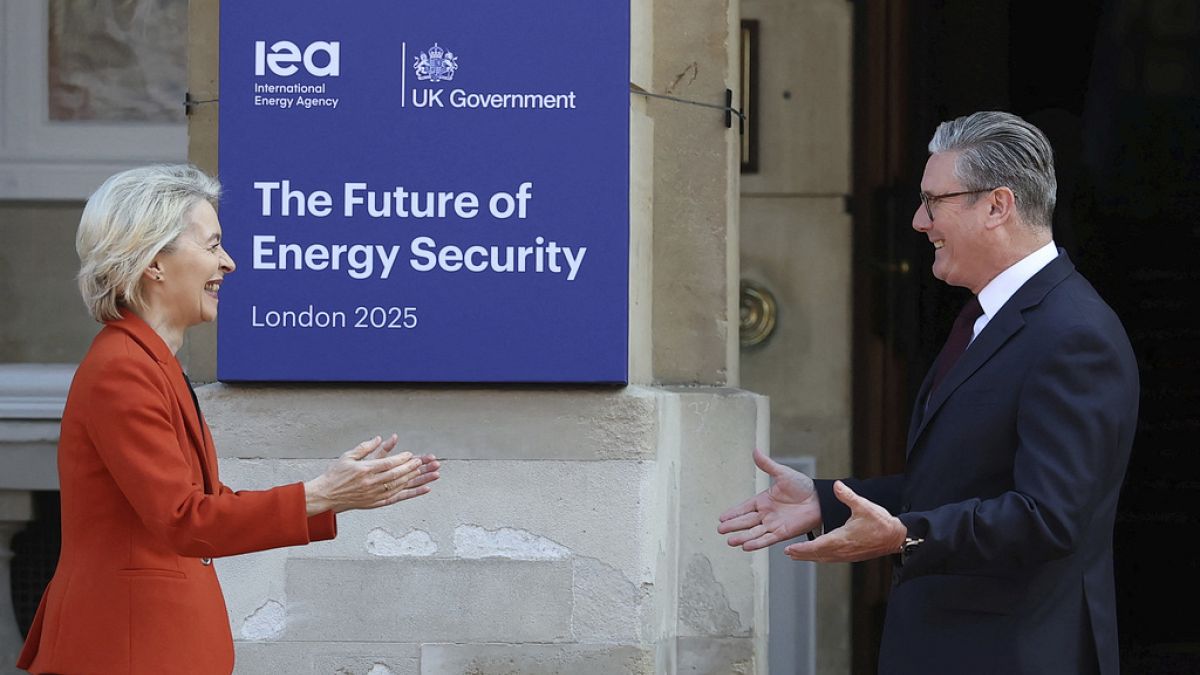
The energy sector across Europe and the United Kingdom is undergoing a significant strategic reorientation, signaling profound shifts for investors in the traditional oil and gas industry and the broader energy complex. Recent high-level discussions in London have reinforced a robust commitment to green energy transitions, even as immediate energy security concerns and persistent geopolitical volatility continue to dominate global headlines.
EU’s Green Imperative Navigates Geopolitical Crosscurrents
European Commission President Ursula von der Leyen recently articulated the European Union’s unwavering resolve to accelerate its clean energy transition. While acknowledging the crucial role of liquefied natural gas (LNG) supplies from the United States in bolstering European energy security, she notably refrained from signaling any plans for a substantial increase in these imports. This cautious stance unfolds against a backdrop of complex geopolitical challenges, including Russia’s continued weaponization of energy supplies, the escalating conflict in the Middle East threatening vital global shipping lanes, and the specter of potential tariffs from the US, which could disrupt critical supply chains. These tariffs, a tactic previously employed by a former US administration, aimed to compel the EU to boost its purchases of American hydrocarbons.
Despite these external pressures, the EU, inherently lacking significant domestic fossil fuel reserves, has achieved remarkable progress in its energy transition. Renewable sources now contribute nearly half of the bloc’s electricity generation, with an impressive 78 gigawatts of new generation capacity deployed in the last year alone. Von der Leyen underscored the North Sea’s immense potential as a future powerhouse for wind energy, citing strategic initiatives like the Clean Industrial Deal. Significantly, Europe witnessed a doubling of electricity demand growth last year, intensifying the impetus for new, sustainable power sources. The EU remains firmly committed to the COP28 pledge made in Dubai in 2023, aiming to triple renewable energy production by 2030 – a target set within the UN climate action framework, from which the US has twice withdrawn.
Britain’s Strategic Embrace of Domestic Clean Power
Across the English Channel, UK Prime Minister Keir Starmer echoed a similar sentiment, strategically framing energy security as an indispensable component of national security. He directly attributed more than half of recent economic recessions to the “roller coaster” volatility inherent in international fossil fuel markets, emphasizing the urgent need to mitigate this exposure. Starmer asserted that the UK could transform energy from a source of national vulnerability into a strategic strength, explicitly rejecting any defense of the status quo or attempts to revert to a bygone energy era. He championed “home-grown clean energy” as the definitive pathway to regain sovereign control over the nation’s energy system. Crucially for traditional energy investors, Starmer also acknowledged that fossil fuels would undeniably remain an integral part of the energy mix for “decades to come,” indicating a phased transition rather than an abrupt cessation of hydrocarbon use.
The Critical Minerals Imperative: A New Geopolitical Front
Adding another layer of complexity to the evolving energy landscape is the emerging security challenge posed by critical minerals. The transition to clean energy technologies, from electric vehicles to wind turbines and battery storage, necessitates a substantial increase in the supply of key raw materials such as copper, lithium, cobalt, and nickel. China currently dominates the processing capacity for these essential minerals, holding an estimated 80% share for many critical elements. This concentration of processing power introduces a new geopolitical risk, potentially mirroring past energy dependencies on a limited number of suppliers.
The demand forecasts for these critical minerals are staggering. By 2030, global copper demand is projected to increase by 50%, lithium by an astonishing 600%, cobalt by 400%, and nickel by 100%. Securing diverse, ethical, and resilient supply chains for these materials is paramount. This necessitates significant investment in domestic mining, processing, and recycling capabilities across Europe and its allies. For investors, this creates both new opportunities in the mining and refining sectors and a strategic imperative to assess the supply chain resilience of companies heavily reliant on these materials for their clean energy initiatives.
Investment Implications for the Hydrocarbon Sector
The converging policy directives from the EU and UK present both challenges and opportunities for investors traditionally focused on the oil and gas sector. The reinforced commitment to green energy translates into heightened policy risk and potential long-term erosion of demand for conventional hydrocarbons. Capital allocation within the energy complex will continue to shift decisively towards renewables, energy efficiency, and critical minerals.
Oil and gas companies face increasing pressure to adapt their portfolios, with a growing emphasis on diversification into areas like carbon capture, utilization, and storage (CCUS), hydrogen production, and even direct investment in renewable energy projects. While the acknowledgment that fossil fuels will persist for “decades to come” offers some near-to-medium term stability for existing assets, it simultaneously signals a clear long-term trajectory away from unmitigated hydrocarbon production. Investors must carefully evaluate the stranded asset risk for new, long-cycle oil and gas projects and consider the implications for dividend sustainability and share price performance.
Conversely, the immense demand for critical minerals and the need for robust supply chains open new avenues for investment. Companies positioned in the exploration, extraction, processing, and recycling of copper, lithium, cobalt, and nickel could see significant growth. Furthermore, the infrastructure required to support a renewable-heavy grid – including energy storage, transmission, and smart grid technologies – represents another burgeoning investment frontier.
Navigating a Multi-Decade Energy Transition
In conclusion, the strategic energy shifts underway in Europe and the UK underscore a complex, multi-decade energy transition. For oil and gas investors, this period demands rigorous analysis of policy developments, geopolitical risks, and technological advancements. Capital will increasingly flow towards sectors enabling the green transition, while traditional hydrocarbon investments will require a sharper focus on efficiency, cost competitiveness, and strategic adaptation to a future with declining demand. The coming years will undoubtedly redefine the risk-reward profiles across the entire energy investment spectrum.