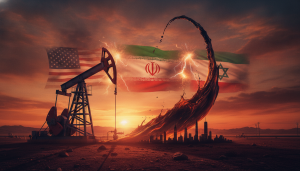
U.S. Military Action Escalates Tensions in Vital Oil Region
Global oil and gas investors are bracing for renewed volatility after U.S. forces conducted “self-defense” strikes in southern Iran early Tuesday. These actions, confirmed by U.S. Central Command (CENTCOM), signal a significant uptick in regional tensions, directly impacting a geographical area indispensable to the world’s energy supply chain. Energy market participants are now closely monitoring the potential for wider destabilization, which could have profound implications for crude prices and shipping security.
CENTCOM spokesperson Tim Hawkins detailed the rationale behind the military operations, stating they were executed to “protect our troops from threats posed by Iranian forces.” The targets included identified missile launch sites and Iranian boats observed attempting to deploy mines. Such activities, particularly mine-laying, pose an immediate and severe threat to maritime navigation in one of the world’s most critical shipping lanes. While CENTCOM affirmed it continues to “defend our forces while using restraint during the ongoing ceasefire,” the kinetic response underscores the fragility of the current regional equilibrium and the high stakes involved for international commerce.
Strait of Hormuz: Global Energy’s Vulnerable Artery
The military engagement occurred within a region inextricably linked to the Strait of Hormuz, a narrow yet vital chokepoint situated near Larak Island, Iran. This strategic waterway is, by far, the most important oil transit choke point globally, through which approximately 21 million barrels of crude oil and petroleum liquids, representing roughly one-fifth of the world’s daily consumption, pass each day. Major oil exporters, including Saudi Arabia, Iran, the United Arab Emirates, Kuwait, and Iraq, rely heavily on this passage to bring their crude to market. Furthermore, virtually all of Qatar’s liquefied natural gas (LNG) exports traverse the Strait. Any direct or indirect threat to freedom of navigation in this channel immediately injects a substantial risk premium into crude prices, elevates insurance costs for tankers, and raises broader concerns about the reliability of global energy supplies. The very presence of Iranian naval activities attempting to place mines in such a sensitive area demonstrates a clear and present danger to global energy security.
Diplomatic Crossroads: Trump’s Peace Push Meets Regional Resistance
These military developments unfold against a backdrop of complex diplomatic efforts spearheaded by U.S. President Donald Trump, who is actively pursuing a comprehensive peace deal in the Middle East. President Trump indicated on Monday that these regional talks were “proceeding nicely,” an assessment that momentarily offered a glimmer of hope amidst the geopolitical complexities. However, his parallel proposals, particularly those concerning Iran’s nuclear program, have introduced significant friction. In a Truth Social post, the U.S. President put forth a contentious demand: Iran’s entire stockpile of enriched uranium must be “immediately turned over to the United States to be brought home and destroyed,” or alternatively, destroyed either within Iran or “at another acceptable location.”
Tehran, however, has unequivocally signaled its unwillingness to comply with any such demands, categorically rejecting the proposition to either destroy its enriched uranium or transfer it to U.S. custody. This steadfast refusal highlights the fundamental divergence in objectives and deep-seated mistrust between the two nations, which remains a core driver of regional instability. For energy investors, Iran’s nuclear ambitions continue to be a critical variable, as any further escalation related to this issue could trigger more stringent international sanctions, potentially disrupting Iran’s oil export capabilities and injecting renewed volatility into global crude markets.
Adding another layer to the intricate diplomatic landscape, the U.S. administration has also actively urged more Arab nations to sign the Abraham Accords, an initiative aimed at normalizing relations with Israel. While proponents view this as a path toward greater regional integration and peace, the proposal has encountered significant resistance. Notably, Pakistan has roundly rejected the demand, with sources close to the matter indicating that the two issues—broader normalization with Israel and other geopolitical concerns—were deemed “not interlinked and cannot be made so.” This rejection from a key regional player further underscores the complex and often fragmented nature of alliances and interests in the Middle East, complicating any straightforward path to enduring peace and stable energy markets.
Investor Outlook: Navigating Heightened Geopolitical Risk in Oil Markets
For savvy oil and gas investors, the convergence of military actions and stalled diplomatic progress necessitates a swift reassessment of risk. Crude oil benchmarks, such as Brent and West Texas Intermediate (WTI), typically react sharply to such escalations, with price increases driven by fear of supply disruption rather than immediate physical shortages. This heightened geopolitical risk translates directly into higher costs across the entire supply chain, including increased shipping expenses and elevated insurance premiums for tankers operating in the Persian Gulf. Companies involved in maritime transport and refining face immediate operational adjustments and financial pressures. Furthermore, long-term strategic planning for major international oil companies and national energy entities must now factor in a significantly elevated geopolitical risk baseline, influencing capital allocation decisions for exploration, production, and infrastructure projects.
The current environment highlights the critical importance of monitoring not just military engagements but also the nuanced diplomatic signals. While a ceasefire is in place, the underlying tensions persist, creating a dynamic where rhetoric and action can quickly diverge. Investors must remain vigilant, analyzing policy implications alongside breaking news. A sustained period of instability in the Persian Gulf could force major consuming nations to draw down strategic petroleum reserves, temporarily alleviating supply concerns but potentially shifting global supply-demand balances over the medium term. This underscores the need for robust risk management strategies and diversified energy portfolios to mitigate exposure to regional shocks.
Conclusion: Vigilance Essential for Energy Sector Stakeholders
The latest U.S. “self-defense” strikes in southern Iran, coupled with ongoing, yet stalled, diplomatic initiatives, reaffirm the Middle East’s perennial role as a critical determinant of global energy market stability. For oil and gas investors, this confluence of military deterrence, contentious nuclear proposals, and fragmented regional political realignments guarantees continued uncertainty. Maintaining close watch on both tactical military developments and strategic diplomatic maneuvers will be paramount for navigating the inherent volatility and securing investment positions in the dynamic landscape of the global energy sector.