Middle East Tensions Escalate: Iran Warns of Global Retaliation Amid Stalled Nuclear Talks
Geopolitical risks in the Middle East have surged dramatically as Iran issued a stark warning of potential retaliation extending beyond its immediate borders if faced with further military action from the United States or Israel. This provocative statement comes amidst signals from the US President hinting at impending strikes within days, underscoring the severe deadlock over Tehran’s nuclear ambitions and critical maritime transit through the Strait of Hormuz. For energy investors, the volatile situation introduces a significant risk premium to global crude markets, demanding close attention to every development.
The Islamic Revolutionary Guard Corps (IRGC) conveyed its aggressive stance through Iran’s semi-official Tasnim news agency, stating unequivocally, “If aggression against Iran is repeated, the regional war that had been promised will this time extend beyond the region.” This direct threat of expanding conflict beyond the traditional battleground of the Middle East signals a perilous new phase of confrontation. The IRGC further cautioned of “crushing blows in places you do not expect,” a thinly veiled warning suggesting potential attacks on international targets or infrastructure far removed from the Gulf. Such an expansion of conflict could have profound and unpredictable implications for global trade, supply chains, and, crucially, energy security.
US President Signals Imminent Action Amid Diplomatic Impasse
These heightened threats from Tehran follow a period of intense rhetoric from the US President, who indicated a willingness to authorize a new round of military strikes should diplomatic efforts fail to secure concessions from Iran. Washington’s core demands center on Iran surrendering its highly enriched uranium stockpile, permanently halting uranium enrichment activities, and reopening the Strait of Hormuz to commercial shipping without restrictions. The President conveyed a clear sense of urgency, telling reporters, “I hope we don’t have to do the war, but we may have to give them another big hit,” even specifying a potential timeline for action: “Friday, Saturday, Sunday — maybe early next week.” Such explicit warnings fuel market uncertainty and compel investors to brace for rapid shifts in the geopolitical landscape.
Oil Market Dynamics: Short-Term Dip Against Long-Term Risk
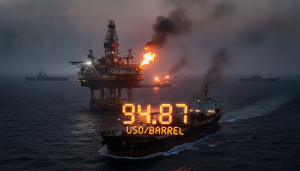
Despite the renewed threats of military action, oil prices experienced a temporary dip, with Brent crude trading near $107 per barrel after a 3.5% decline. This short-term pullback might reflect profit-taking or an initial market assessment of the immediate probability of large-scale disruption. However, it is crucial for investors to recognize that prices remain sharply higher for the year. This underlying strength in the crude market is directly attributable to the persistent conflict, ongoing shipping disruptions, and the ever-present geopolitical risk premium associated with the Middle East. Any perceived calming of tensions, even fleeting, can trigger short-term corrections, but the foundational risks continue to underpin elevated energy market valuations.
The fundamental disagreements between Iran and the United States remain deeply entrenched. Tehran has consistently rebuffed American demands to relinquish its highly enriched uranium stockpile or to cease its uranium enrichment activities permanently. Concurrently, Washington continues to exert pressure on Iran to allow the unfettered passage of commercial shipping through the Strait of Hormuz, a critical artery for global energy flows. This impasse highlights the profound challenges facing negotiators and casts a long shadow over prospects for a swift resolution.
Strait of Hormuz: A Vital Chokepoint Under Threat
The Strait of Hormuz holds unparalleled strategic importance, serving as the transit point for approximately one-fifth of the world’s global oil and liquefied natural gas (LNG) trade. Since the intensification of regional fighting earlier this year, navigation through this vital waterway has remained severely restricted. Iran has explicitly linked the reopening of the Strait to Washington lifting its naval blockade of Iranian ports, effectively using commercial shipping access as a bargaining chip. This tactic places significant economic strain on global supply chains and exacerbates anxieties about energy supply security.
Recent data indicates a stark reality: Iranian officials reported that only 26 vessels transited Hormuz in the past 24 hours under the coordination of the IRGC Navy. This figure remains drastically below normal pre-conflict volumes, underscoring the ongoing disruption to one of the world’s most critical maritime passages. The sustained curtailment of traffic through such a vital chokepoint has direct implications for shipping costs, insurance premiums, and ultimately, the delivered price of energy globally, affecting bottom lines for producers and consumers alike.
Iran’s Preparedness and Stalled Diplomacy
Adding another layer of complexity, Iranian Parliament Speaker Mohammad Bagher Ghalibaf disclosed that Tehran has strategically utilized the ceasefire period to enhance its military readiness and bolster economic resilience. This proactive strengthening is undertaken in anticipation of a potential renewal of conflict, signaling Iran’s resolve rather than a leaning towards de-escalation. Such preparations undoubtedly factor into market calculations, as they suggest Iran is positioning itself for a protracted standoff or even further escalation.
Diplomatic channels, primarily facilitated through intermediaries like Pakistan, are still active, with the White House reportedly continuing its pursuit of a negotiated settlement. However, officials on both sides have acknowledged that these crucial talks remain stalled, with no significant breakthroughs reported. This lack of tangible progress through diplomacy reinforces the perception of a prolonged geopolitical standoff, maintaining a high level of uncertainty for energy markets.
Despite the President’s public threats, Vice President JD Vance offered a slightly more tempered view, suggesting the administration still believes Iran desires a deal, describing renewed military action as merely “option B.” Vance stated on Tuesday, “We think that we’ve made a lot of progress. But that’s not what the president wants. And I don’t think it’s what the Iranians want either.” These comments highlight a potential internal divergence or a strategy to keep all options on the table, contributing to the mixed signals received by the market.
Further complicating the immediate military calculus, the President previously indicated that Saudi Arabia, Qatar, and the United Arab Emirates had urged him to delay additional military action. These key regional allies, all major oil producers, likely prefer a diplomatic resolution or at least a delay in hostilities to prevent broader regional destabilization that could severely impact their own economies and oil export capabilities. Their influence underscores the complex interplay of regional interests and global energy considerations.
Investor Outlook: Sustained Risk and Market Sensitivity
Analysts universally agree that the risk of further escalation remains exceptionally elevated. Both the US and Iran continue to harden their positions, creating a precarious environment where any miscalculation could trigger a wider conflict. For oil and gas investors, this translates into sustained market sensitivity to any development affecting Hormuz transit, regional oil exports, or the broader geopolitical stability of the Middle East. Prudent investment strategies must account for these ongoing risks, recognizing that energy markets will likely remain volatile and responsive to headline news for the foreseeable future.