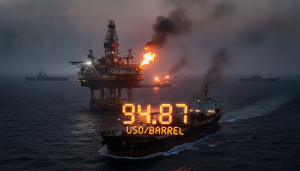
In a forceful move impacting global energy markets, the U.S. Treasury Department has unleashed a new wave of sanctions, directly targeting 19 vessels and a sprawling web of shipping, financial, and trading entities facilitating Iranian oil, liquefied petroleum gas (LPG), and petrochemical exports. This aggressive escalation underscores Washington’s unwavering resolve to curb Tehran’s energy revenues amidst simmering tensions across the Middle East, a development keenly watched by energy investors worldwide.
The action, spearheaded by the Treasury’s Office of Foreign Assets Control (OFAC) and announced earlier this week, takes aim at what U.S. officials meticulously describe as Iran’s sophisticated “shadow banking system” and “shadow fleet.” These clandestine operations have reportedly enabled the illicit movement of billions of dollars from energy sales, cleverly bypassing conventional financial oversight and international sanctions regimes.
Washington’s “Economic Fury” Campaign Intensifies
Treasury Secretary Scott Bessent articulated these measures as a critical component of the administration’s broader “Economic Fury” campaign. This strategic offensive is designed to systematically dismantle Iran’s capacity to generate and transfer vital revenue through the intricate global energy market. For investors, this signifies an increased focus on compliance and a heightened risk landscape surrounding any entities even tangentially connected to sanctioned Iranian trade.
“Iran’s shadow banking system serves as a conduit for the illicit transfer of funding, often for nefarious purposes,” Secretary Bessent asserted. “As the Treasury aggressively dismantles Tehran’s shadow banking infrastructure and its hidden maritime assets under our Economic Fury initiative, financial institutions globally must remain exceptionally vigilant to the regime’s sophisticated manipulations of the international financial system.” This clear warning highlights the potential for secondary sanctions and the growing scrutiny on financial intermediaries.
These latest sanctions emerge against a backdrop of persistent volatility in global crude and liquefied natural gas (LNG) markets, exacerbated by ongoing disruptions tied to the Strait of Hormuz crisis. Iranian export activities and regional shipping flows have faced increasing scrutiny and restrictions in recent months, introducing significant geopolitical premiums into energy commodity prices and impacting maritime logistics stocks.
Unveiling the “Shadow Fleet” and Financial Network
OFAC’s detailed findings reveal that the sanctioned vessels were actively engaged in transporting Iranian crude oil, LPG, methanol, various petrochemicals, and naphtha to an array of foreign buyers. These illicit shipments have collectively generated hundreds of millions of dollars, effectively bolstering Tehran’s treasury. The breadth of this operation is significant, with the targeted vessels operating under diverse international flags and complex ownership structures traced back to entities in key maritime jurisdictions such as Hong Kong, the Marshall Islands, Panama, and Liberia.
The list of sanctioned assets includes a mix of critical energy carriers: crude tankers designed for vast oil shipments, LPG carriers facilitating liquefied gas exports, and chemical tankers moving specialized petrochemical products. These vessels are implicated in transporting millions of barrels of Iranian-origin cargoes over recent periods, feeding a clandestine supply chain that has defied previous international efforts to restrict Iran’s energy trade.
Beyond the maritime assets, the Treasury Department has also brought the hammer down on Iran-based Amin Exchange. Officials pinpoint Amin Exchange as a pivotal foreign currency exchange network, instrumental in facilitating transactions for various sanctioned Iranian banks, prominent petrochemical exporters, and notably, the National Iranian Oil Company (NIOC). OFAC’s intelligence indicates that this exchange house leveraged a network of front companies operating across the United Arab Emirates (UAE), Türkiye, and Hong Kong to seamlessly support cross-border financial activities intrinsically linked to Iranian oil and petrochemical trade, showcasing the elaborate nature of these illicit operations.
Investor Vigilance: Navigating Secondary Sanctions and Compliance Risks
The U.S. administration’s latest pronouncements carry a stark warning for foreign companies and financial institutions globally: continued engagement in Iranian oil trade could expose them to severe secondary sanctions. This threat extends far beyond direct transactions, encompassing any facilitating services, financial processing, or logistical support that enables Tehran’s energy exports.
Of particular note is the explicit reference to Chinese independent “teapot” refineries. These smaller, privately-owned refiners in China have historically been major buyers of Iranian crude, often acquiring it at significant discounts. The Treasury’s direct warning signals an imminent increase in pressure on these entities and the broader Chinese energy sector, forcing a re-evaluation of their supply chains and risk exposure. For investors in global refining and commodity trading firms, understanding the intricate web of sanctions compliance and geopolitical risks associated with such transactions becomes paramount.
These expanded measures solidify Washington’s broader and intensifying campaign to cripple Iran’s export infrastructure, disrupt its opaque financial networks, and impede its maritime logistics operations. As the regional conflict continues to evolve, these actions are fundamentally reshaping global oil flows, rerouting supply chains, and introducing new dynamics into the competitive tanker market. Investors with holdings in shipping, refining, and energy infrastructure must closely monitor these developments, as geopolitical maneuvers directly translate into market opportunities and potential liabilities in the volatile oil and gas investment landscape.