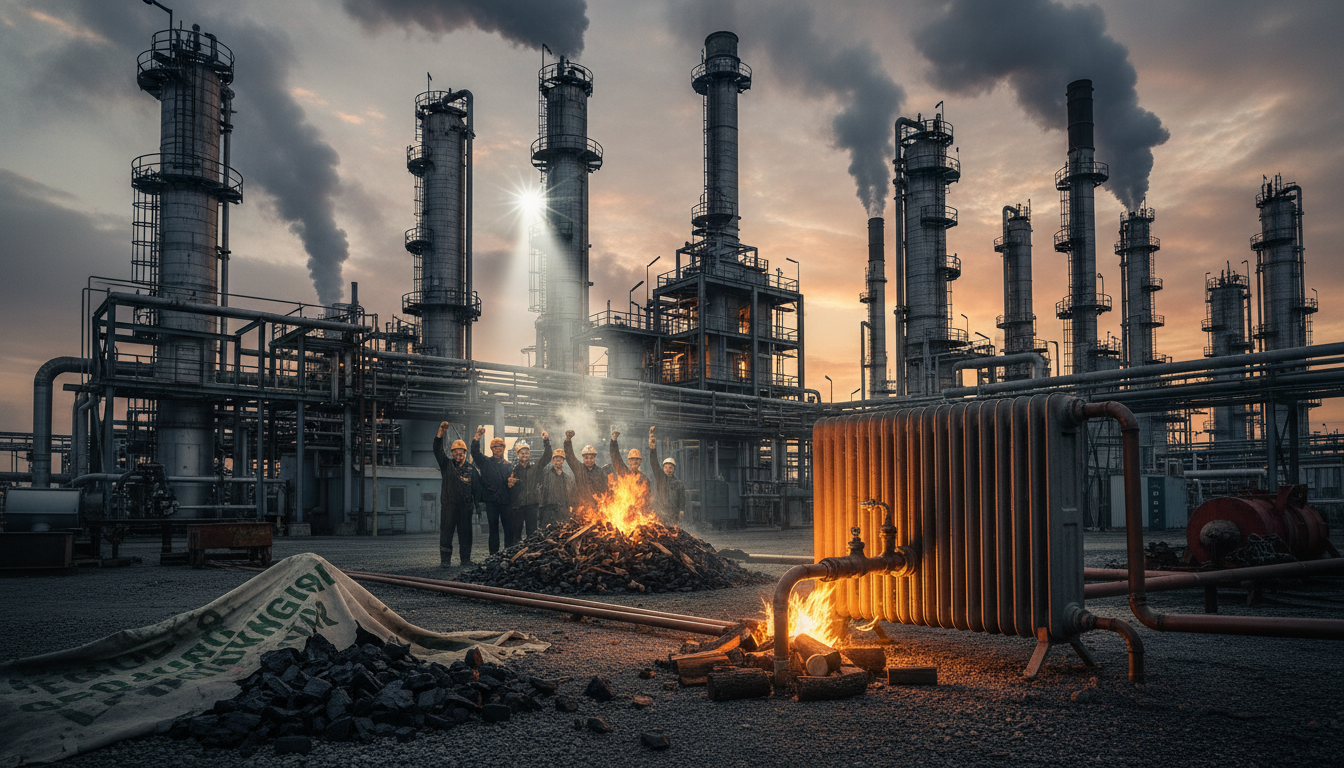
Germany’s Heating Law Reversal: A New Era for Oil & Gas Investment in Europe’s Largest Economy
Germany, Europe’s economic powerhouse, is signaling a significant recalibration of its energy transition strategy, a move that could reshape investment landscapes for the oil and gas sector. Chancellor Friedrich Merz’s cabinet has agreed to overhaul a contentious 2023 heating law, abandoning its stringent mandate for new heating systems to incorporate at least 65% renewable energy. This strategic pivot aims to inject vitality into the construction sector, alleviate household financial burdens, and restore critical investor confidence.
The original heating legislation, a cornerstone of former Chancellor Olaf Scholz’s climate agenda, had become a political flashpoint. Critics argued vehemently that the blanket 65% renewable requirement would force millions of German households to prematurely abandon their existing gas and oil boilers, incurring substantial, often unaffordable, costs for cleaner alternatives. This pressure, combined with broader economic headwinds, has driven the Merz government to a more pragmatic approach, acknowledging the economic realities facing both consumers and industry.
The Evolution of German Heating Policy: Blended Fuels Take Center Stage
Under the new cabinet agreement, set to be codified in a forthcoming building modernization law, the emphasis shifts from an outright renewable mandate to a progressive integration of climate-neutral fuels. Crucially, homeowners will retain the flexibility to maintain their current heating systems, including gas and oil boilers, without an immediate obligation to switch to heat pumps, district heating, or biomass solutions.
For new installations, however, a new requirement emerges. From 2029, all new gas and oil heating systems must commence blending climate-neutral fuels. This initial share will stand at 10%, steadily escalating to 60% by 2040. This phased approach offers a longer runway for the development and scaling of technologies and supply chains for fuels such as green hydrogen, biofuels, and synthetic natural gas, presenting a tangible, albeit evolving, market for oil and gas companies capable of adapting their portfolios.
Economy Minister Katherina Reiche emphasized the benefits of this revised framework, stating, “We are creating investment security, we are creating planning security, we are enabling technological openness and flexibility in the choice of heating system.” This statement resonates strongly with investors seeking clarity and stability in a historically volatile regulatory environment.
Stabilizing the Grid: Germany’s New Power Capacity Market
Beyond the heating sector, the German cabinet has also endorsed measures to establish a new market for standby power generation. This initiative is pivotal for maintaining grid stability as Germany accelerates its coal phaseout and increases its reliance on intermittent renewable energy sources like wind and solar. Under this plan, operators of power stations and energy storage facilities will receive financial compensation not solely for the electricity they supply, but critically, for ensuring their capacity remains available to bridge gaps when renewable output wanes.
For savvy investors in the energy infrastructure space, this represents a new revenue stream centered on flexibility and reliable firm capacity. It underscores the continued necessity of dispatchable power sources – a segment where advanced natural gas-fired plants, potentially running on hydrogen blends in the future, could play a vital role. This policy is a direct response to the inherent challenges of integrating high levels of renewables, reinforcing the investment case for diversified energy portfolios.
Investor Outlook: Opportunities and Execution Risks for Oil and Gas
Germany’s building sector, one of Europe’s most challenging to decarbonize, lies at the nexus of energy security, household economic viability, and ambitious climate objectives. The sector demands significant upfront capital, a skilled labor force, and extended planning horizons. By easing the prescriptive 65% renewable rule, the Merz administration intends to unlock capital for essential renovation and new construction.
This shift introduces both opportunities and risks for oil and gas investors. The explicit allowance for conventional heating systems, coupled with the future demand for climate-neutral fuel blends, could extend the operational lifespan of existing fossil fuel infrastructure while simultaneously spurring investment in sustainable fuel production and distribution. However, the efficacy of this new strategy hinges critically on the credibility, availability, and affordability of these future climate-neutral fuels. The execution risk associated with scaling these new fuel sources to meet 2029 and 2040 targets will be a key metric for investor scrutiny.
Industry Reactions and the Political Landscape
The policy reversal has drawn predictably divergent reactions. Germany’s BDI industry federation lauded the change, calling it “an important step towards finally getting investment back on track.” This sentiment highlights the business community’s desire for predictable regulatory frameworks that foster, rather than hinder, economic activity and modernization within Germany’s extensive building stock.
Conversely, environmental advocacy groups and the Green party, which spearheaded the original heating law under the previous government, voiced strong condemnation. Katherina Droege, parliamentary leader for the Greens, criticized the cabinet’s decision as “a complete abandonment of Germany’s climate targets,” viewing it as a significant setback for household-level climate action.
This political backdrop is crucial. The ruling coalition, comprising Merz’s conservative Christian Democrats and their Social Democrat partners, is navigating a period of intense public scrutiny amidst internal disputes over various reforms and a surge in support for the far-right Alternative for Germany party. Prioritizing visible economic action, the revised heating law is now a litmus test for whether Germany can temper politically sensitive climate regulations without compromising its overarching 2045 climate neutrality objective.
Europe’s Evolving Climate Agenda: Pragmatism Meets Policy
While Germany reaffirms its 2045 climate neutrality target, the strategic path to achieving it is undeniably evolving. The revised heating policy also aligns with certain aspects of the European Union’s broader Buildings Directive, which mandates all new buildings to be zero-emission from 2030, suggesting a larger regional trend towards more pragmatic, market-based mechanisms.
For C-suite executives and investors across the energy value chain, the broader implication is clear: climate regulation in Europe is not diminishing, but rather transforming. It is becoming increasingly politically contested, more technologically agnostic, and inextricably linked to affordability and economic viability. Germany’s decisive move could serve as a bellwether for other European markets grappling with similar pressures, indicating that future climate policy will likely demand greater flexibility and a more direct response to the economic concerns of households and industries. The next chapter of Europe’s energy transition will be defined less by ambitious targets alone, and more by policy frameworks that can successfully navigate the intricate demands of citizens, businesses, and the ballot box.


