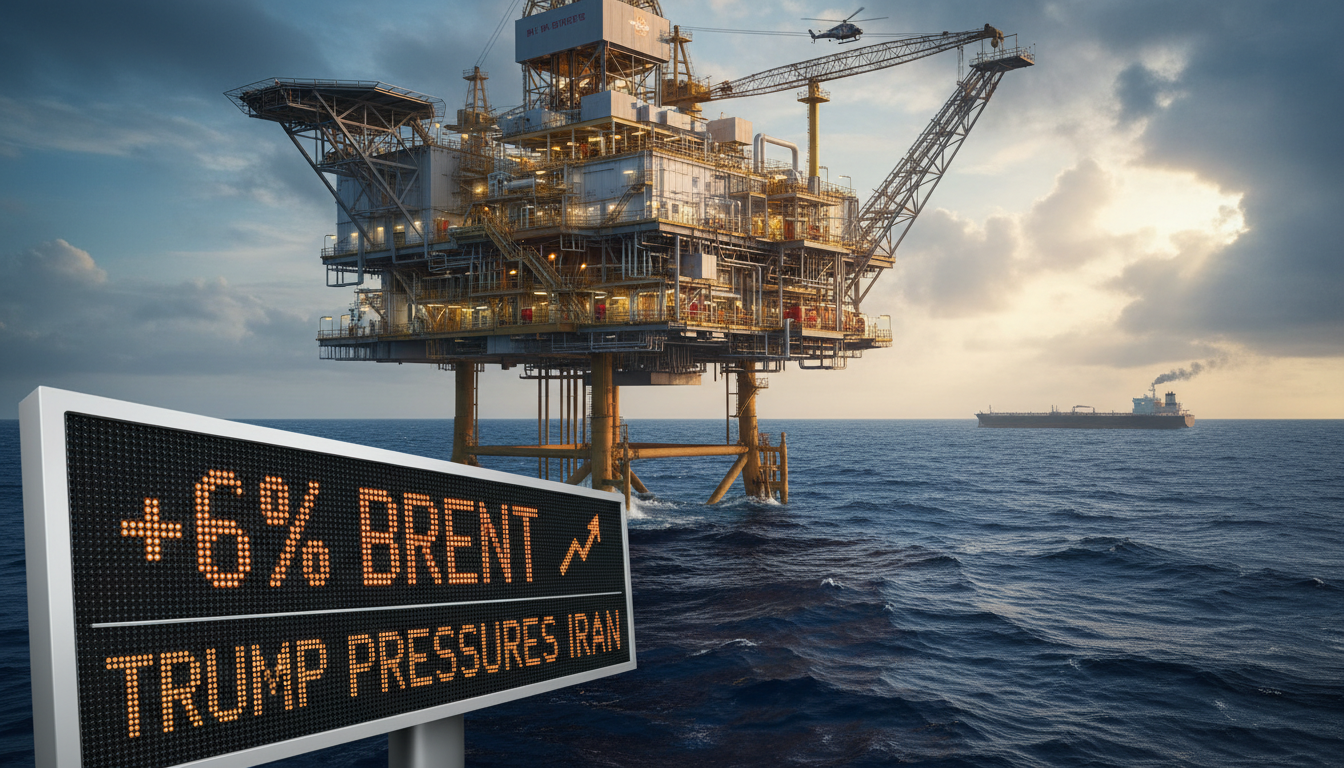
Geopolitical Tensions Drive Brent Crude Towards Significant Weekly Gains
Global oil markets are buzzing with heightened volatility, with Brent crude futures poised to close the week up by a substantial 6%. This sharp ascent is directly attributed to mounting geopolitical tensions surrounding Iran and the critical Strait of Hormuz, exacerbated by firm rhetoric from the White House and ongoing uncertainty following high-level international discussions.
Investors are keenly observing the escalating standoff between the United States and Iran, which continues to dominate the discourse in energy circles. The sentiment turned particularly bullish after the U.S. President issued a stark warning, indicating a rapidly diminishing patience with Tehran. In a televised interview, the President made it unequivocally clear, stating, “I am not going to be much more patient,” and urged Iran to “make a deal.” Such declarations inevitably inject a premium into crude prices, reflecting the increased risk of supply disruptions from the Middle East.
Strait of Hormuz: A Chokepoint Under Pressure
The Strait of Hormuz remains the epicenter of these geopolitical anxieties. While Iran’s Revolutionary Army Corps recently asserted that approximately 30 vessels had successfully traversed the vital waterway since Wednesday, offering what Tehran presented as a sign of normal operations, this figure tells a different story to market observers. Before the current flare-up, the Strait typically saw an average of 140 vessels passing through daily. The stark contrast between the reported 30 vessels and the historical daily average of 140 underscores the significant impediment to global maritime traffic and the tangible impact of the geopolitical standoff on vital energy transit routes.
Among the limited number of ships that did clear the Strait earlier this week, only two were tankers. One of these crude carriers was reportedly destined for Japan, while the other was en route to China, highlighting the continued, albeit constrained, flow of oil to major Asian economies. Tehran has proactively encouraged various governments to engage in negotiations for the safe passage of their commercial shipping through this strategic chokepoint, signaling a complex diplomatic landscape alongside military posturing.
Beijing Summit Fails to Deliver on Iran, But China’s Oil Interests Emerge
Much anticipation surrounded the recent high-stakes meeting between the U.S. and Chinese presidents in Beijing, with hopes that these discussions might yield a diplomatic breakthrough regarding the perilous situation in the Strait of Hormuz. Unfortunately for market stability, no such positive developments emerged from the Chinese capital concerning the Iran issue. This lack of progress left the market to re-focus on the underlying deadlock and the potential for a blockaded Strait.
However, an interesting development did surface from the summit. The U.S. President indicated that China had expressed a keen interest in procuring American crude oil. This revelation alone provided a fresh surge of bullish sentiment, further underpinning the upward trajectory of oil prices. The prospect of increased Chinese demand for U.S. crude arrives amid growing warnings from analysts regarding rapid drawdowns in global oil inventories, which are being depleted to compensate for the significant reduction in Middle Eastern supply flows.
Leading oil analyst Vandana Hari reinforced the market’s pivot, noting, “With the Beijing summit not delivering any breakthrough on Iran, market focus is back on the deadlock and a blockaded Strait, with a tail risk of renewed military escalation.” This sentiment encapsulates the precarious position investors find themselves in, balancing fundamental supply/demand dynamics with unpredictable geopolitical catalysts.
Analyst Outlook: High Hopes for China’s Influence May Be Overstated
While the market grapples with these tensions, some analysts have speculated on China’s potential role as a mediator. Commodity experts from ING, including Warren Patterson and Ewa Manthey, commented in a recent market note that there was “some hope that China could exert pressure on Iran to reach a deal with the US, to end the war and lead to a resumption of energy flows through the Strait of Hormuz.”
However, Patterson and Manthey offered a crucial caveat, suggesting that “The market could be pinning too much hope on the US-China talks yielding some positive results on Iran.” This assessment implies that investors should temper their expectations regarding Beijing’s immediate capacity or willingness to broker a substantial de-escalation between Washington and Tehran. While China has vested interests in global energy stability, its primary focus in such bilateral meetings often remains its own economic and trade objectives.
Investor Implications: Navigating a Volatile Energy Landscape
For energy investors, the current environment demands heightened vigilance. The 6% weekly surge in Brent crude underscores the market’s sensitivity to geopolitical flashpoints, particularly those impacting crucial supply arteries like the Strait of Hormuz. The combination of strong U.S. presidential rhetoric, unyielding Iranian actions, and the strategic importance of the Strait creates a volatile cocktail for crude prices.
The immediate outlook suggests that oil prices will remain highly reactive to any new developments from the Middle East, be they diplomatic overtures or further escalations. While the potential for inventory drawdowns provides fundamental support, the overarching driver for the foreseeable future appears to be the unpredictable nature of geopolitics. Investors must consider the substantial tail risk of military action, which could lead to dramatic and swift price movements, making astute risk management paramount in this dynamically shifting energy market.


