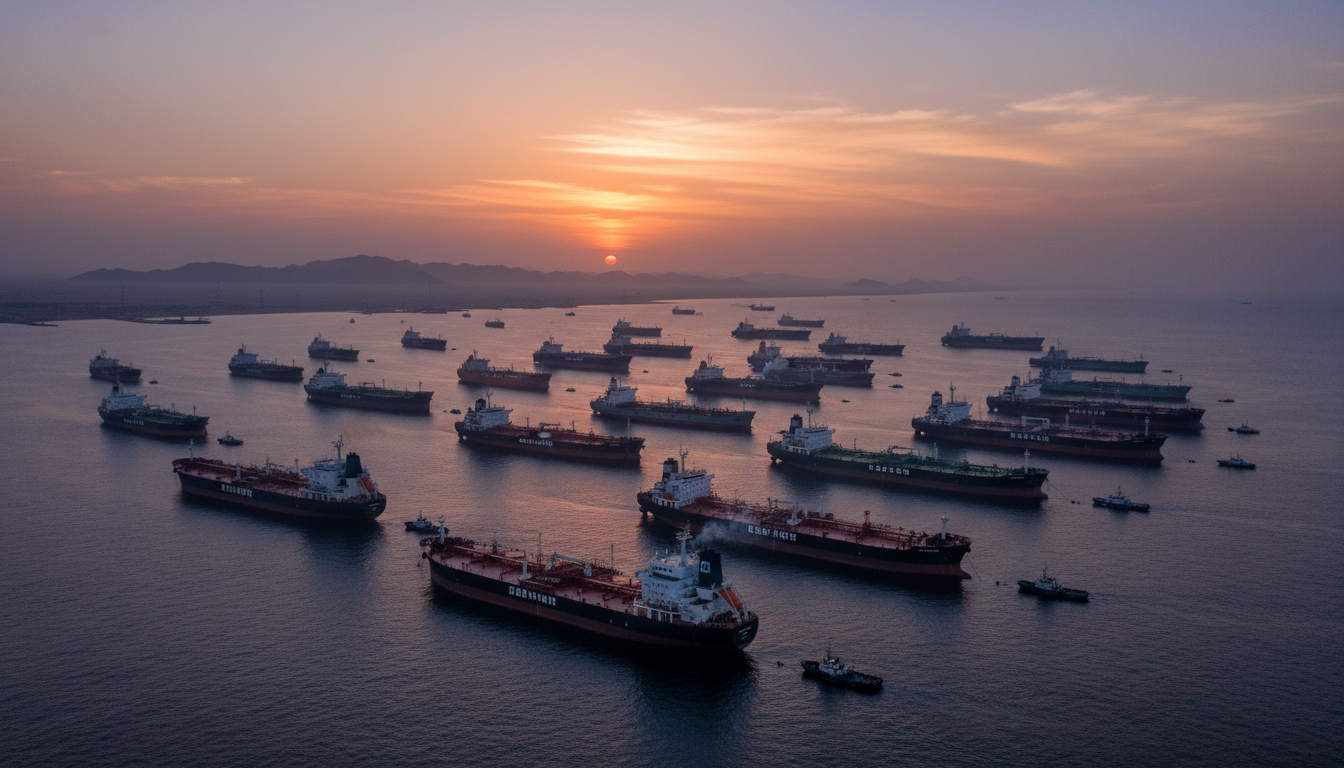
Strait of Hormuz Gridlock Imperils India’s Energy Lifeline, Sparks Global Market Jitters
A critical bottleneck in the Persian Gulf continues to ensnare a significant fleet of India-bound commercial vessels, with nearly half of these ships carrying vital energy products. Officials indicate that more than 40 cargo ships remain stranded west of the Strait of Hormuz, unable to navigate this strategic chokepoint. This ongoing maritime paralysis poses a substantial threat to India’s energy and food security, sending ripples of concern through global commodity markets and amplifying geopolitical risk premiums.
The trapped flotilla is laden with an array of essential commodities, including crude oil, liquefied petroleum gas (LPG), and liquefied natural gas (LNG), alongside crucial agricultural inputs such as fertilizers. Out of the 41 vessels identified by Indian authorities for priority passage from the Gulf region, a staggering 18 are tankers transporting energy products. Additionally, 16 ships are carrying fertilizers, with the remaining seven loaded with various other critical goods. Compounding the situation, 13 of the vessels currently stuck west of the Strait proudly fly the Indian flag, underscoring the direct impact on the nation’s maritime interests and supply chains.
For a rapidly developing economy like India, heavily reliant on imported hydrocarbons and agricultural resources, the prolonged closure or severely restricted passage through the Strait of Hormuz is a dire scenario. The government has voiced profound concerns that the sustained disruption is actively eroding the nation’s energy and food security foundations. The inability of crude oil, natural gas, and fertilizer cargoes to depart the Persian Gulf directly threatens industrial operations, power generation, and agricultural output across the subcontinent. A stable and unimpeded flow of these commodities is paramount for India’s economic stability and growth trajectory.
Geopolitical Tensions Escalate Amidst Fragile Ceasefire
The maritime impasse is a direct consequence of escalating geopolitical tensions in the region, particularly between Iran and the United States. While a fragile ceasefire had largely held for approximately a month, hostilities reignited recently with an exchange of fire in the Strait of Hormuz. This latest flare-up immediately threatened to unravel the delicate truce, casting a shadow over prospects for a swift resolution to the shipping crisis. Despite the renewed skirmish, Washington maintains that the ceasefire remains in effect, while Tehran is reportedly reviewing a U.S. proposal for a framework agreement designed to facilitate further diplomatic talks. Such discussions, if successful, could eventually pave the way for a full and stable reopening of the Strait of Hormuz.
Investors and market analysts are closely monitoring these developments. The Strait of Hormuz is arguably the world’s most critical oil transit chokepoint, with approximately 20% of global petroleum liquids consumption passing through its narrow channels daily. Any sustained disruption here inevitably translates into heightened volatility for crude oil benchmarks like Brent and WTI, increased shipping insurance costs, and logistical nightmares for global energy majors and refiners. India, as a major importer, is acutely vulnerable to these price shocks and supply chain disruptions, making a diplomatic resolution an urgent imperative.
A Glimmer of Hope: An LPG Tanker’s Successful Passage
Amidst the widespread concern, a recent event offered a rare and critical moment of progress. An LPG tanker successfully navigated the Strait of Hormuz en route to India, marking the first such passage for an India-linked LPG cargo since the U.S. implemented a blockade designed to curb Iranian oil exports. The vessel, MT Sarv Shakti, chartered by Indian Oil Corporation (IOC) – India’s largest state-owned refiner – cleared the Strait on May 2nd. Its anticipated arrival in Visakhapatnam on May 13th provides a tangible, albeit singular, instance of a breakthrough in the restricted maritime corridor. This successful transit, while significant, underscores the precarious nature of the situation and the immense logistical challenges faced by shipping companies and energy importers operating in the Gulf.
The broader implications for global energy markets are profound. While the immediate focus is on India’s inbound supplies, a prolonged standoff in the Strait of Hormuz would inevitably impact global crude and LNG prices. Shipping companies would face spiraling insurance premiums, longer transit times through alternative (and often more costly) routes, and potential vessel availability issues. Energy traders are already pricing in a geopolitical risk premium, reflecting the uncertainty surrounding future supply flows from the Middle East. For investors, this translates into potential opportunities in commodity futures, shipping equities, and companies with robust and diversified supply chain strategies, while also highlighting the inherent risks in companies heavily reliant on Gulf energy exports or imports.
Market Outlook: Navigating Uncertainty in Critical Shipping Lanes
As the situation unfolds, market participants must continue to factor in significant volatility. The interplay of geopolitical negotiations, military posturing, and the ongoing humanitarian concerns regarding trapped cargo creates a complex and unpredictable environment. While a full resolution would bring immense relief to India and stabilize global commodity markets, the recent return of hostilities serves as a stark reminder of the region’s inherent instability. The world’s dependence on the uninterrupted flow of energy through the Strait of Hormuz means that every development, however minor, will be meticulously scrutinized by investors, energy companies, and governments alike. The coming weeks will be crucial in determining whether diplomatic efforts can restore stability to this indispensable maritime artery, or if the current gridlock becomes a more enduring challenge for global supply chains and commodity prices.


